Calcium release channel deficiency syndrome in patients diagnosed with idiopathic ventricular fibrillation and decedents classified as sudden unexplained death in the young
Lucilla Giammarino, Raquel Neves, David J Tester, Sahej Bains, Vanessa Karlinski Vizentin, J Martijn Bos, John R Giudicessi, Michael J Ackerman

TL;DR
This study finds that a genetic condition affecting calcium channels may cause sudden cardiac events in people with no obvious heart problems.
Contribution
The study identifies the prevalence of RYR2 gene variants in IVF and SUDY cases, linking them to a newly recognized syndrome.
Findings
CRCDS may account for 3% of IVF and 9% of exertion-related sudden cardiac arrest in IVF patients.
RYR2 variants were found in 11% of SUDY cases, with 65% of these occurring during exertion.
Loss-of-function RYR2 variants contribute to at least 7% of exercise-related SUDY cases.
Abstract
Calcium release channel deficiency syndrome (CRCDS) results from loss-of-function (LOF) variants in the RYR2-encoded type 2 ryanodine receptor (RyR2), predisposing patients to sudden cardiac arrest/death (SCA/SCD) without abnormalities on a stress electrocardiogram (ECG). Undetected CRCDS may underlie idiopathic ventricular fibrillation (IVF) and sudden unexplained death in the young (SUDY). We aimed to determine the prevalence of potential CRCDS-causative RYR2 variants in IVF and SUDY. We reviewed clinical evaluation and RYR2 genetic analysis of 169 IVF patients and 279 SUDY victims. Only ultra-rare (<0.005% in gnomAD) nonsynonymous RYR2 variants were considered potentially pathogenic. Among IVF patients, 6/169 (3%) overall—and 6/67 (9%) with exertion-related SCA—harboured an RYR2 variant and represent potential CRCDS cases. All exhibited normal resting and stress ECGs. Genetic…
Genes, proteins, chemicals, diseases, species, mutations and cell lines named across the full text — each resolved to its canonical identifier and authoritative record.
Click any figure to enlarge with its caption.
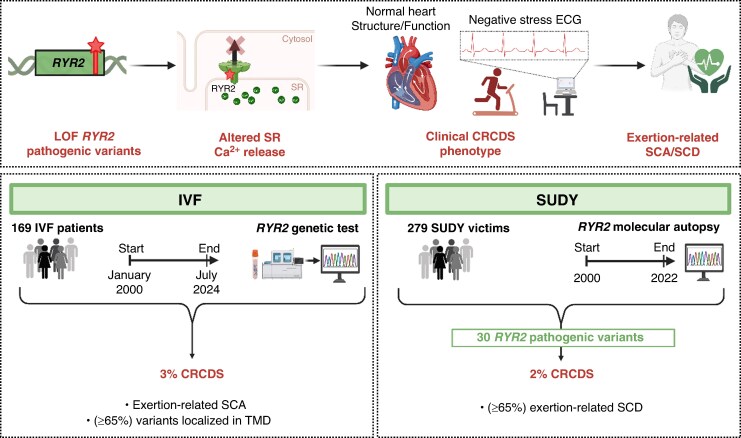 Figure 1
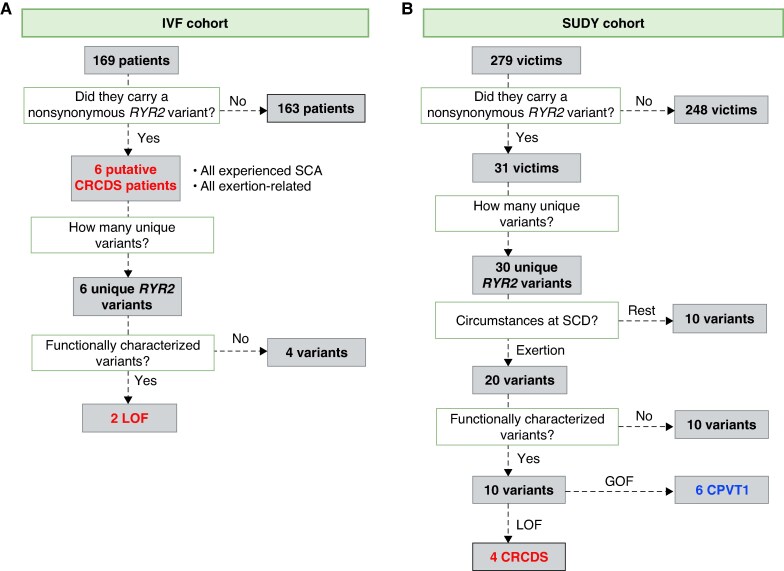 Figure 2
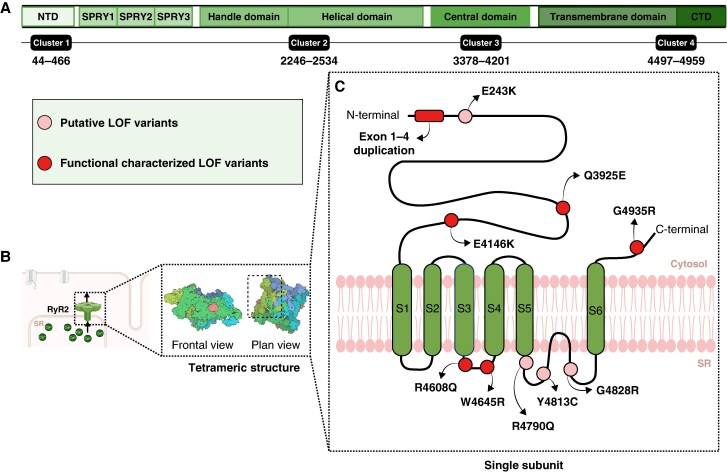 Figure 3
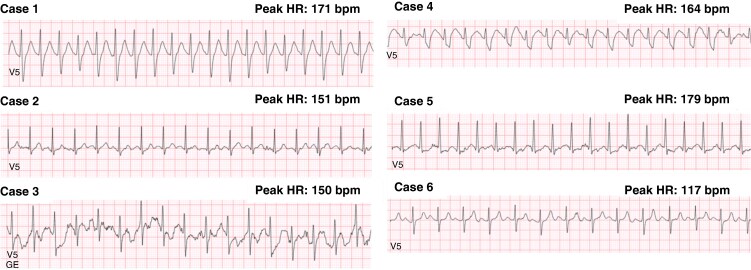 Figure 4
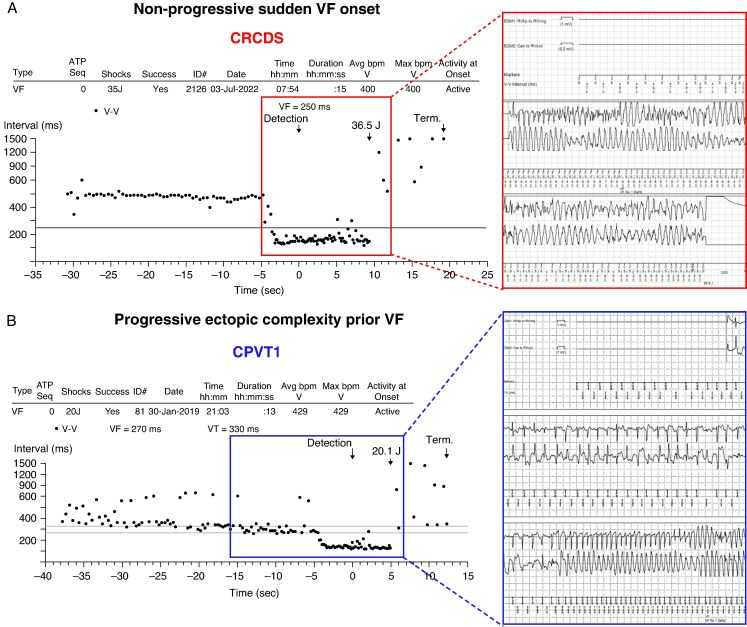 Figure 5
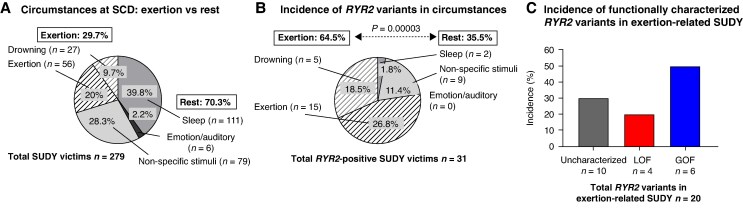 Figure 6
Peer Reviews
No public reviews on file for this paper yet. If you reviewed it on a platform where reviews are public (OpenReview, ICLR, NeurIPS, ICML), you can paste yours below so the community can read it here.
Videos
No videos yet. Explain this paper in a talk, walkthrough, or lecture? Add one.
Taxonomy
TopicsCardiac electrophysiology and arrhythmias · Ion channel regulation and function · Atrial Fibrillation Management and Outcomes