Designing B1 ‐Selective Pulses by Frequency Modulating in a Second Rotating Frame
Saurin Kantesaria, Efraín Torres, Mazin M. Mustafa, Djaudat Idiyatullin, Sara Ponticorvo, Gregor Adriany, Shalom Michaeli, Michael Garwood

TL;DR
This paper introduces a new method for slice selection in MRI that works even when magnetic field inhomogeneities are present, using a novel pulse design.
Contribution
A new B1-selective pulse design using frequency modulation in a second rotating frame to enable slice selection without B0 gradients.
Findings
AMHS1 simulations showed robust slice inversion despite B0 and B1 inhomogeneities.
Slice and slab selection was experimentally demonstrated in phantoms and rat brains using surface coils.
Low-flip angle AMHS1 pulses enabled 3D gradient-echo imaging in vivo at 9.4 T.
Abstract
To create a frequency‐modulated pulse for slice selection of arbitrary, uniform flip angle even when B 0 and B 1 are inhomogeneous, without utilizing B0 gradients An amplitude‐modulated hyperbolic secant pulse (AMHS1) was derived from Hoult's B1‐selective imaging method which utilizes one component, B 1y, as a gradient and another, B 1x, for selective excitation. The frequency sweep in AMHS1 was produced by a time‐dependent amplitude‐modulation of B 1x, defining the band of nutation frequencies to select along the B 1y gradient. Resilience of slice selection to B 0 and B 1 inhomogeneities was investigated by simulations. Slice‐ and slab‐selective imaging were demonstrated experimentally in phantoms and rat brain in vivo using surface coils. Simulations of AMHS1 demonstrated slice inversion despite B 0 and B 1 inhomogeneities. When operating sub‐adiabatically to produce excitation flip…
Genes, proteins, chemicals, diseases, species, mutations and cell lines named across the full text — each resolved to its canonical identifier and authoritative record.
Click any figure to enlarge with its caption.
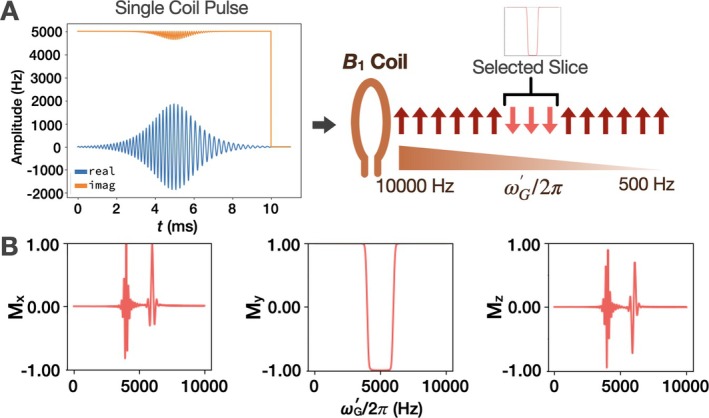 Figure 1
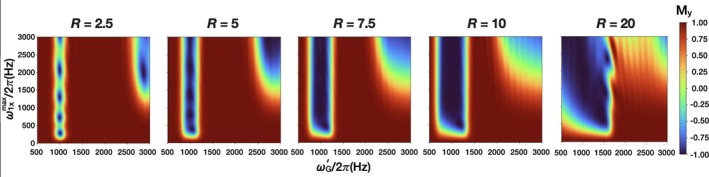 Figure 2
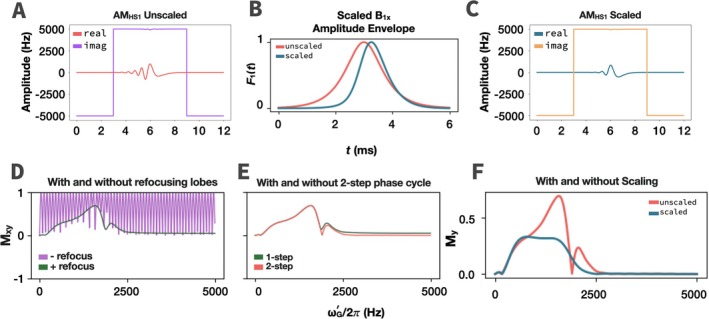 Figure 3
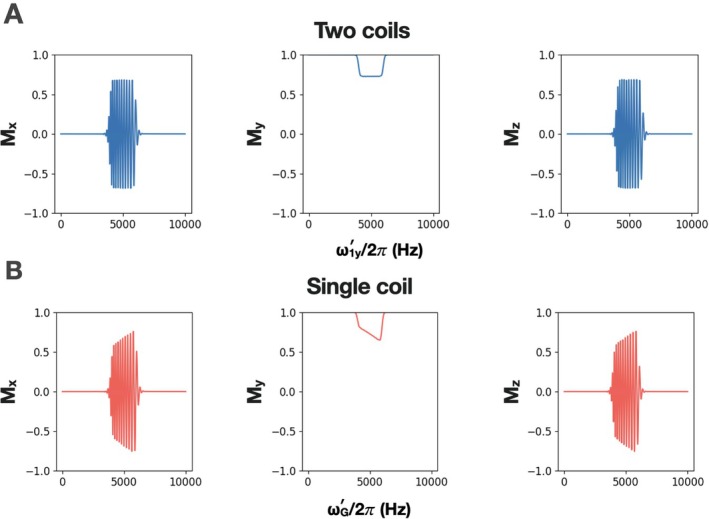 Figure 4
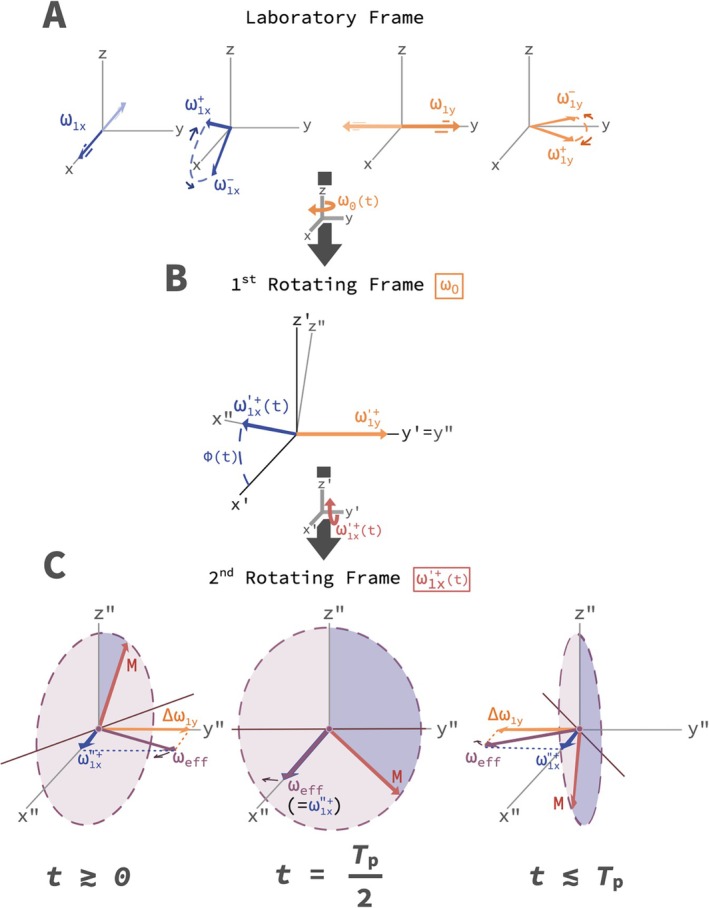 Figure 5
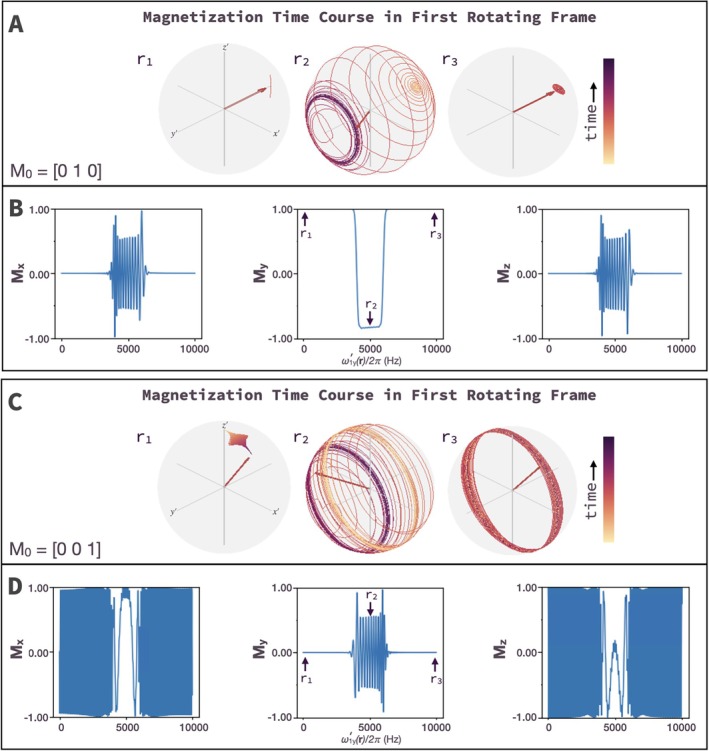 Figure 6
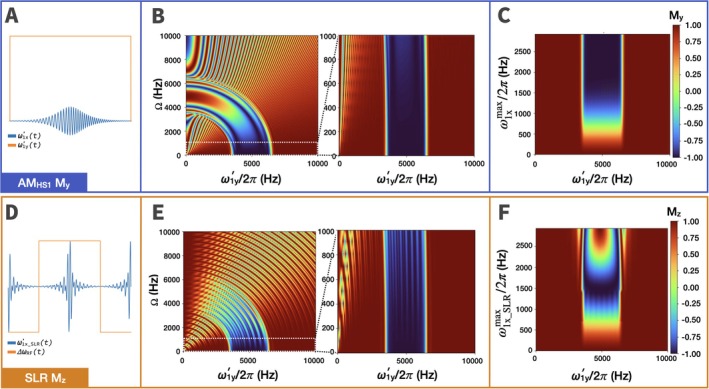 Figure 7
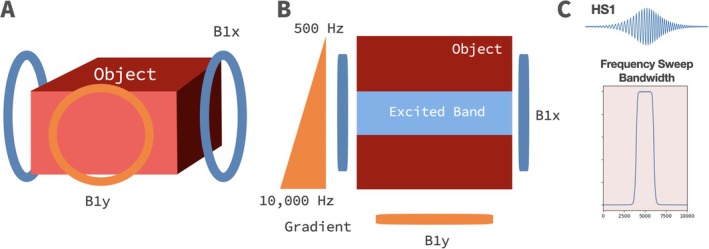 Figure 8
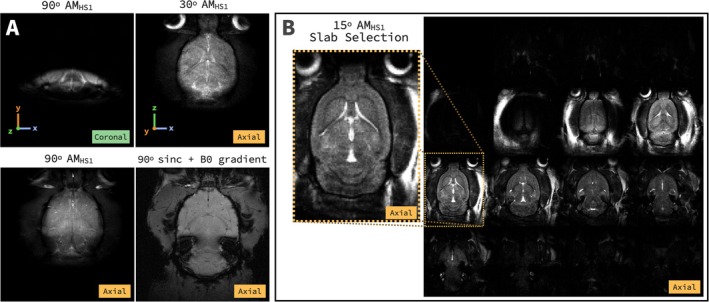 Figure 9
Peer Reviews
No public reviews on file for this paper yet. If you reviewed it on a platform where reviews are public (OpenReview, ICLR, NeurIPS, ICML), you can paste yours below so the community can read it here.
Videos
No videos yet. Explain this paper in a talk, walkthrough, or lecture? Add one.
Taxonomy
TopicsSeismic Imaging and Inversion Techniques · High-pressure geophysics and materials · Advanced SAR Imaging Techniques