Field Strength‐Dependent White Matter R 1 and R 2 Anisotropy of Phase‐Cycled Balanced Steady‐State Free Precession Relaxometry
Florian Birk, Hamzeh Tesh, Ali Aghaeifar, Svenja Klinkowski, Praveen Iyyappan Valsala, Sebastian Mueller, Svenja Brodt, Klaus Scheffler, Rahel Heule

TL;DR
This study explores how magnetic field strength affects relaxation rates and anisotropy in white matter using brain imaging techniques.
Contribution
The paper reveals that susceptibility effects dominate R2 anisotropy at ultra-high fields, unlike lower fields where other mechanisms may play a role.
Findings
R2 and asymmetry indices show strong orientation dependence, increasing with higher field strength.
Susceptibility contributes 77.0%–87.1% to R2 anisotropy at 9.4T, compared to 24.0%–39.0% at 3T.
Monte Carlo simulations replicate R2 anisotropy characteristics but not their magnitude.
Abstract
To investigate how the relaxation rates (R 1, R 2) and asymmetry indices (AI), derived from phase‐cycled balanced steady‐state free precession (pc‐bSSFP) data, depend on the orientation of white matter (WM) fiber tracts at different field strengths. Phase‐cycled bSSFP data acquired at 3 and 9.4T in the healthy human brain were processed using motion‐insensitive rapid configuration relaxometry (MIRACLE) and a frequency response analysis to derive R 1, R 2, and AI values, respectively. Fractional anisotropy (FA) and fiber‐to‐field angle (θ) were estimated based on 3T diffusion tensor imaging. The orientation dependence of R 1, R 2, and AI in WM was characterized using literature model fits as well as Monte Carlo random walk simulations to explore the influence of field strength and susceptibility effects. R 2 and AI exhibited a pronounced orientation dependence while the influence of…
Genes, proteins, chemicals, diseases, species, mutations and cell lines named across the full text — each resolved to its canonical identifier and authoritative record.
Click any figure to enlarge with its caption.
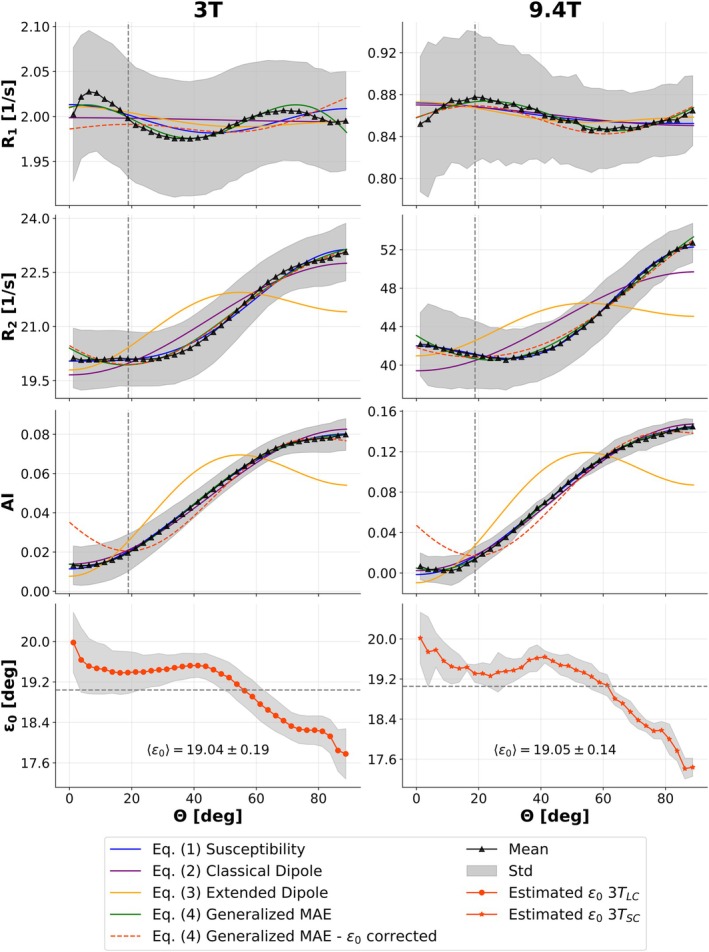 Figure 1
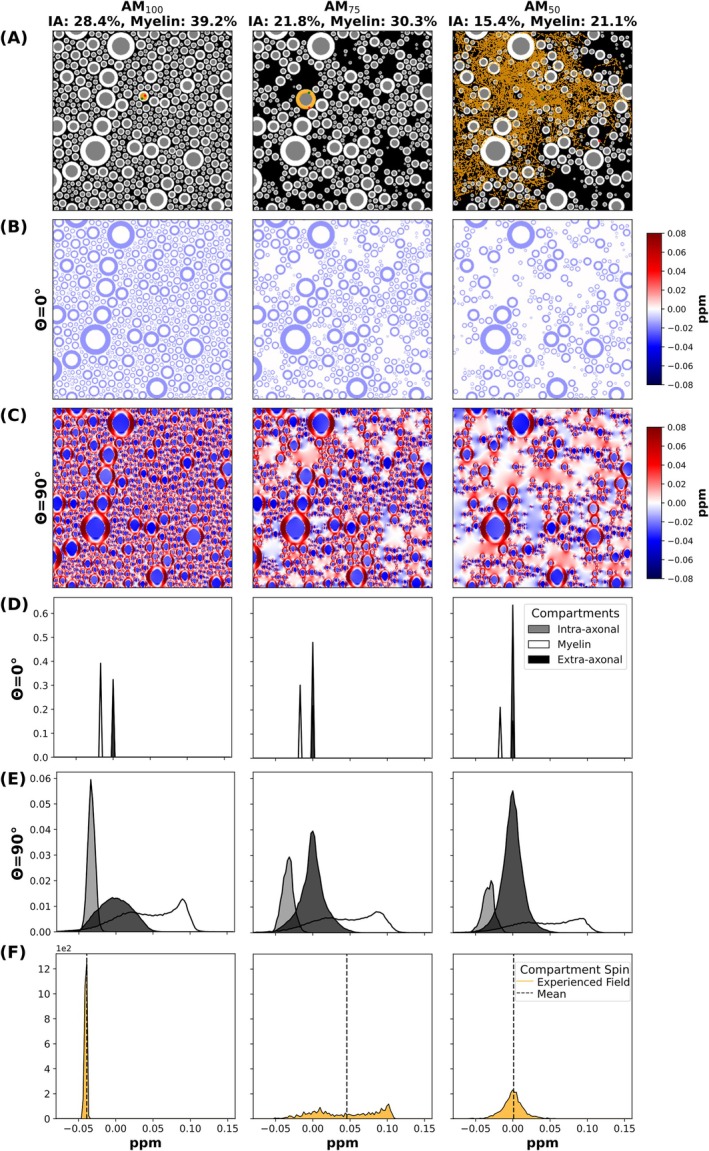 Figure 2
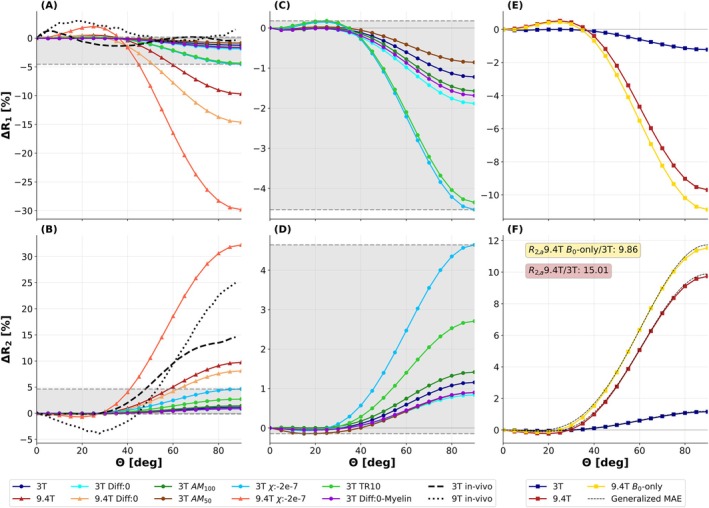 Figure 3
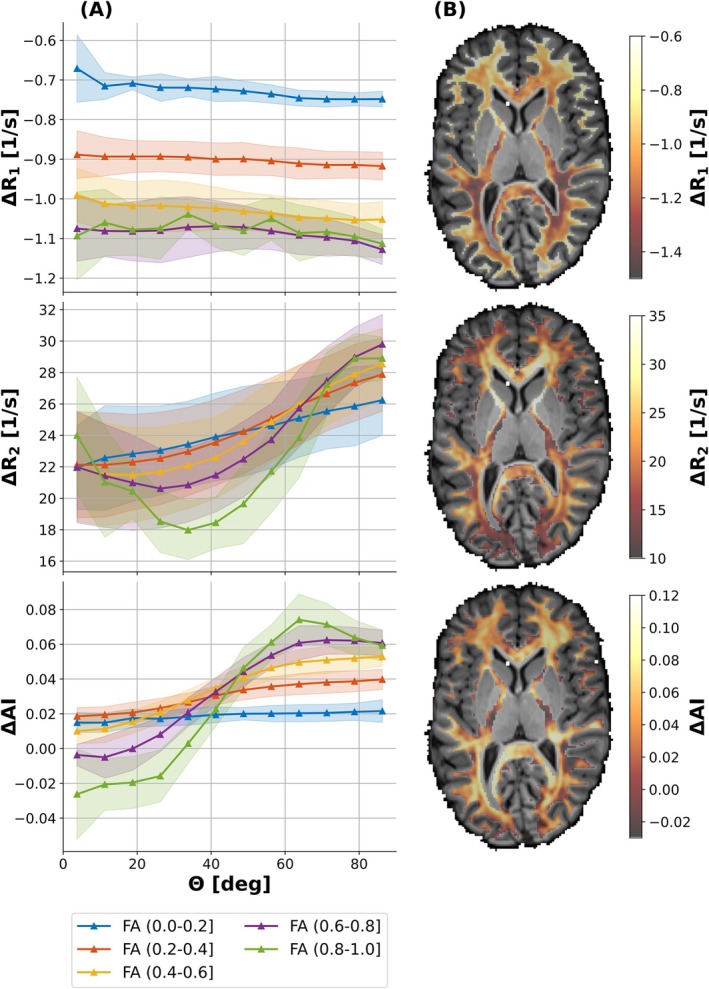 Figure 4
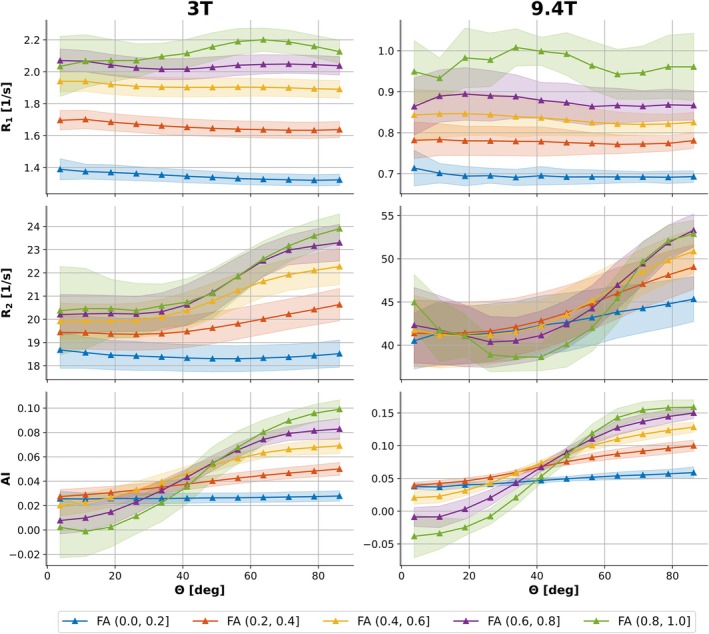 Figure 5
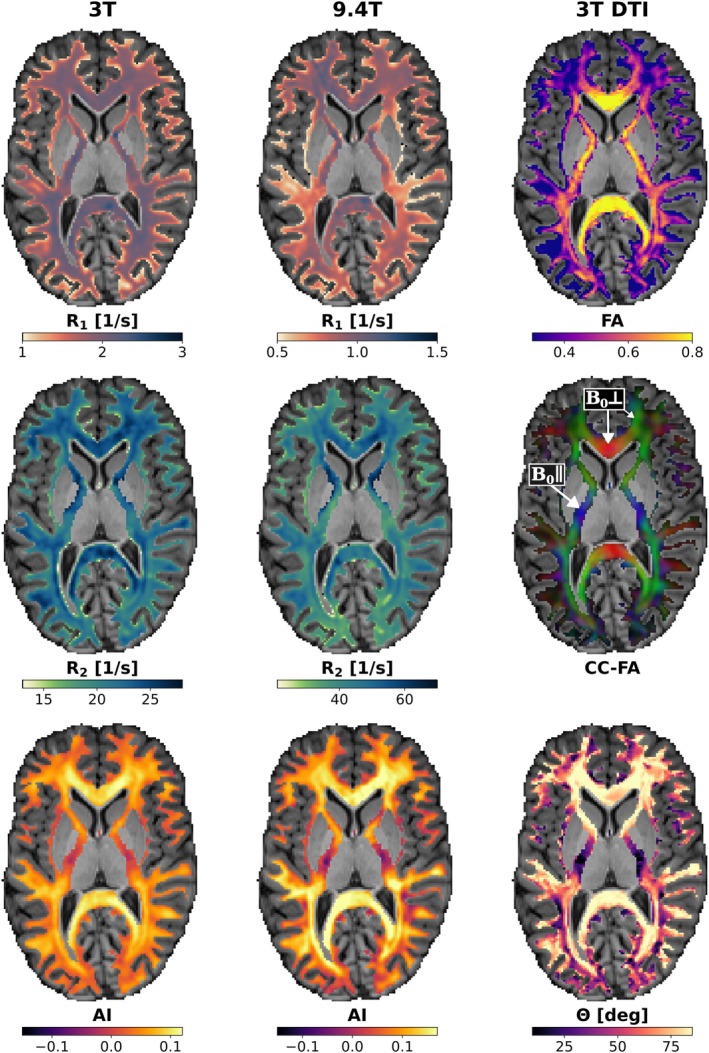 Figure 6
Peer Reviews
No public reviews on file for this paper yet. If you reviewed it on a platform where reviews are public (OpenReview, ICLR, NeurIPS, ICML), you can paste yours below so the community can read it here.
Videos
No videos yet. Explain this paper in a talk, walkthrough, or lecture? Add one.
Taxonomy
TopicsAdvanced Neuroimaging Techniques and Applications · Advanced MRI Techniques and Applications · Functional Brain Connectivity Studies