Strong‐Gradient Diffusion‐Weighted Imaging of Prostate Cancer Using an Inside‐Out Nonlinear Gradient Coil
Horace Z. Zhang, Nahla M. H. Elsaid, Terence W. Nixon, Andrew Dewdney, Dana C. Peters, Jeffrey C. Weinreb, Preston C. Sprenkle, R. Todd Constable, Gigi Galiana

TL;DR
This paper shows that using a special nonlinear gradient coil improves prostate cancer imaging by increasing image quality and lesion visibility.
Contribution
The use of an inside-out nonlinear gradient coil for locally strong gradients in prostate diffusion-weighted imaging is novel.
Findings
SNR increased by 3%–38% with the nonlinear gradient coil.
Lesion CNR improved by 133% at b = 2000 s/mm² and 217% at b = 3000 s/mm².
Restricted diffusion in lesions was more visible with shorter echo times.
Abstract
To demonstrate improved image quality and lesion conspicuity in prostate diffusion‐weighted imaging (DWI) using an inside‐out nonlinear gradient coil that provides locally strong gradients (200–500 500 mT/m) at typical prostate positions. Before applying the nonlinear gradient coil to DWI with Echo Planar Imaging (EPI) readout, we investigated geometric distortion and eddy currents, and proposed necessary corrections. We then developed two DWI protocols (b max = 1000 and 3000 s/mm2) with minimized echo time (TE) and tested them on volunteers and patients. We validated apparent diffusion coefficient (ADC) maps from the nonlinear gradient acquisition against the reference (linear gradients only). We quantified improvements in signal‐to‐noise ratio (SNR), lesion contrast‐to‐noise ratio (CNR), and lesion‐to‐normal‐tissue contrast ratio in the compartmental map of restricted diffusion.…
Genes, proteins, chemicals, diseases, species, mutations and cell lines named across the full text — each resolved to its canonical identifier and authoritative record.
Click any figure to enlarge with its caption.
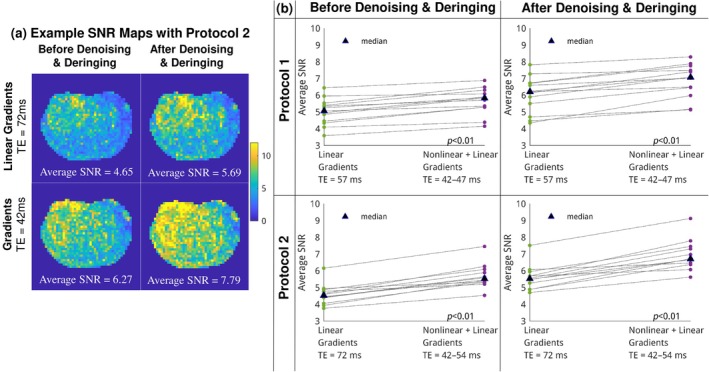 Figure 1
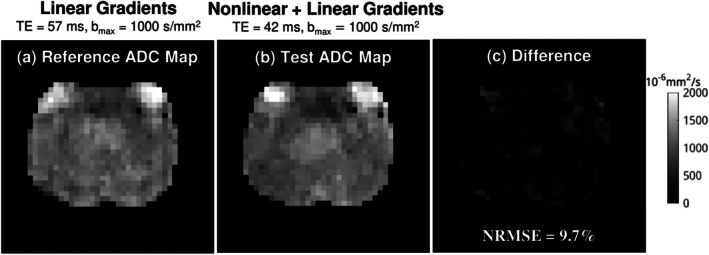 Figure 2
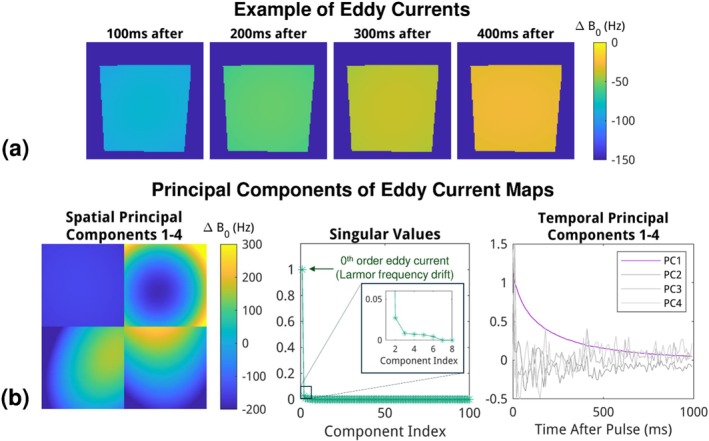 Figure 3
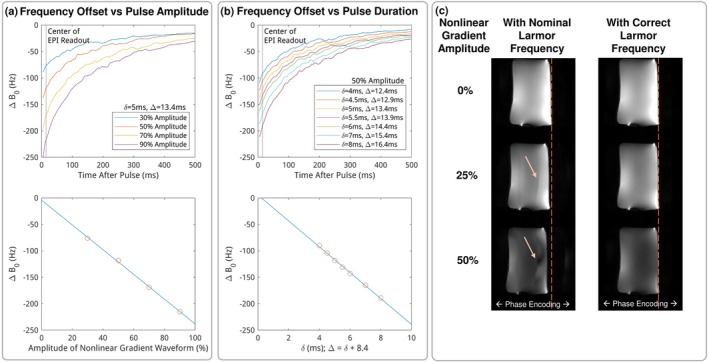 Figure 4
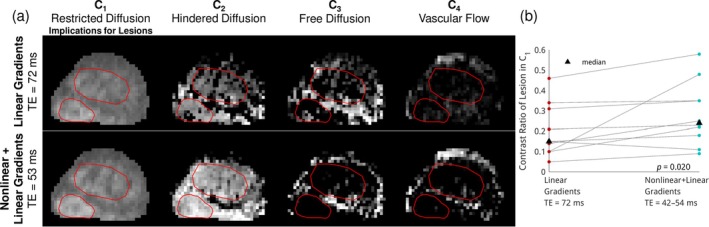 Figure 5
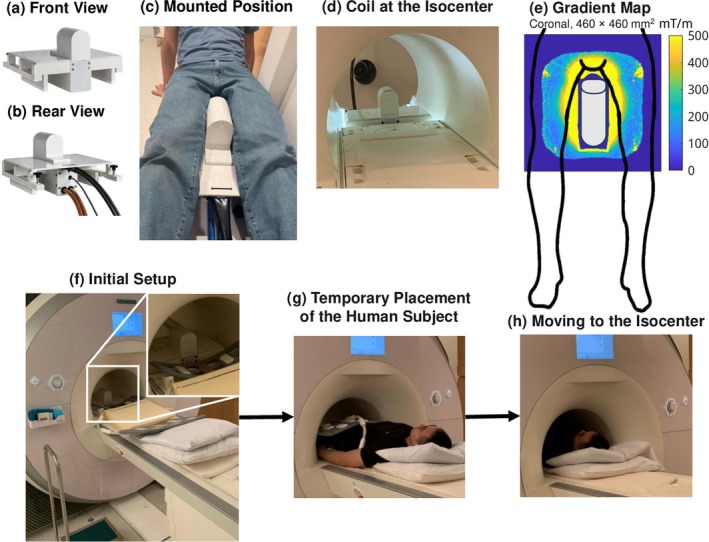 Figure 6
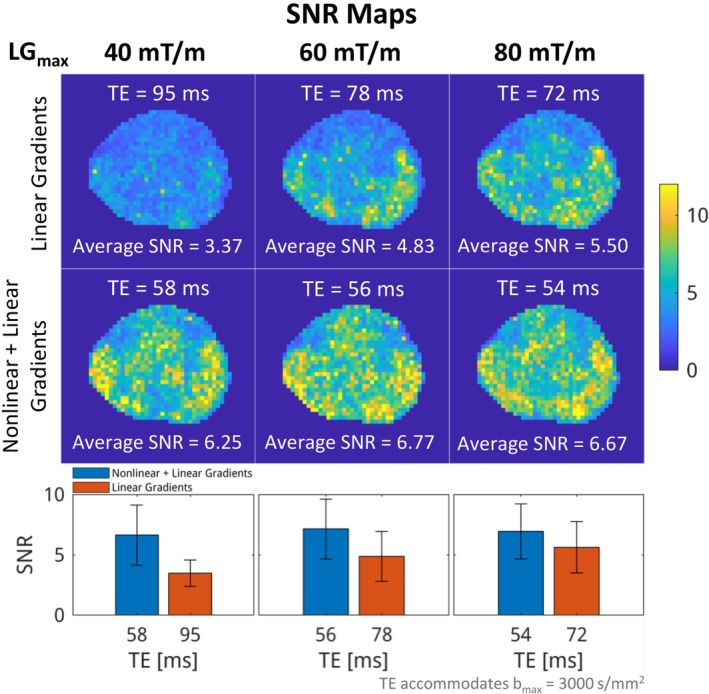 Figure 7
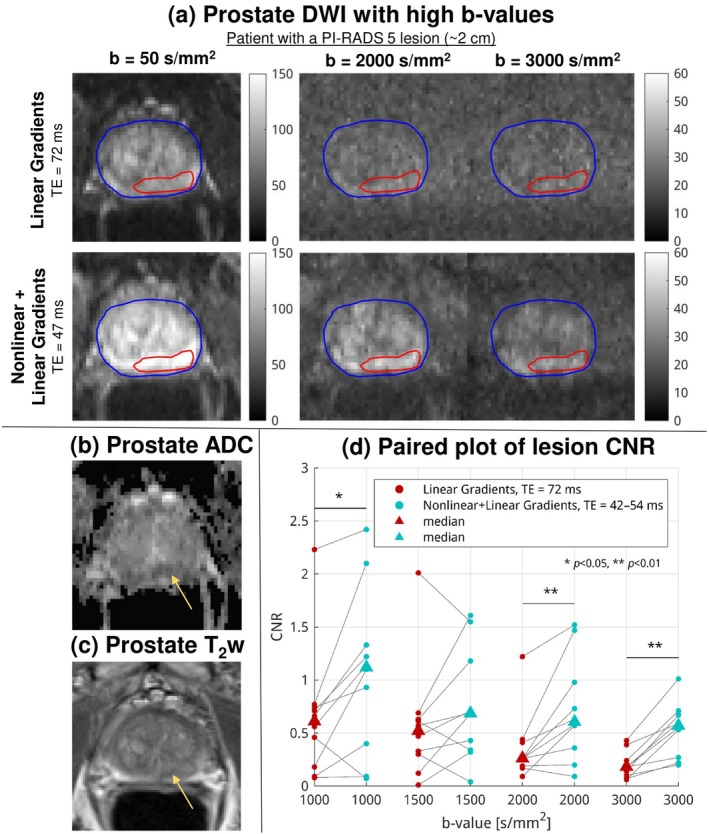 Figure 8
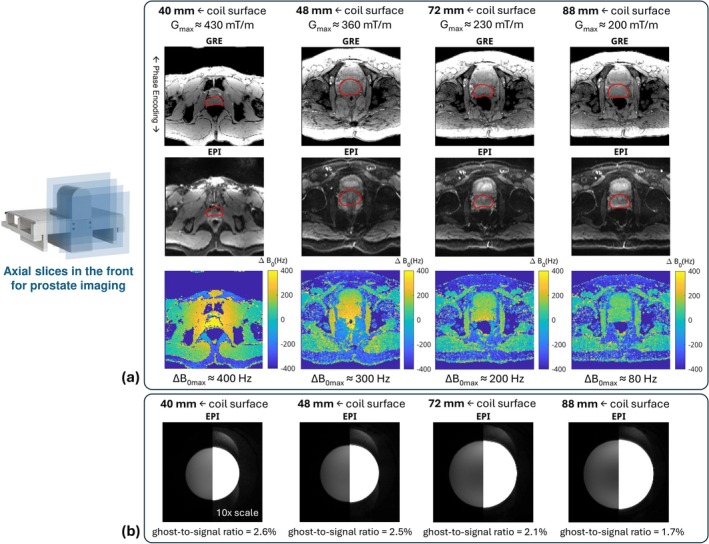 Figure 9
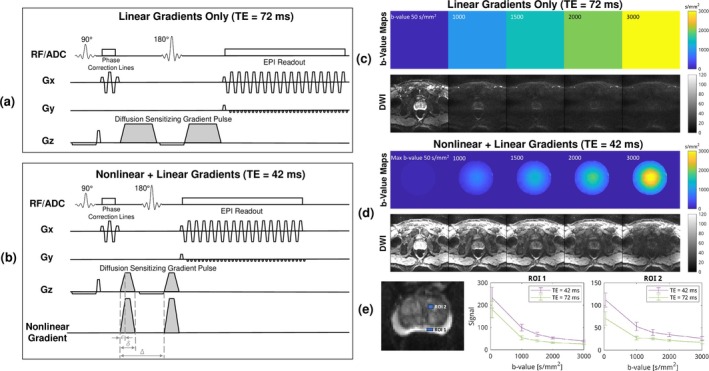 Figure 10
Peer Reviews
No public reviews on file for this paper yet. If you reviewed it on a platform where reviews are public (OpenReview, ICLR, NeurIPS, ICML), you can paste yours below so the community can read it here.
Videos
No videos yet. Explain this paper in a talk, walkthrough, or lecture? Add one.
Taxonomy
TopicsMRI in cancer diagnosis · Advanced Neuroimaging Techniques and Applications · Advanced MRI Techniques and Applications