Highly Reproducible, Vendor‐Agnostic, Motion‐Insensitive Liver PDFF Mapping at 0.55T, 1.5T, and 3T
Jiayi Tang, Daiki Tamada, Jon‐Fredrik Nielsen, Jitka Starekova, Julius F. Heidenreich, Felix Schön, Alexandra A. Anagnostopoulos, Amirhossein Roshanshad, Lu Mao, Shohei Fujita, Pengcheng Xu, Christopher Keen, Imam Ahmed Shaik, Eugene Milshteyn, Seonghwan Yee, Andrew J. Ellison

TL;DR
This study introduces a new MRI method for measuring liver fat that works across different machines and is less affected by motion.
Contribution
A vendor-agnostic, motion-insensitive PDFF quantification method was developed and validated across multiple MR systems and field strengths.
Findings
Pulseq-FAM showed reduced T1-bias and variability compared to commercial methods in phantom studies.
Pulseq-FAM improved image quality and reduced motion artifacts in volunteer studies.
The method demonstrated excellent repeatability and reproducibility across field strengths.
Abstract
To develop and validate a vendor‐agnostic, motion‐insensitive proton‐density fat‐fraction (PDFF) quantification method. Flip‐angle‐modulated (FAM) 2D chemical‐shift‐encoded (CSE) MRI for PDFF quantification was implemented in both the vendor‐agnostic platform Pulseq (“Pulseq‐FAM”) and one vendor‐specific platform (“GE‐specific FAM”). These implementations were distributed to four sites with twelve MR systems of three vendors (Siemens/GE/Philips) and field strengths (0.55T/1.5T/3T). A sequentially‐shipped 16‐vial phantom (PDFF = 0%–30%/T1water = 200–1400 ms) underwent confounder‐corrected PDFF mapping with commercial 3D‐CSE methods and GE‐specific FAM as available on each system, and Pulseq‐FAM on every system. To assess bias, phantom PDFF measurements were compared to reference. Between‐system variance was evaluated with linear mixed‐effects modeling. Different volunteers were also…
Genes, proteins, chemicals, diseases, species, mutations and cell lines named across the full text — each resolved to its canonical identifier and authoritative record.
Click any figure to enlarge with its caption.
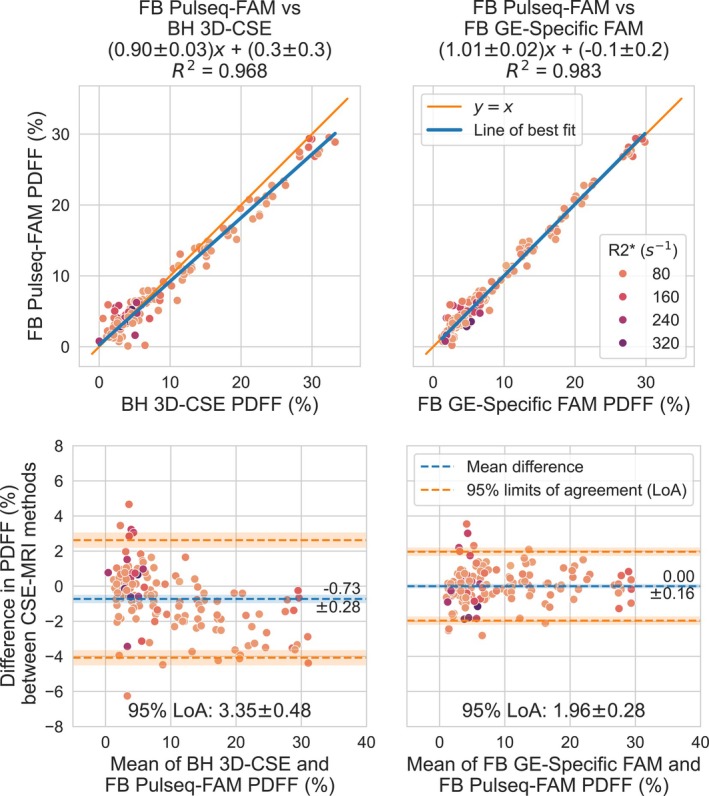 Figure 1
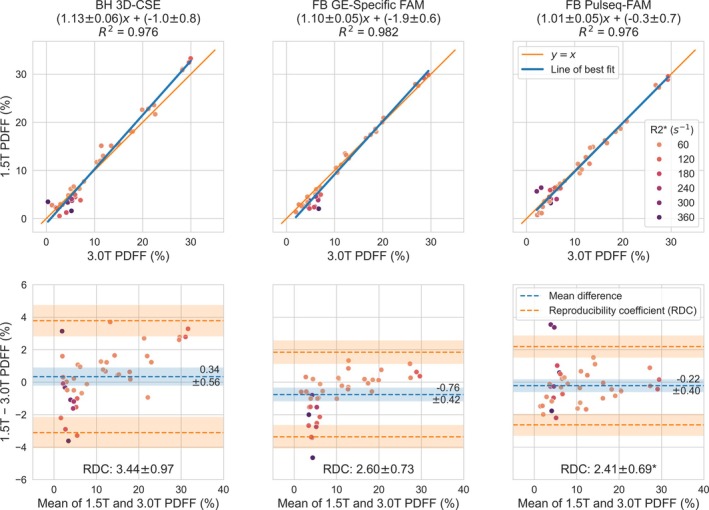 Figure 2
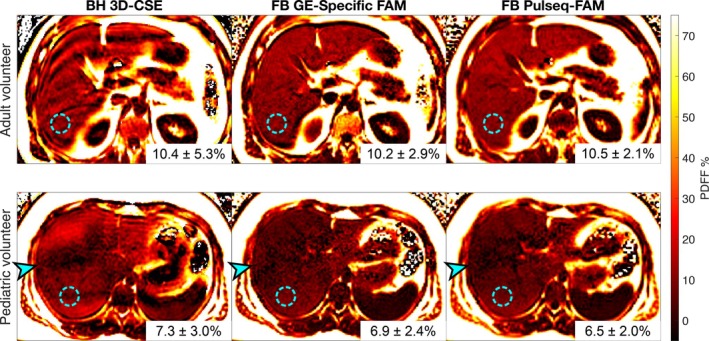 Figure 3
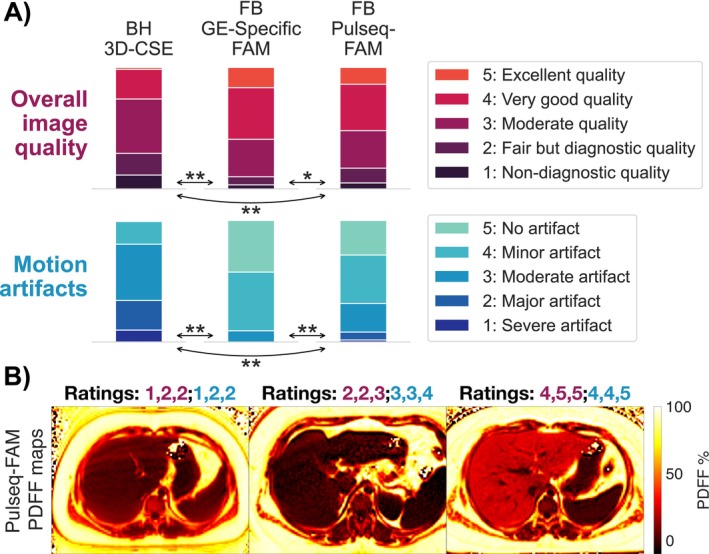 Figure 4
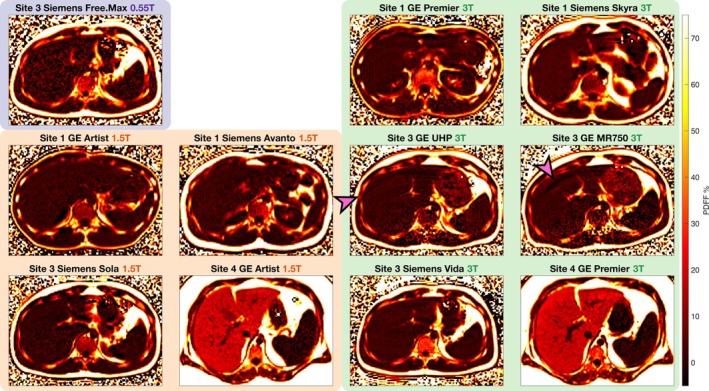 Figure 5
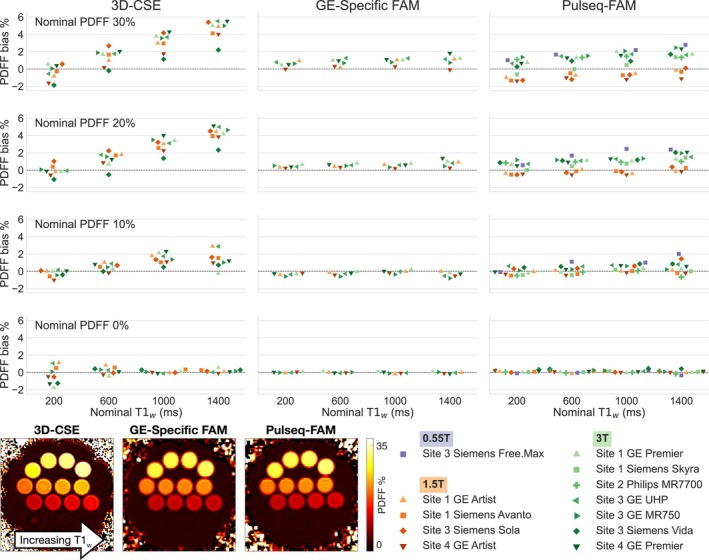 Figure 6
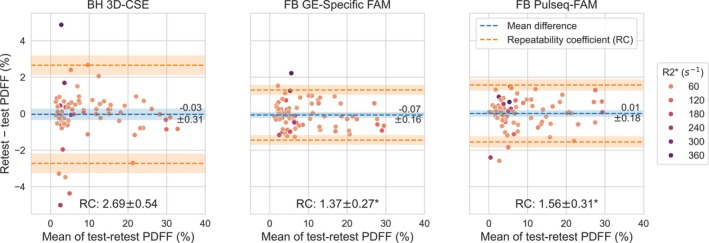 Figure 7
Peer Reviews
No public reviews on file for this paper yet. If you reviewed it on a platform where reviews are public (OpenReview, ICLR, NeurIPS, ICML), you can paste yours below so the community can read it here.
Videos
No videos yet. Explain this paper in a talk, walkthrough, or lecture? Add one.
Taxonomy
TopicsHepatocellular Carcinoma Treatment and Prognosis · Liver Disease Diagnosis and Treatment · Advanced MRI Techniques and Applications