CEST MRI Processing Pipeline in Pilot Study of Alzheimer's Disease Patients
Alexander Asturias, Fang Frank Yu, Elizabeth M. Davenport, Brendan J. Kelley, Ivan E. Dimitrov, Jochen Keupp, Elena Vinogradov

TL;DR
A new MRI processing pipeline was developed and tested to detect differences in brain imaging between Alzheimer's patients and healthy individuals.
Contribution
A novel CEST MRI processing pipeline was created and applied to a pilot study comparing Alzheimer's disease and cognitively normal subjects.
Findings
Motion correction improved CEST image quality and reduced artifacts.
Cortical and white matter regions showed significant MTRasym differences between cognitively impaired and normal groups.
Lower mean MTRasym and Lorentzian amplitudes were observed in Alzheimer's patients compared to controls.
Abstract
To develop a processing pipeline combining neuroimaging analysis tools with CEST postprocessing and utilize it in a pilot study probing differences between cognitively impaired (CI) Alzheimer's disease (AD) patients and cognitively normal (CN) individuals. Eight subjects (4 biomarker confirmed CI with underlying AD and 4 CN) were scanned on a 3T MRI scanner. The processing pipeline included rigid motion correction and co‐registration of the CEST images with the 3D T1w images using Advanced Normalization Tools (ANTs). MTRasym maps at 1 ppm, 2 ppm and 3.5 ppm were generated on a voxel‐by‐voxel basis. Each subject's 3D T1w images were processed with FreeSurfer to generate brain region specific ROIs, and the MTRasym values were averaged over the generated ROIs. In addition, a 6‐pool Lorentzian multi‐peak model was fitted to averaged Z‐spectrum data per ROI. Between‐group (CI vs. CN) CEST…
Genes, proteins, chemicals, diseases, species, mutations and cell lines named across the full text — each resolved to its canonical identifier and authoritative record.
Click any figure to enlarge with its caption.
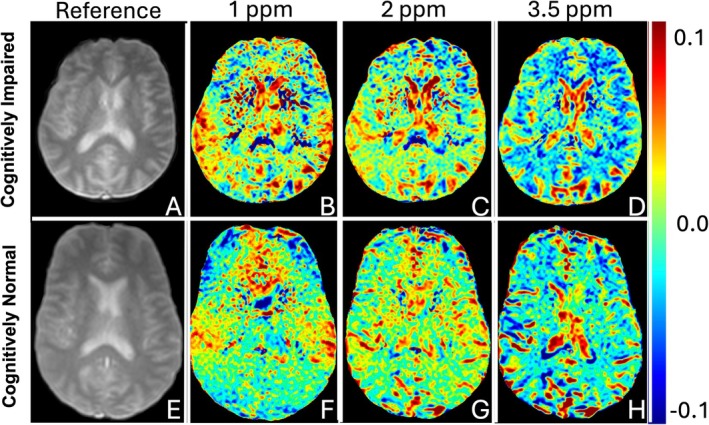 Figure 1
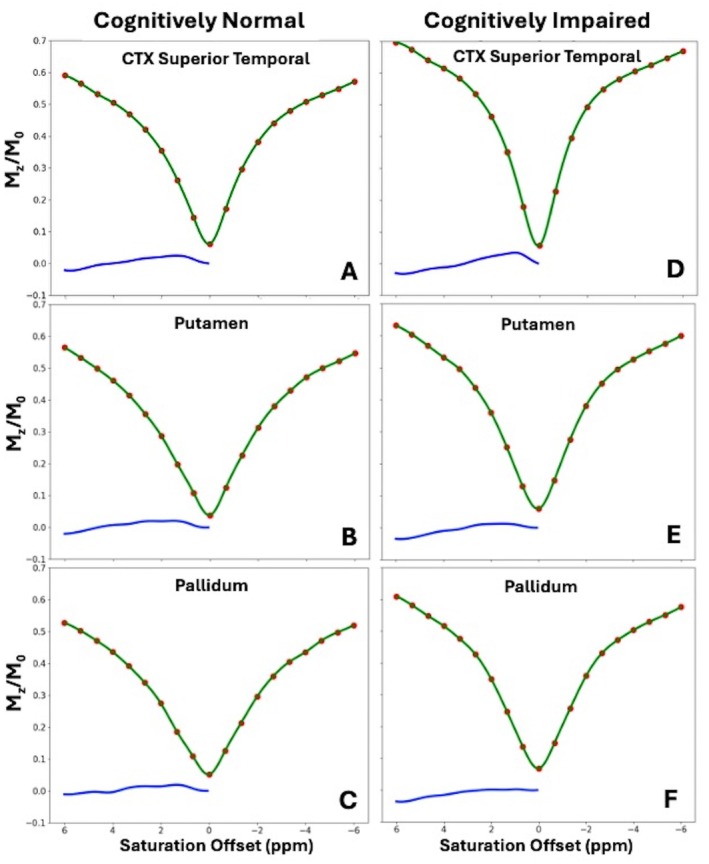 Figure 2
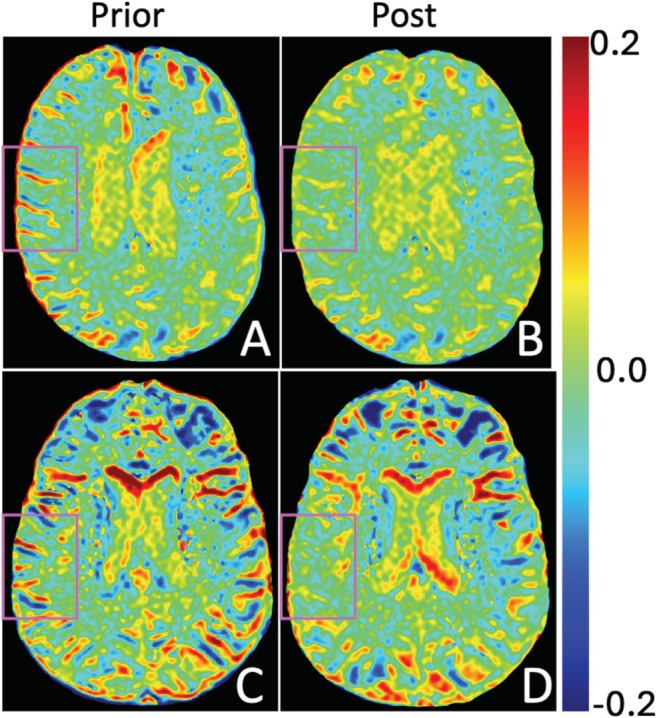 Figure 3
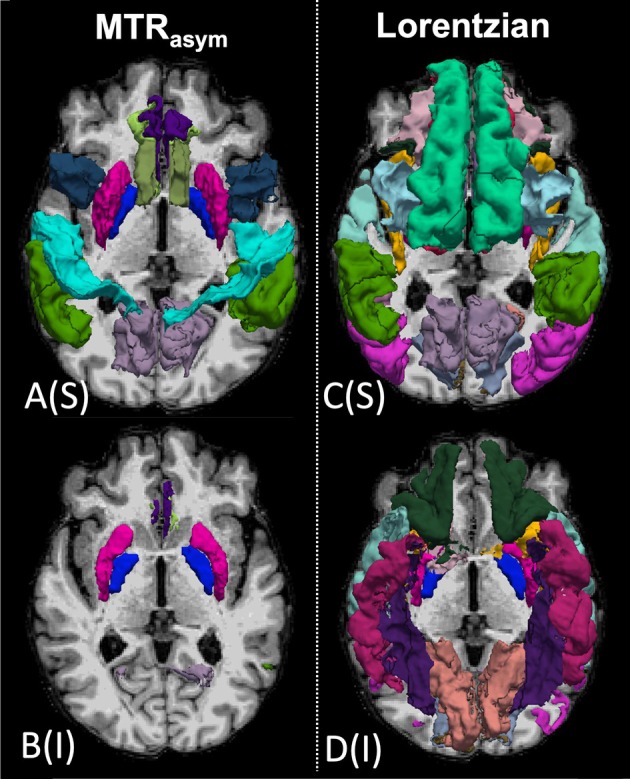 Figure 4
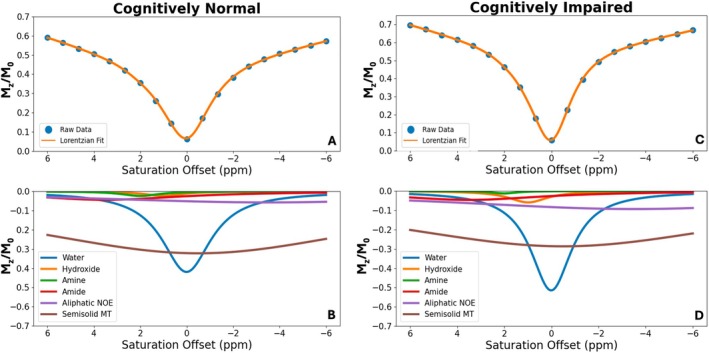 Figure 5
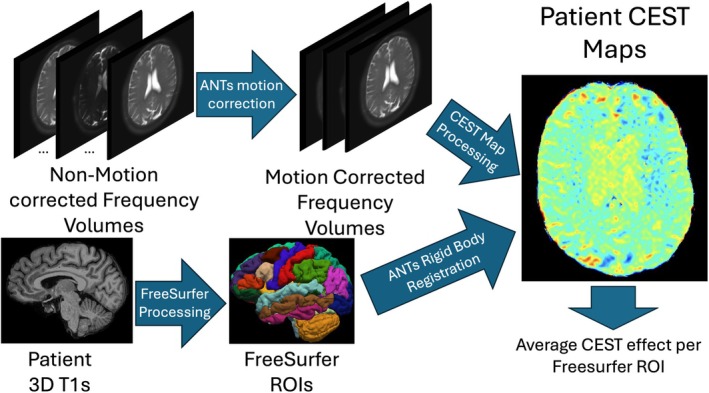 Figure 6
Peer Reviews
No public reviews on file for this paper yet. If you reviewed it on a platform where reviews are public (OpenReview, ICLR, NeurIPS, ICML), you can paste yours below so the community can read it here.
Videos
No videos yet. Explain this paper in a talk, walkthrough, or lecture? Add one.
Taxonomy
TopicsDementia and Cognitive Impairment Research · Functional Brain Connectivity Studies · Advanced MRI Techniques and Applications