Distinct descending and biomechanical influences on interlimb coordination in mice
Zane Mitrevica, Andrew J. Murray

TL;DR
The study explores how mice coordinate their limbs during movement by using a new method to separate the effects of speed and body load.
Contribution
A novel head-fixed locomotor paradigm was developed to study gait coordination in mice, decoupling speed and load effects.
Findings
Hind-heavy loading causes a shift to more synchronized limb coordination.
This coordination change is largely independent of movement speed.
The effect aligns with changes in how limbs support the body.
Abstract
Interlimb coordination, or gait, is a hallmark of locomotion, but has been challenging to study due to its partial dependence on speed and the difficulty of reliably evoking the full gait spectrum in genetically amenable quadrupeds such as mice. To address this, we developed a head-fixed locomotor paradigm that decouples the speed- and leg loading-related effects on gait by combining optogenetic stimulation in the cuneiform nucleus with head height and surface slope modulation. This approach revealed a largely speed-independent shift in homolateral phase preference from strict alternation to a quarter-of-phase more synchronized coordination upon a rearward redistribution of load. This load-related effect was observed regardless of hindlimb phase and aligned with changes in limb support patterns. These findings highlight how quadrupeds use biomechanical input to coordinate limbs across…
Genes, proteins, chemicals, diseases, species, mutations and cell lines named across the full text — each resolved to its canonical identifier and authoritative record.
Click any figure to enlarge with its caption.
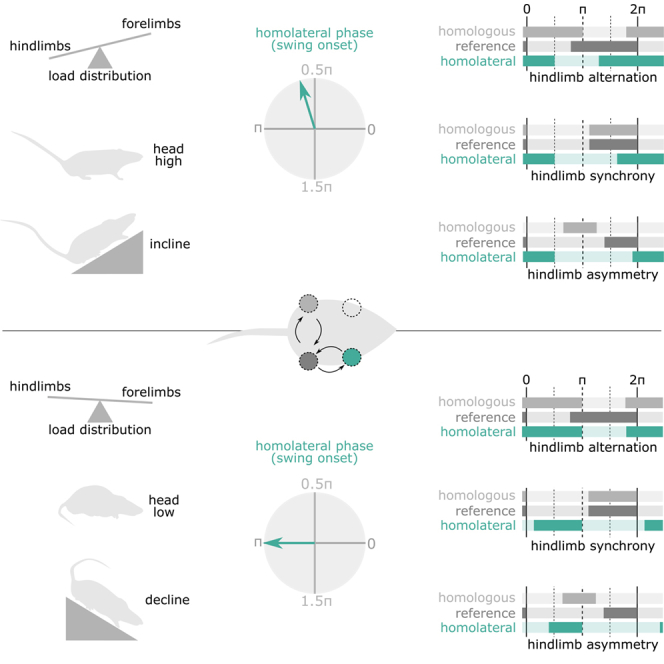 Figure 1
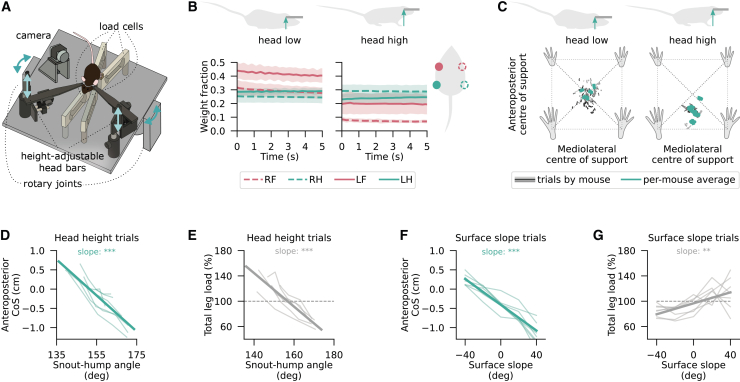 Figure 2
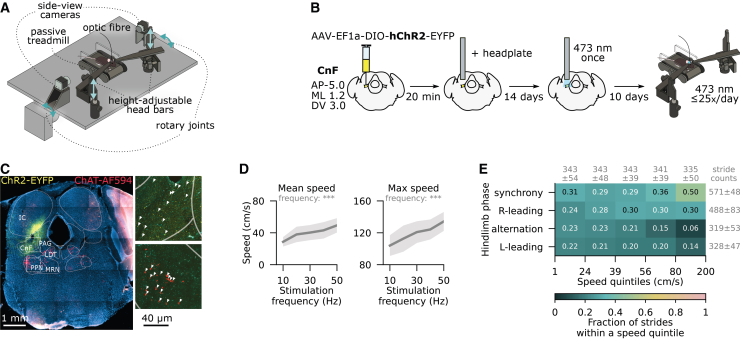 Figure 3
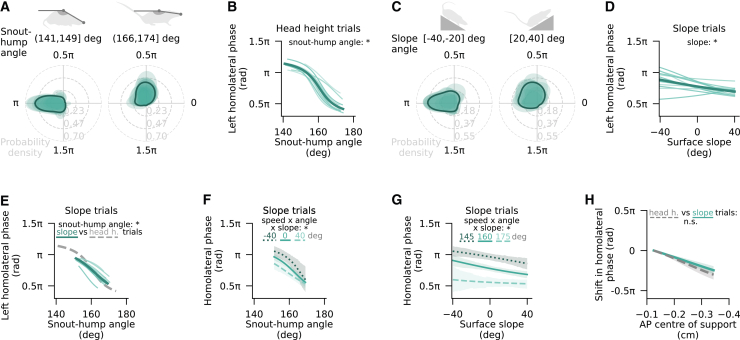 Figure 4
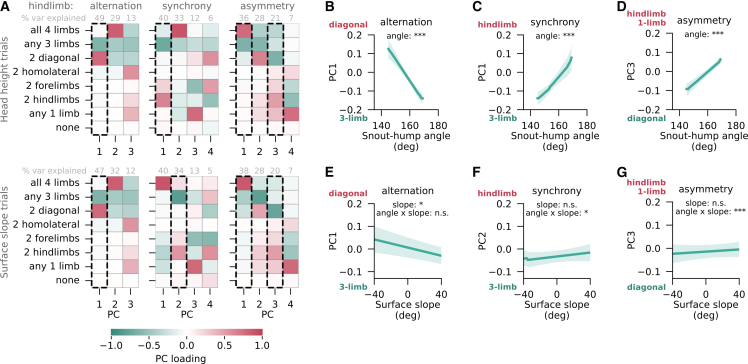 Figure 5
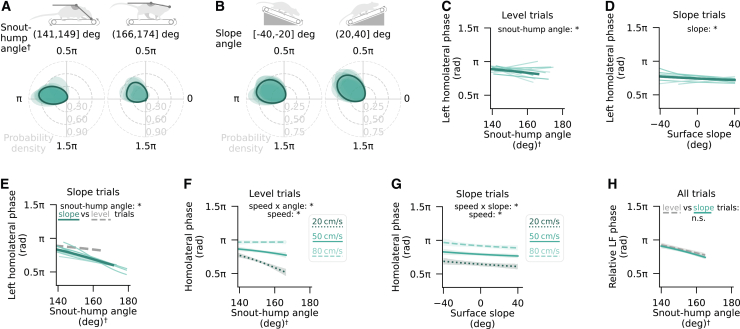 Figure 6
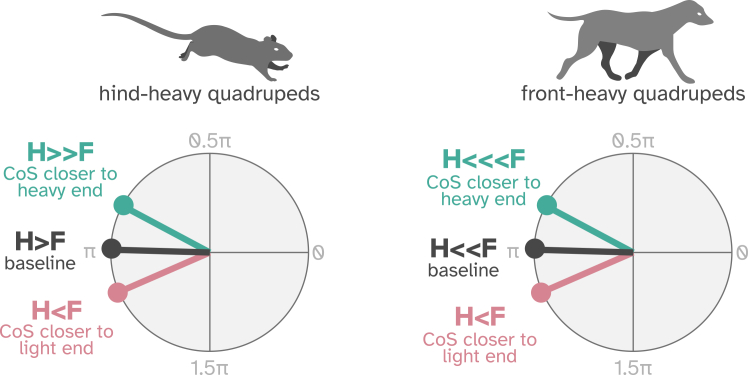 Figure 7
Peer Reviews
No public reviews on file for this paper yet. If you reviewed it on a platform where reviews are public (OpenReview, ICLR, NeurIPS, ICML), you can paste yours below so the community can read it here.
Videos
No videos yet. Explain this paper in a talk, walkthrough, or lecture? Add one.
Taxonomy
TopicsCardiomyopathy and Myosin Studies · Cellular Mechanics and Interactions · Physiological and biochemical adaptations