Artificial Intelligence Applications for Automated Data Extraction and Secondary Use of Clinical Information in Uro-oncology: A Systematic Review
Julian Greß, Gordon Otto, Sebastian Sommer, Markus K. Schuler, Shahbaz Khan, Florian Schröder, Christoph Seidel

TL;DR
AI can accurately extract clinical data from uro-oncology records, but most systems lack validation and are not yet ready for widespread clinical use.
Contribution
This systematic review identifies key limitations in AI-driven clinical data extraction in uro-oncology and proposes standards for reliable deployment.
Findings
AI models achieve high accuracy (F1 > 0.90) in structured data extraction from uro-oncology documents.
86% of studies rely on internal validation, with limited external validation or clinical readiness assessments.
Most AI systems are single-center and lack transparency in calibration and implementation frameworks.
Abstract
Artificial intelligence systems can extract clinical information from uro-oncology documents with consistently high technical performance, frequently achieving F1 scores above 0.90 and demonstrating meaningful efficiency gains. However, this systematic review reveals that clinical readiness remains limited: (1) 85% of models lack any external validation, (2) calibration and interpretability are rarely reported, and (3) studies are predominantly single center, retrospective, and methodologically heterogeneous. This disconnect between accuracy and trustworthiness underscores the need for a decisive shift toward rigorous external and temporal validation, human-in-the-loop verification, transparent calibration reporting, fairness assessments, and implementation-science frameworks. Only through such standards can artificial intelligence–driven data extraction become reliable, safe, and…
Genes, proteins, chemicals, diseases, species, mutations and cell lines named across the full text — each resolved to its canonical identifier and authoritative record.
Click any figure to enlarge with its caption.
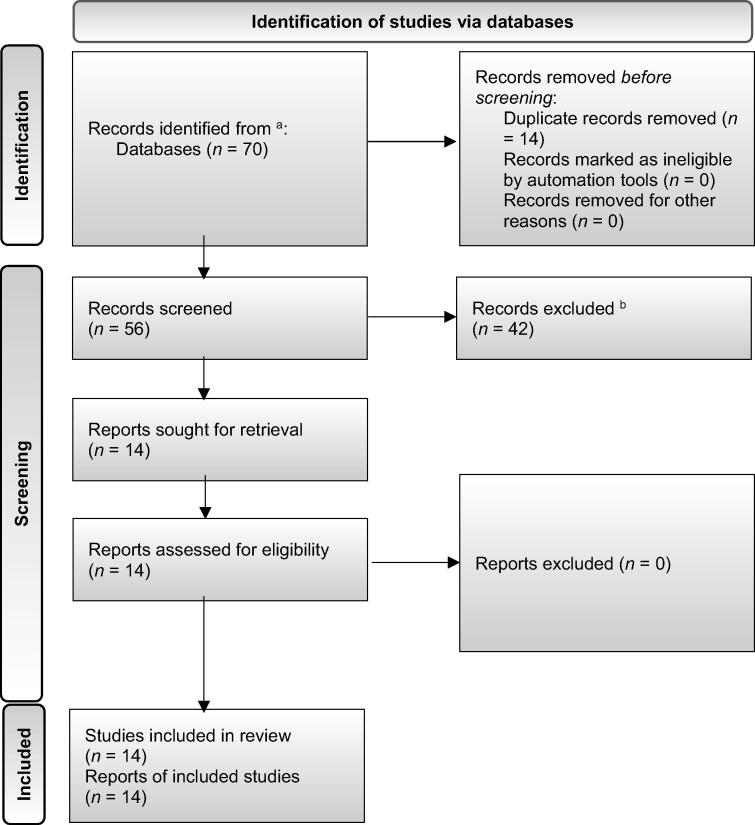 Figure 1
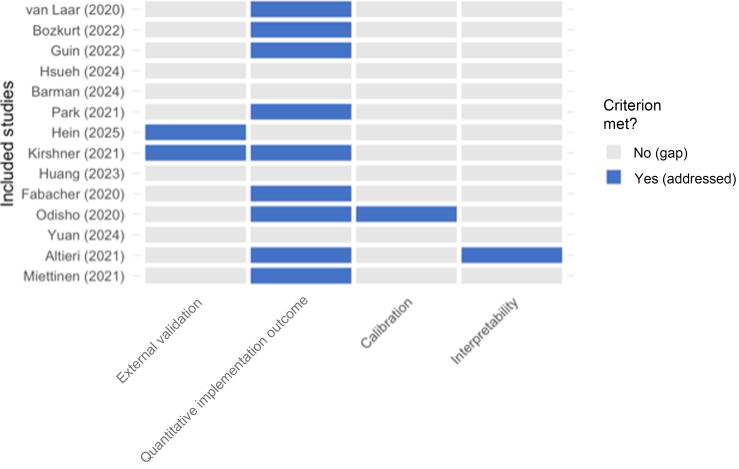 Figure 2
Peer Reviews
No public reviews on file for this paper yet. If you reviewed it on a platform where reviews are public (OpenReview, ICLR, NeurIPS, ICML), you can paste yours below so the community can read it here.
Videos
No videos yet. Explain this paper in a talk, walkthrough, or lecture? Add one.
Taxonomy
TopicsArtificial Intelligence in Healthcare and Education · Machine Learning in Healthcare · AI in cancer detection