Parallel processing of distinct facial signals for the rapid evaluation of social agents
Zihe Wei, Amanda K. Robinson, Alan J. Pegna, Jessica Taubert

TL;DR
The human brain rapidly processes different facial signals, such as emotion and sex, using separate neural mechanisms within less than a tenth of a second.
Contribution
The study provides empirical evidence for the distributed model of face perception by showing distinct processing timelines for emotional valence and perceived sex.
Findings
The brain distinguishes emotional valence and perceived sex from unfamiliar faces in under 95 ms.
Emotional valence is decoded earlier than perceived sex, as shown by time-resolved analyses.
Different facial signals are processed by separate neural mechanisms, supporting the distributed model.
Abstract
The distributed model of primate face perception proposes that distinct facial signals, such as emotional valence and sex, are processed by separate neural mechanisms. A key prediction is that cues about a face’s emotion and sex are extracted at different processing stages. To test this, we decoded time-resolved patterns of brain activity evoked by a large set of unfamiliar, naturalistic faces. Behavioral ratings were first collected to characterize the perceived emotional valence and sex of 900 faces. Electrophysiological recordings were then obtained while 40 participants passively viewed all face stimuli. The brain reliably distinguished both emotional valence and perceived sex from a brief glance, with decoding emerging in under 95 ms. Crucially, emotional valence showed earlier peak decoding than perceived sex, consistent with time-resolved representational similarity analyses.…
Genes, proteins, chemicals, diseases, species, mutations and cell lines named across the full text — each resolved to its canonical identifier and authoritative record.
Click any figure to enlarge with its caption.
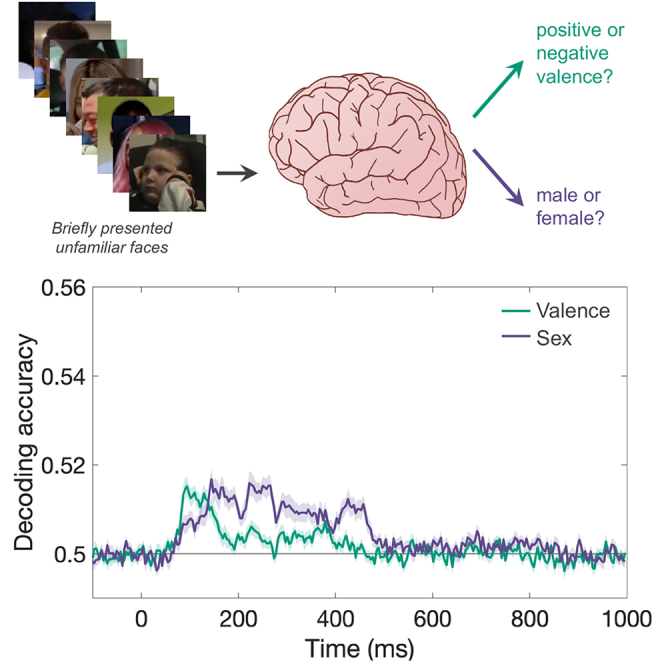 Figure 1
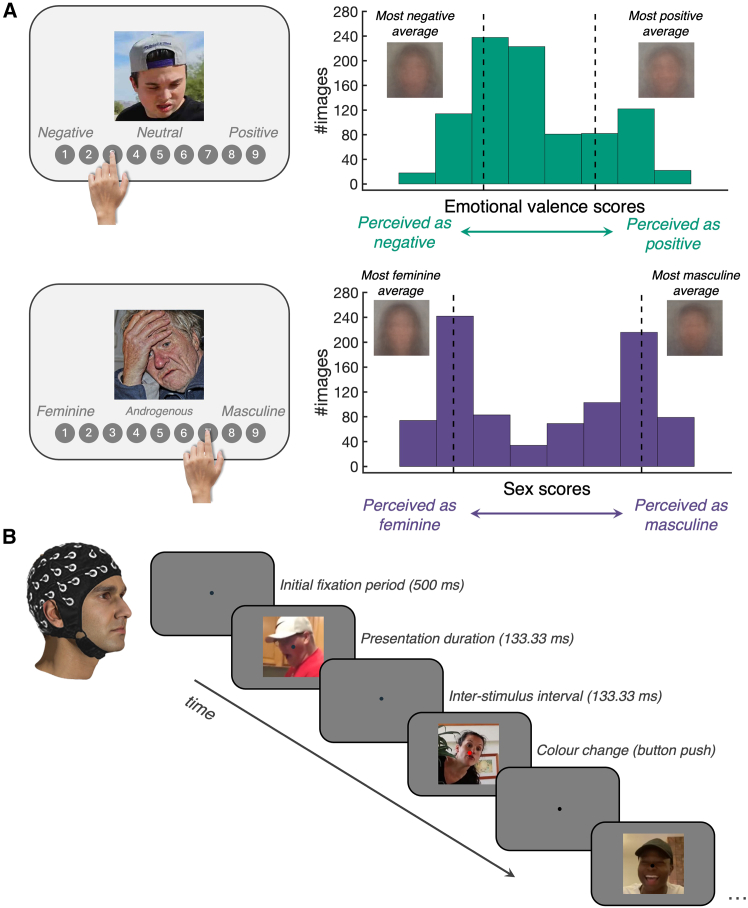 Figure 2
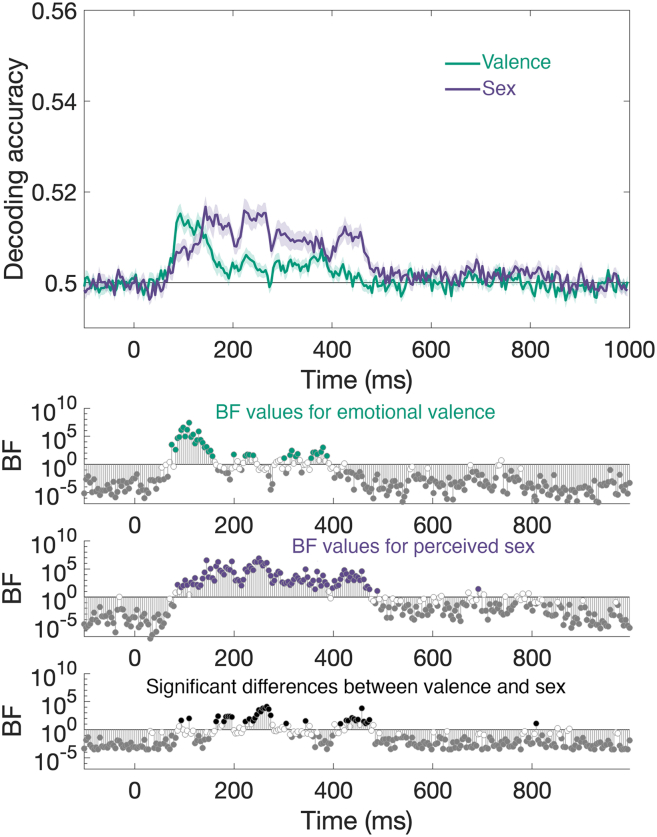 Figure 3
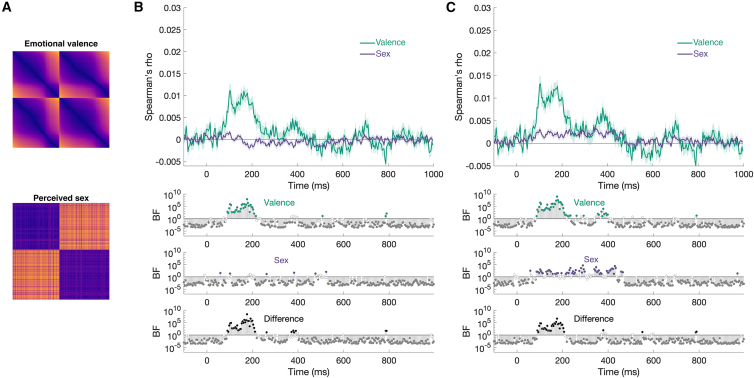 Figure 4
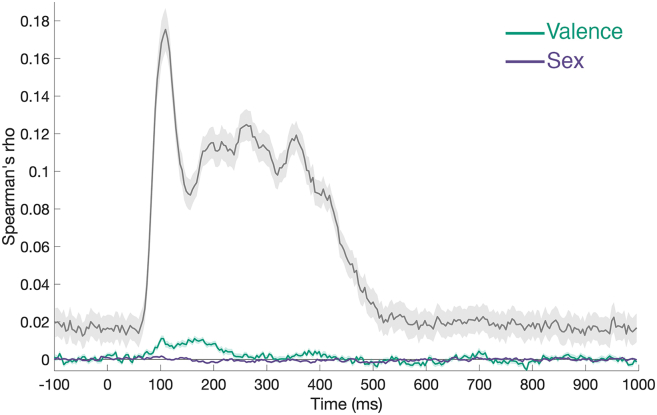 Figure 5
Peer Reviews
No public reviews on file for this paper yet. If you reviewed it on a platform where reviews are public (OpenReview, ICLR, NeurIPS, ICML), you can paste yours below so the community can read it here.
Videos
No videos yet. Explain this paper in a talk, walkthrough, or lecture? Add one.
Taxonomy
TopicsEmotion and Mood Recognition · Face recognition and analysis · Face and Expression Recognition