Impact of Circular Stapler Size on Short‐Term Outcomes and Long‐Term Quality of Life After McKeown Esophagectomy
Suguru Maruyama, Katsutoshi Shoda, Yoshihiko Kawaguchi, Ryo Saito, Wataru Izumo, Kensuke Shiraishi, Shinji Furuya, Hidetake Amemiya, Hiromichi Kawaida, Daisuke Ichikawa

TL;DR
This study found that using a 21mm circular stapler during esophagectomy leads to worse long-term quality of life, particularly with swallowing issues, compared to a 23mm stapler, though short-term outcomes are similar.
Contribution
The study provides new evidence on the long-term quality of life impact of circular stapler size in esophagectomy patients.
Findings
Short-term outcomes like anastomotic leakage and stenosis were not significantly different between 21mm and 23mm stapler groups.
Patients with 21mm staplers reported significantly worse meal-related quality of life and dysphagia compared to those with 23mm staplers.
The study found no significant differences in short-term surgical complications between the two stapler sizes.
Abstract
The circular stapling technique (CST) is reported to be a simple and time‐efficient method; however, it is associated with a high incidence of anastomotic stenosis for McKeown esophagectomy. Meanwhile, the impact of circular stapler size remains controversial. We aimed to investigate the impact of circular stapler size on both short‐term outcomes and long‐term quality of life (QOL) after McKeown esophagectomy. In total, 63 consecutive patients who underwent McKeown esophagectomy for esophageal cancer between 2019 and 2022 were eligible. We examined the association between circular stapler size and short‐term outcomes and long‐term QOL using the PGSAS‐37. 35 (55.6%) patients underwent anastomosis with a 21 mm stapler, whereas 28 (44.4%) patients used a 23 mm stapler. No significant differences were observed between the groups. The incidence of anastomotic leakage did not differ…
Genes, proteins, chemicals, diseases, species, mutations and cell lines named across the full text — each resolved to its canonical identifier and authoritative record.
Click any figure to enlarge with its caption.
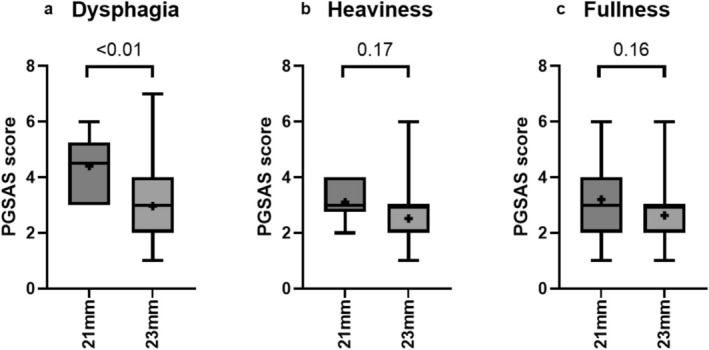 Figure 1
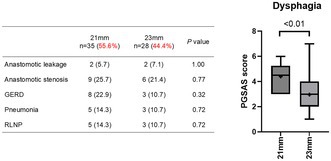 Figure 2
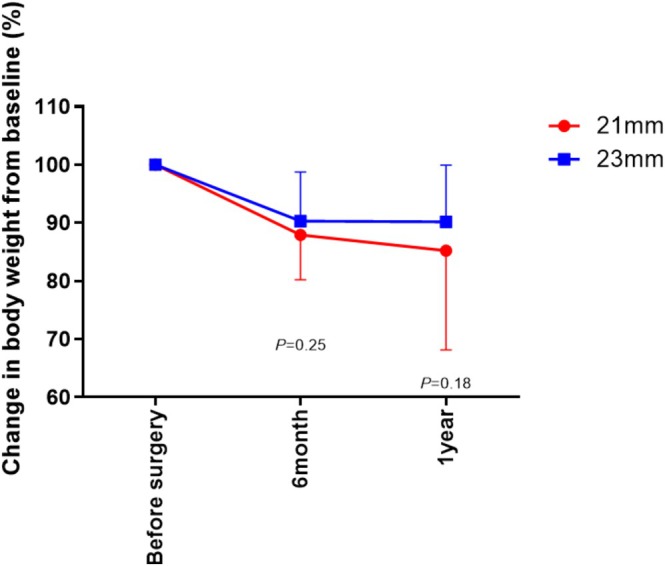 Figure 3
Peer Reviews
No public reviews on file for this paper yet. If you reviewed it on a platform where reviews are public (OpenReview, ICLR, NeurIPS, ICML), you can paste yours below so the community can read it here.
Videos
No videos yet. Explain this paper in a talk, walkthrough, or lecture? Add one.
Taxonomy
TopicsEsophageal Cancer Research and Treatment · Esophageal and GI Pathology · Gastric Cancer Management and Outcomes