Intraoperative Evaluation of Bladder Perfusion Using Indocyanine Green Fluorescence Imaging During Total Pelvic Exenteration After Interruption of Blood Flow From the Internal Iliac Vessels
Mamoru Uemura, Chikako Kusunoki, Mao Osaki, Hiroshi Kusafuka, Satoshi Higuchi, Yuki Sekido, Mitsunobu Takeda, Tsuyoshi Hata, Atsushi Hamabe, Takayuki Ogino, Norikatsu Miyoshi, Koji Munakata, Hirofumi Ota, Yuichiro Doki, Hidetoshi Eguchi

TL;DR
This study shows that bladder blood flow remains intact after cutting off internal iliac vessels, thanks to blood from the pubic side, supporting safer cancer surgeries.
Contribution
Demonstrates bladder perfusion is preserved via pubic-side blood flow after internal iliac vessel resection using ICG fluorescence imaging.
Findings
Bladder perfusion was successfully visualized in all patients after internal iliac vessel division.
Perfusion originated exclusively from the pubic side, confirming alternative blood supply routes.
Older age was significantly associated with delayed visualization of bladder perfusion.
Abstract
In lateral lymph node dissection (LLND) for locally advanced or recurrent rectal cancer, concomitant resection of the internal iliac vessels is sometimes required. Because the bladder receives its primary blood supply from branches of the internal iliac artery, concerns arise regarding bladder perfusion when these vessels are resected. However, the extent to which bladder perfusion depends on the internal iliac system remains unclear. Between 2020 and 2023, 25 patients with locally advanced or recurrent rectal cancer who underwent total pelvic exenteration (TPE) with bilateral LLND were prospectively enrolled. After division of all ventral branches of the internal iliac vessels, including the umbilical, obturator, and vesical vessels, bladder perfusion was evaluated intraoperatively using indocyanine green (ICG) fluorescence imaging. Time to visualization of bladder perfusion was…
Genes, proteins, chemicals, diseases, species, mutations and cell lines named across the full text — each resolved to its canonical identifier and authoritative record.
Click any figure to enlarge with its caption.
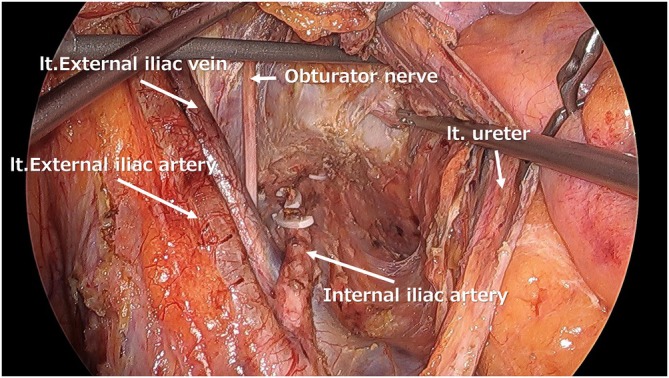 Figure 1
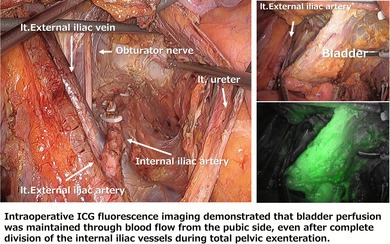 Figure 2
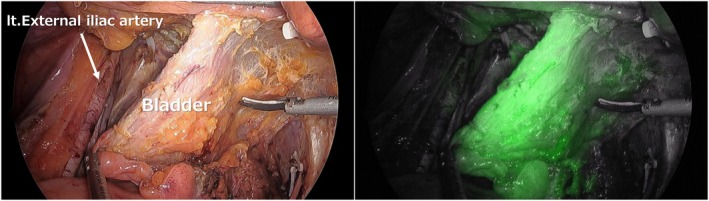 Figure 3
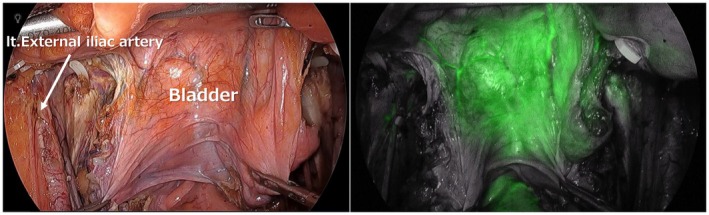 Figure 4
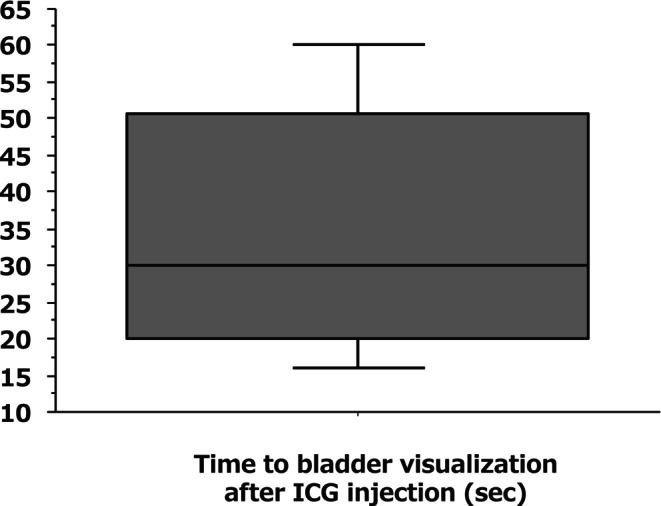 Figure 5
Peer Reviews
No public reviews on file for this paper yet. If you reviewed it on a platform where reviews are public (OpenReview, ICLR, NeurIPS, ICML), you can paste yours below so the community can read it here.
Videos
No videos yet. Explain this paper in a talk, walkthrough, or lecture? Add one.
Taxonomy
TopicsColorectal Cancer Surgical Treatments · Ureteral procedures and complications · Reconstructive Surgery and Microvascular Techniques