Prognostic Utility of the Preoperative Cachexia Index in Patients Undergoing Emergency Laparotomy
Naoko Fukushima, Takahiro Masuda, Kazuto Tsuboi, Masami Yuda, Keita Takahashi, Fumiaki Yano, Ken Eto

TL;DR
A new index called the cachexia index helps predict survival chances in patients undergoing emergency abdominal surgery, based on muscle mass, nutrition, and inflammation.
Contribution
The study demonstrates that the preoperative cachexia index is a novel and effective predictor of mortality in emergency laparotomy patients.
Findings
Patients with a low cachexia index had significantly higher in-hospital mortality (20.0%) compared to those with a high index (5.0%).
The cachexia index was an independent predictor of in-hospital mortality alongside age and chronic renal failure.
One-year mortality was higher in the low cachexia index group (34.2%) compared to the high index group (13.4%).
Abstract
Emergency laparotomy is associated with high morbidity and mortality rates. The cachexia index, an objective index that incorporates muscle mass, nutrition, and inflammation, has been shown to predict outcomes in patients with cancer. The present study aimed to investigate the prognostic significance of preoperative cachexia index in patients undergoing emergency laparotomy. This retrospective study included data from 404 patients who underwent emergency laparotomy between January 2013 and March 2023. The cachexia index was calculated as: (psoas muscle index × albumin level [g/dL]/neutrophil‐to‐lymphocyte ratio). Patients were divided into low and high cachexia index groups based on sex‐specific receiver operating characteristic curve derived cut‐off values. Of 404 patients (median age, 74 years [44.6% female]), 120 (30%) exhibited a low cachexia index. In‐hospital mortality was…
Genes, proteins, chemicals, diseases, species, mutations and cell lines named across the full text — each resolved to its canonical identifier and authoritative record.
Click any figure to enlarge with its caption.
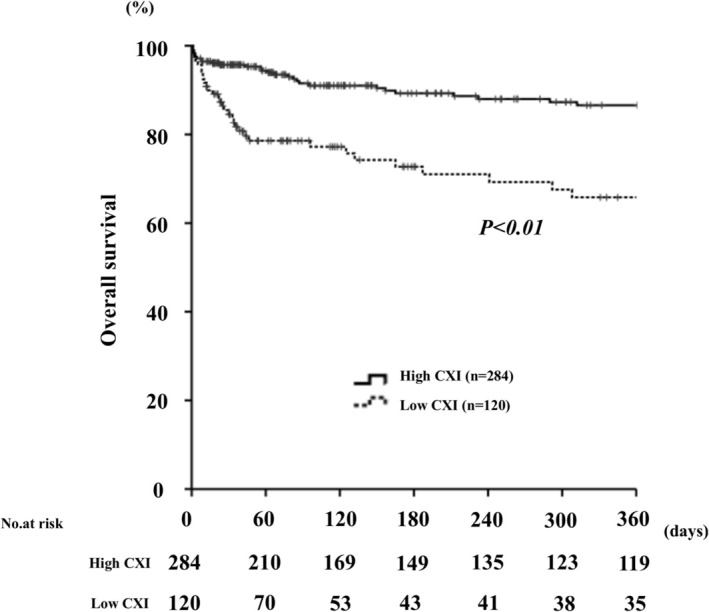 Figure 1
 Figure 2
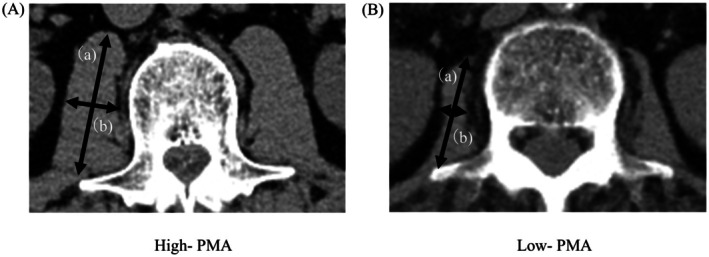 Figure 3
Peer Reviews
No public reviews on file for this paper yet. If you reviewed it on a platform where reviews are public (OpenReview, ICLR, NeurIPS, ICML), you can paste yours below so the community can read it here.
Videos
No videos yet. Explain this paper in a talk, walkthrough, or lecture? Add one.
Taxonomy
TopicsNutrition and Health in Aging · Cardiac, Anesthesia and Surgical Outcomes · Hip and Femur Fractures