Improvements to dark experience replay and reservoir sampling for better balance between consolidation and plasticity
Taisuke Kobayashi

TL;DR
This paper improves dark experience replay and reservoir sampling to better balance memory retention and adaptability in continual learning.
Contribution
The study introduces automatic weight adaptation and strategies to handle inconsistent data in DER and RS.
Findings
The proposed improvements achieved steady performance gains across multiple learning tasks.
Blocking inconsistent data and correcting past outputs reduced negative impacts of distribution shifts.
Stratified buffers and generalized acceptance probability enhanced reservoir sampling efficiency.
Abstract
Continual learning is one of the most essential abilities for autonomous agents, which can incrementally learn daily-life skills even with limited computer resources. To achieve this goal, a simple yet powerful method called dark experience replay (DER) was recently proposed. DER mitigates catastrophic forgetting, where the skills acquired in the past are unintentionally forgotten when learning new skills, by stochastically storing streaming data in a reservoir sampling (RS) buffer and relearning them or retaining their past outputs. However, because DER considers multiple objectives, it does not function properly without appropriate weighting for each problem. In addition, the ability to retain past outputs inhibits learning if past outputs are inconsistent owing to distribution shifts or other effects. This is because of the trade-off between memory consolidation and plasticity. The…
Genes, proteins, chemicals, diseases, species, mutations and cell lines named across the full text — each resolved to its canonical identifier and authoritative record.
Click any figure to enlarge with its caption.
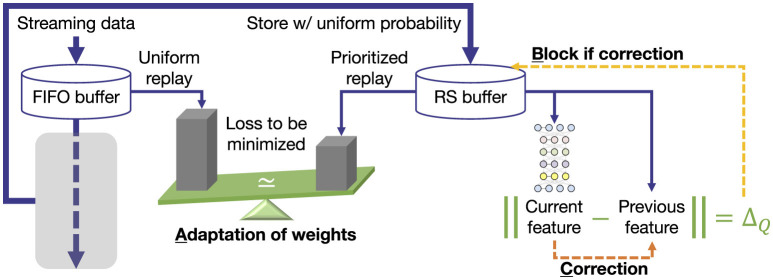 Figure 1
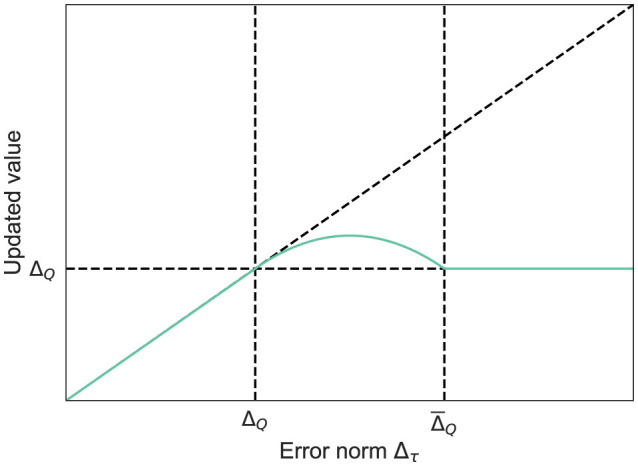 Figure 2
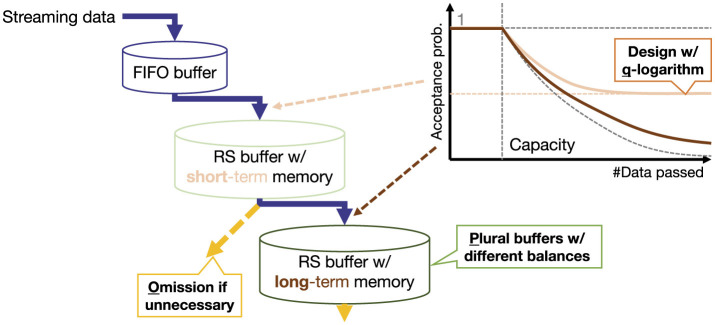 Figure 3
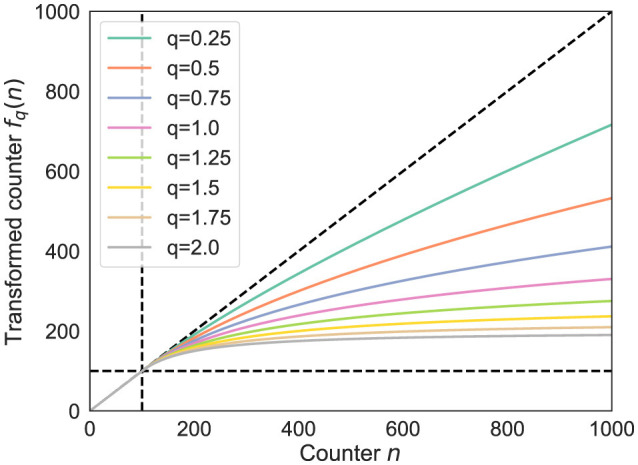 Figure 4
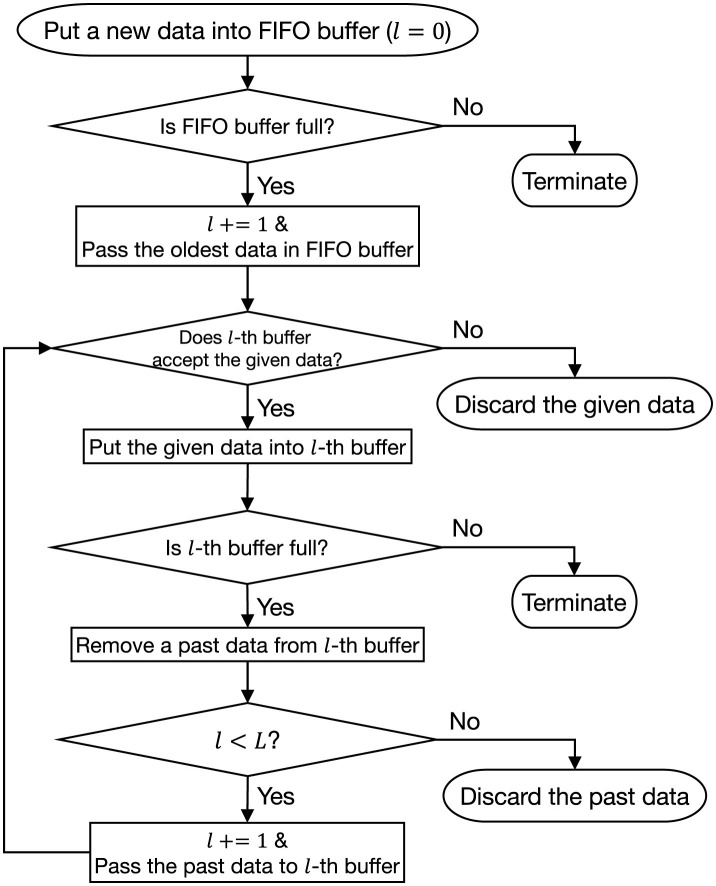 Figure 5
 Figure 6
 Figure 7
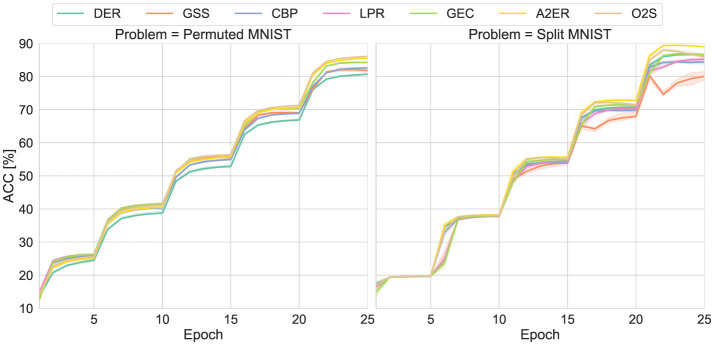 Figure 8
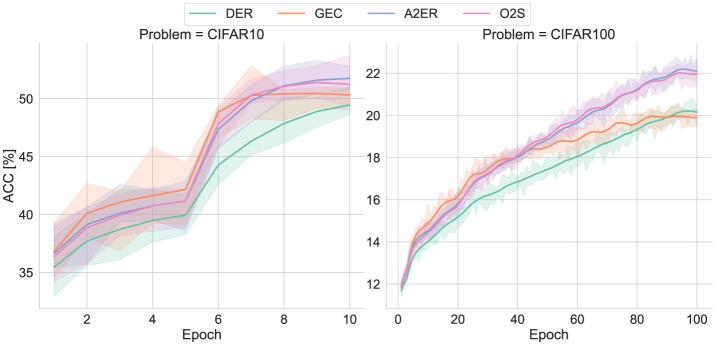 Figure 9
Peer Reviews
No public reviews on file for this paper yet. If you reviewed it on a platform where reviews are public (OpenReview, ICLR, NeurIPS, ICML), you can paste yours below so the community can read it here.
Videos
No videos yet. Explain this paper in a talk, walkthrough, or lecture? Add one.
Taxonomy
TopicsNeural Networks and Reservoir Computing · Domain Adaptation and Few-Shot Learning · Ferroelectric and Negative Capacitance Devices