Integrated Chemical and Hazard Assessment of Plastic Pellets from the Toconao Spill (Galicia, Spain) Indicates Potential for Environmental Harm
Carmen Morales-Caselles, Andy M. Booth, Juan Baztan, Line-Marie Berget, Eric Carmona, Natàlia Corcoll, Hubert Dirven, Montserrat Filella, Daniela Gómez-Martínez, Dorte Herzke, Hege Hjertholm, Annika Jahnke, Per Meyer Jepsen, Azora König Kardgar, Claudia Lorenz, Neema Negi

TL;DR
A plastic pellet spill in Spain released harmful chemicals that could damage marine life and ecosystems, highlighting the need for better regulations.
Contribution
This study integrates chemical analysis and toxicity testing to assess the environmental risks of a specific plastic pellet spill.
Findings
Over 50 chemical substances, including additives and nonintentionally added substances, were identified in the pellets.
Toxicity assays showed significant effects on microalgae and copepods, suggesting risks to primary producers and food webs.
Zebrafish embryos showed no developmental effects, while human cells had modest viability reductions.
Abstract
Plastic pellet spills are a major source of microplastic pollution, and pellets are found on beaches worldwide. However, the potential environmental impacts of these spills remain poorly understood. In December 2023, approximately 25,000 kg of polyethylene pellets containing high concentrations of the additive Tinuvin UV-622 were spilled during a shipping accident off the northern coast of Portugal. Pellets collected from an affected beach located in Galicia, Spain, along with solvent extracts and aqueous leachates, were subjected to both target and nontarget chemical analyses and tested in a battery of toxicity assays including a green microalga (Raphidocelis subcapitata), a marine copepod (Apocyclops royi), a fish model (Danio rerio), and a human cell line. Chemical screening identified on the order of 50 chemical substances in addition to Tinuvin UV-622, including a range of known…
Genes, proteins, chemicals, diseases, species, mutations and cell lines named across the full text — each resolved to its canonical identifier and authoritative record.
Click any figure to enlarge with its caption.
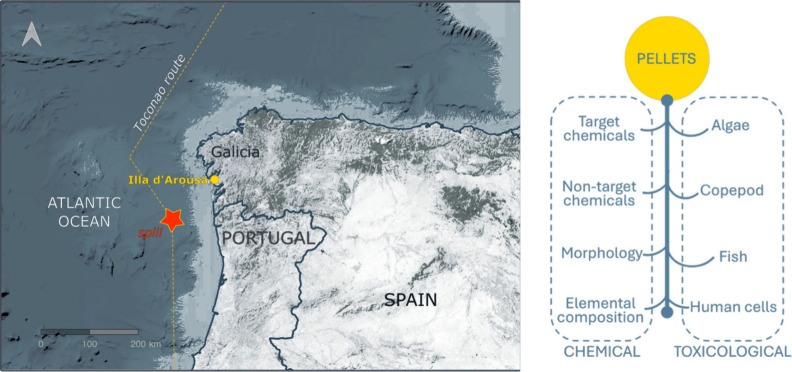 Figure 1
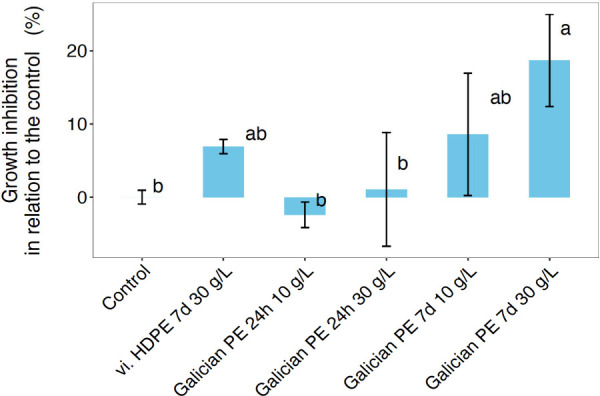 Figure 2
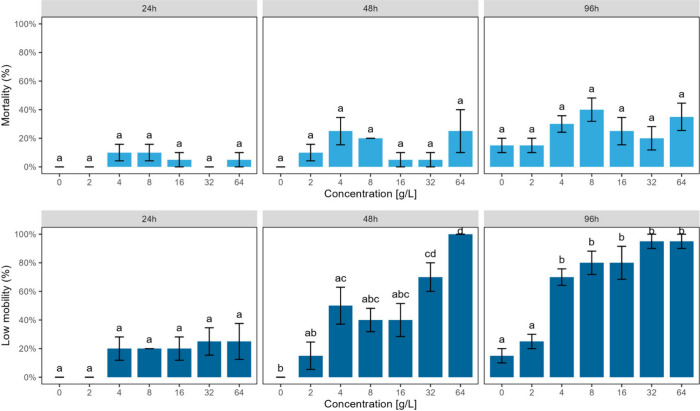 Figure 3
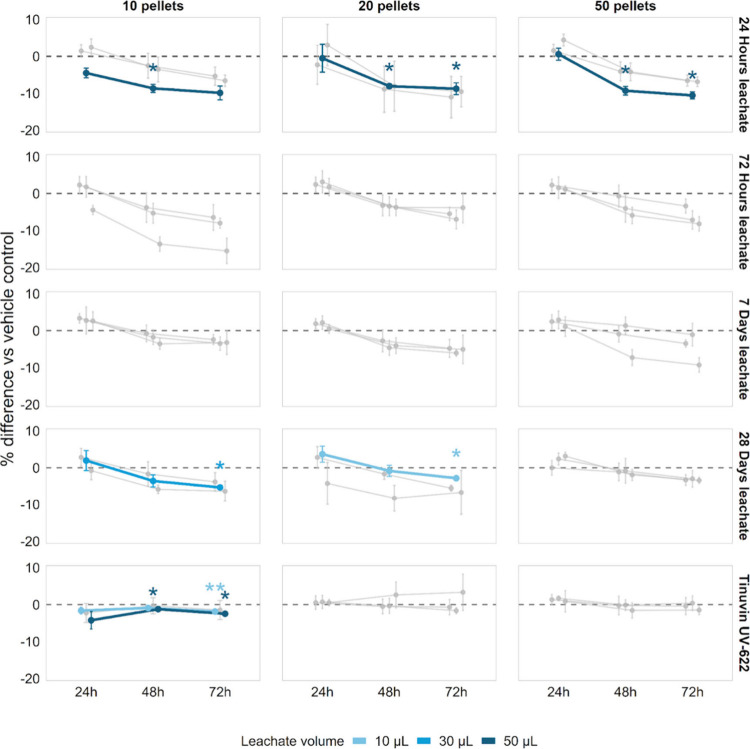 Figure 4
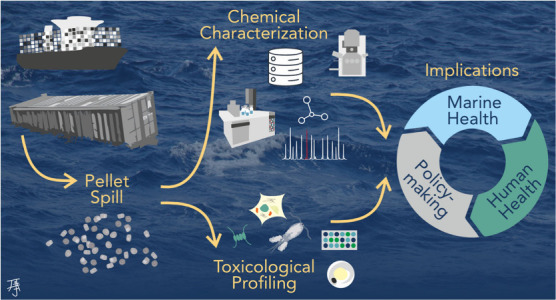 Figure 5
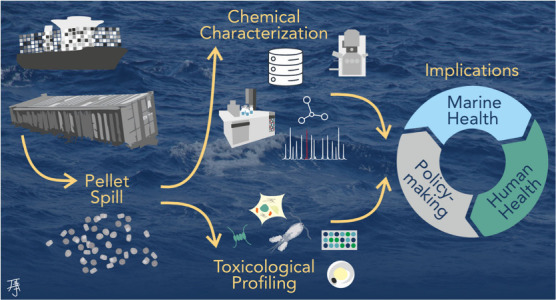 Figure 6
Peer Reviews
No public reviews on file for this paper yet. If you reviewed it on a platform where reviews are public (OpenReview, ICLR, NeurIPS, ICML), you can paste yours below so the community can read it here.
Videos
No videos yet. Explain this paper in a talk, walkthrough, or lecture? Add one.
Taxonomy
TopicsMicroplastics and Plastic Pollution · Marine Biology and Environmental Chemistry · Effects and risks of endocrine disrupting chemicals