Tea (Camellia sinensis) Extract-Mediated Green Synthesis of Co3O4 and Co3O4@Graphene Nanocomposites for Multifunctional Applications in Pollutant Degradation, Sensing, and Energy Storage
Lakshmanan Ganesh, Sundararajan Ashok Kumar, Balamurugan Arumugam, Mariadhas Jarvin, Daniel Rani Rosaline, Nelson Y. Dzade, Savariroyan Stephen Rajkumar Inbanathan

TL;DR
Researchers developed a green method to create Co3O4 and graphene nanocomposites using tea extract, which can be used to break down pollutants, detect chemicals, and store energy.
Contribution
A novel green synthesis method using tea extract to create Co3O4@Graphene nanocomposites with multifunctional applications.
Findings
Co3O4@Graphene nanocomposites showed 80% catalytic efficiency in degrading methylene blue dye.
The nanocomposites had a detection limit of 0.01–224 μM for low-DPA with high sensitivity.
The material exhibited a maximum specific capacitance of 349 F/g at 5 mV/s scan rate for energy storage.
Abstract
A novel solution-mixing method was proposed to synthesize Co3O4/graphene nanocomposites (Co3O4@Gr) using a green tea leaf (Camellia sinensis) extract as the reducing agent. XRD analysis shows that the as-prepared Co3O4@Gr exhibits a cubic spinel crystal structure. From morphological analysis, the obtained Co3O4 NS forms spherical clusters that are uniformly distributed on the graphene surface. FT-IR and Raman analyses confirmed the strong molecular and vibrational interactions between the Co3O4 NS and Gr. The suppressed PL intensity peak of the Co3O4@Gr NCs indicated significant inhibition in the recombination of charge carriers between the hybrid orbitals within the composites. As a result, the catalytic efficiency of Co3O4@Gr NCs increased to 80% compared to pristine Co3O4, which exhibited only 45% efficiency against methylene blue (MB) dye. Moreover, the as-prepared NCs exhibited a…
Genes, proteins, chemicals, diseases, species, mutations and cell lines named across the full text — each resolved to its canonical identifier and authoritative record.
Click any figure to enlarge with its caption.
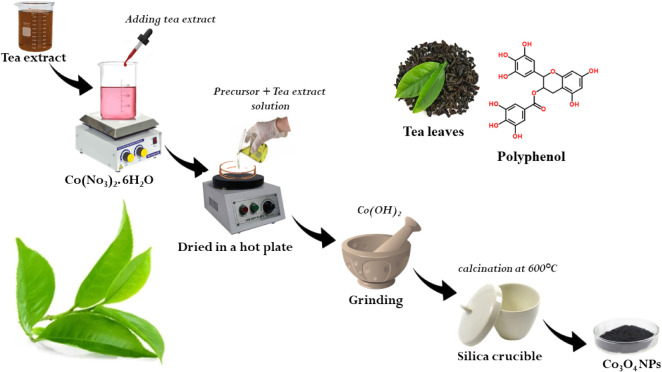 Figure 1
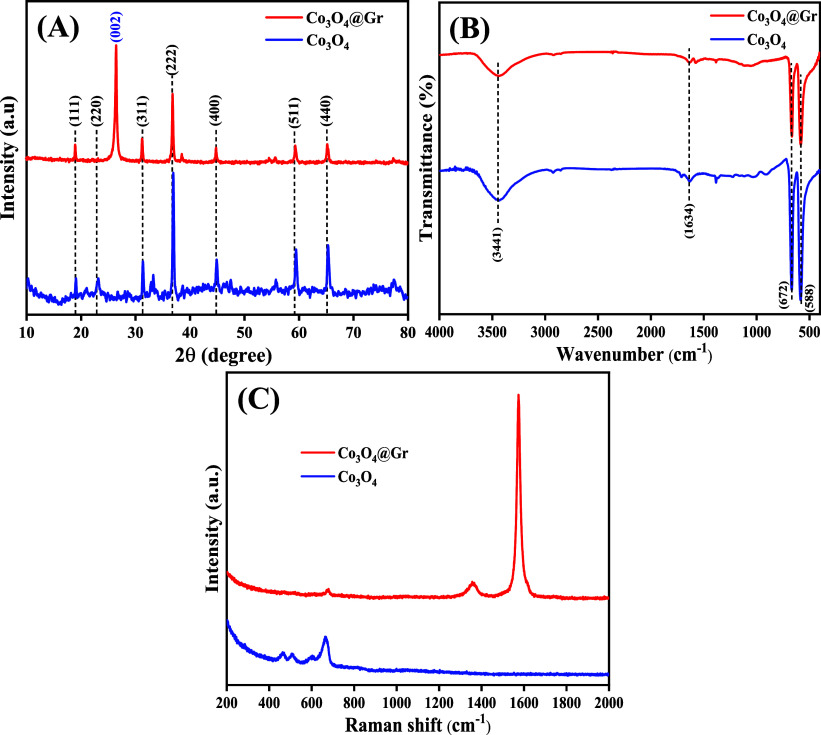 Figure 2
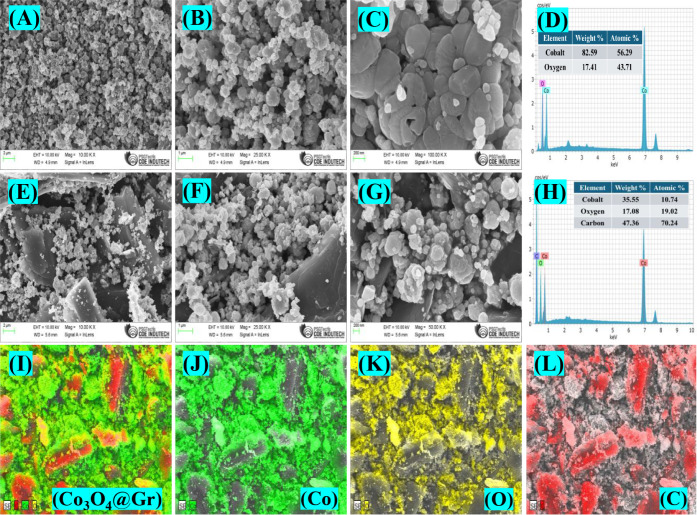 Figure 3
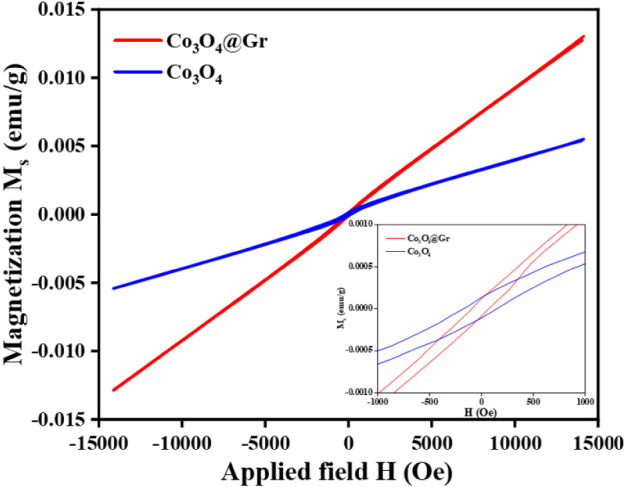 Figure 4
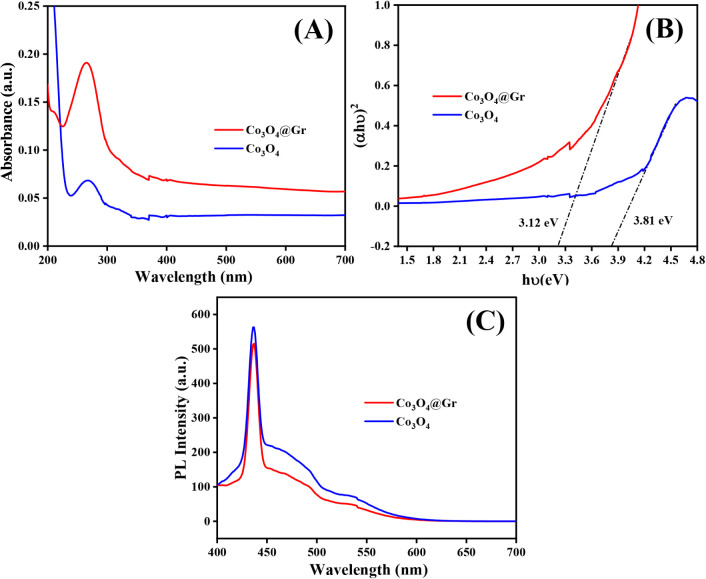 Figure 5
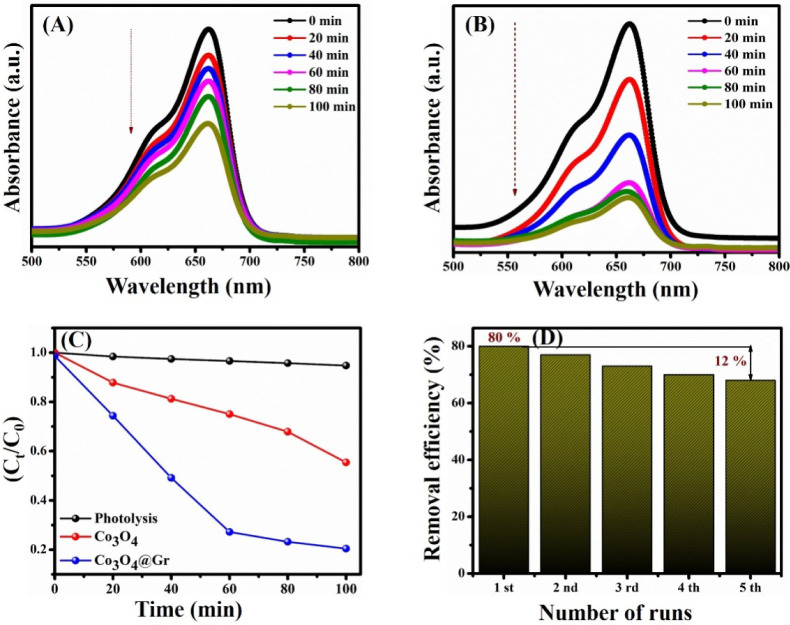 Figure 6
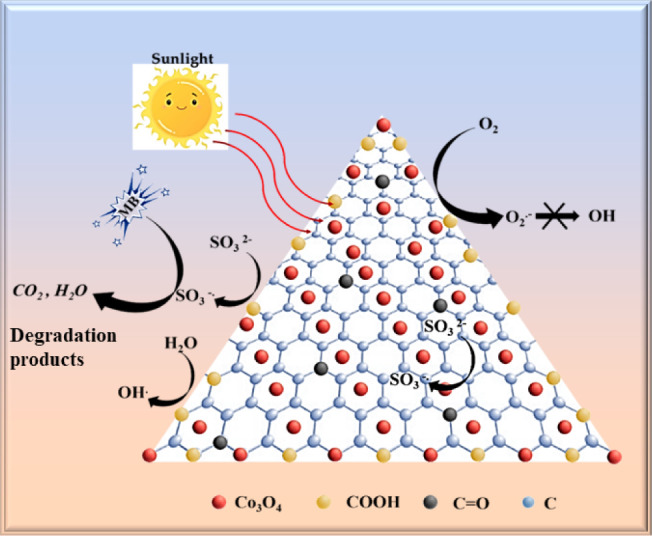 Figure 7
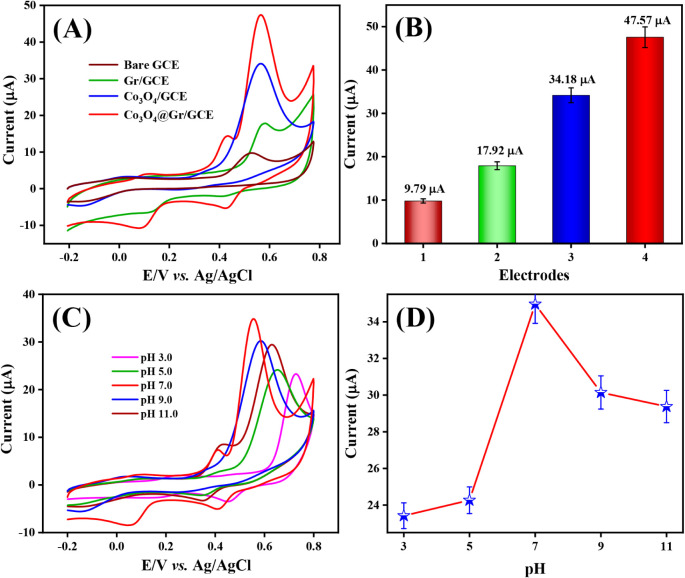 Figure 8
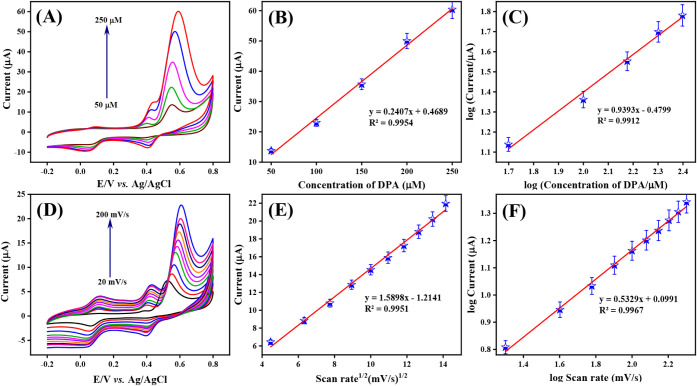 Figure 9
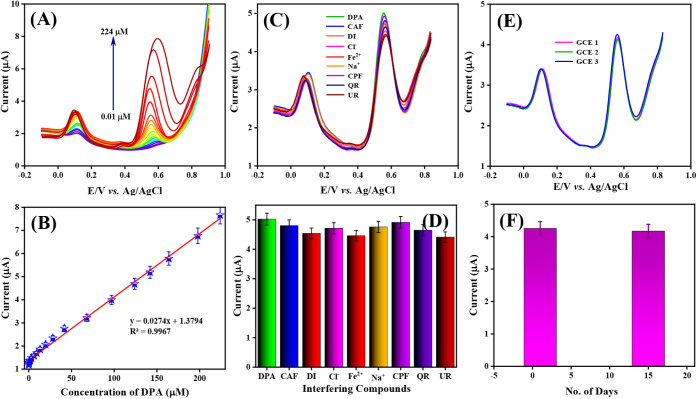 Figure 10
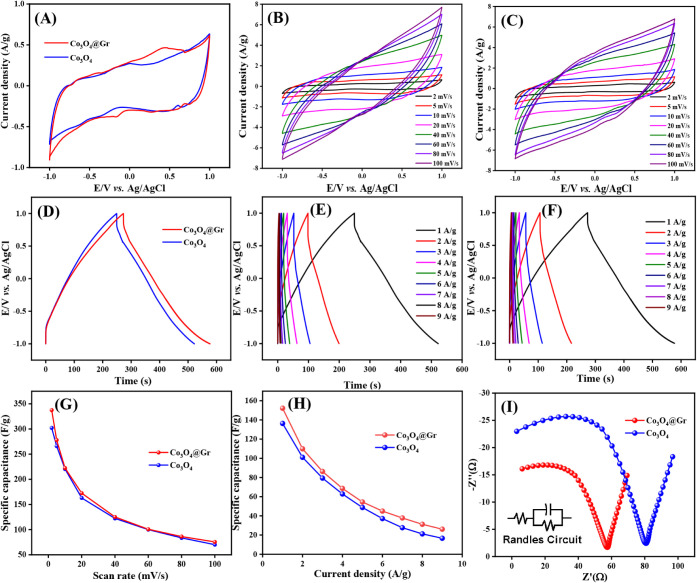 Figure 11
 Figure 12
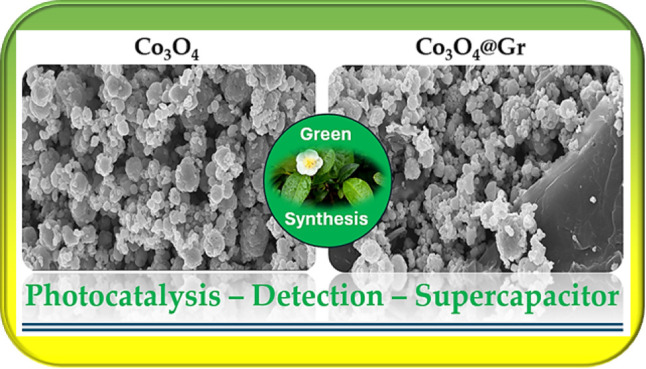 Figure 13
 Figure 14
 Figure 15
 Figure 16
 Figure 17
 Figure 18
 Figure 19
 Figure 20
 Figure 21
 Figure 22
 Figure 23
 Figure 24
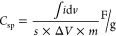 Figure 25
 Figure 26
Peer Reviews
No public reviews on file for this paper yet. If you reviewed it on a platform where reviews are public (OpenReview, ICLR, NeurIPS, ICML), you can paste yours below so the community can read it here.
Videos
No videos yet. Explain this paper in a talk, walkthrough, or lecture? Add one.
Taxonomy
TopicsSupercapacitor Materials and Fabrication · Electrochemical sensors and biosensors · Magnetic Properties and Synthesis of Ferrites