Uptake and Biotransformation Govern the Toxicity of Reactive Acrylamides in an In Vivo Zebrafish Embryo Model: Implications for NAM-Based Hazard Assessment
Nico Grasse, Stefan Scholz, Thorsten Reemtsma, Qiuguo Fu

TL;DR
This study uses zebrafish embryos to show that the toxicity of acrylamides depends on how they are taken up and transformed in the body, not just their chemical reactivity.
Contribution
The study identifies a new detoxification pathway involving mercapturic acid-taurine conjugates for acrylamides in zebrafish embryos.
Findings
Acute toxicity of acrylamides in zebrafish embryos varied over 2 orders of magnitude.
Toxicity was influenced by hydrophobicity and electrophilic reactivity, but also by biotransformation and uptake.
Nontarget screening identified 90 transformation products, including mercapturic acid-taurine conjugates for eight compounds.
Abstract
Acrylamides are widely used in polymer manufacturing and adhesives, and their electrophilic nature raises toxicological concerns when released into aquatic environments. However, their physicochemical diversity complicates the prediction of environmental fate and toxicity. To elucidate the main drivers of their toxicity in aquatic organisms, we investigated ten structurally diverse monomeric acrylamides and methacrylamides in zebrafish embryos (Danio rerio) (ZFE). Acute toxicity varied over 2 orders of magnitude (0.16–33 mM) and showed a moderate correlation with hydrophobicity (logK lipw, R 2 = 0.87) and intrinsic electrophilic reactivity (logk GSH). Measured bioconcentration factors of highly polar, reactive compounds (e.g., NMBA) for ZFE deviated up to 16-fold from model predictions, indicating limited uptake or significant biotransformation. This indicates an impact of…
Genes, proteins, chemicals, diseases, species, mutations and cell lines named across the full text — each resolved to its canonical identifier and authoritative record.
Click any figure to enlarge with its caption.
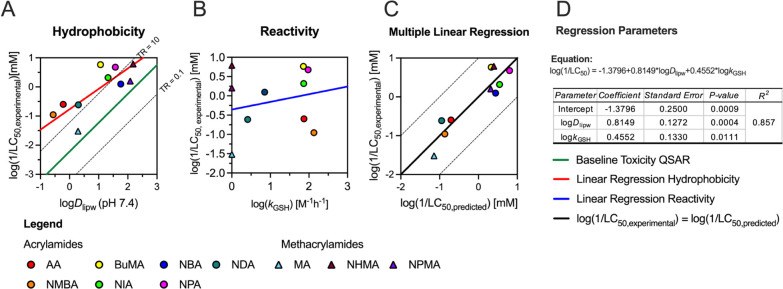 Figure 1
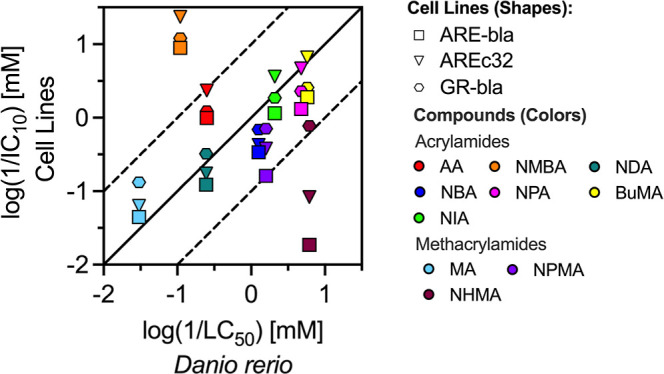 Figure 2
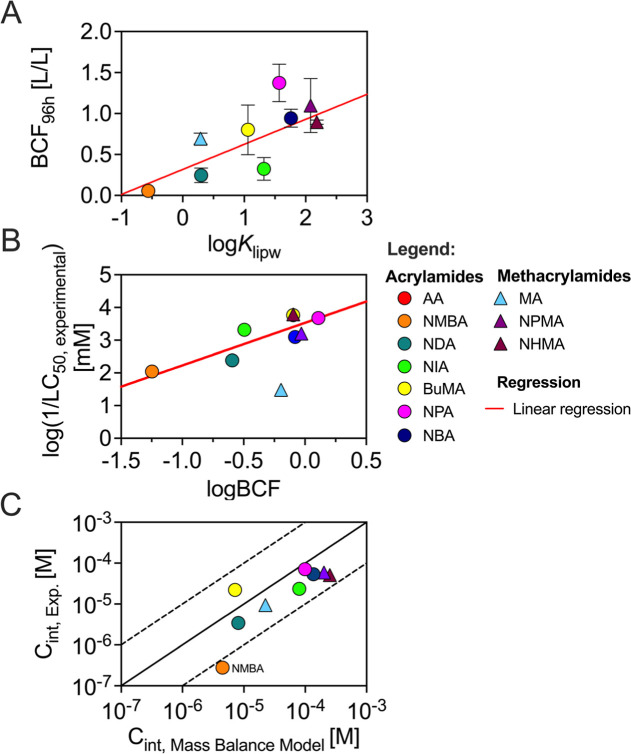 Figure 3
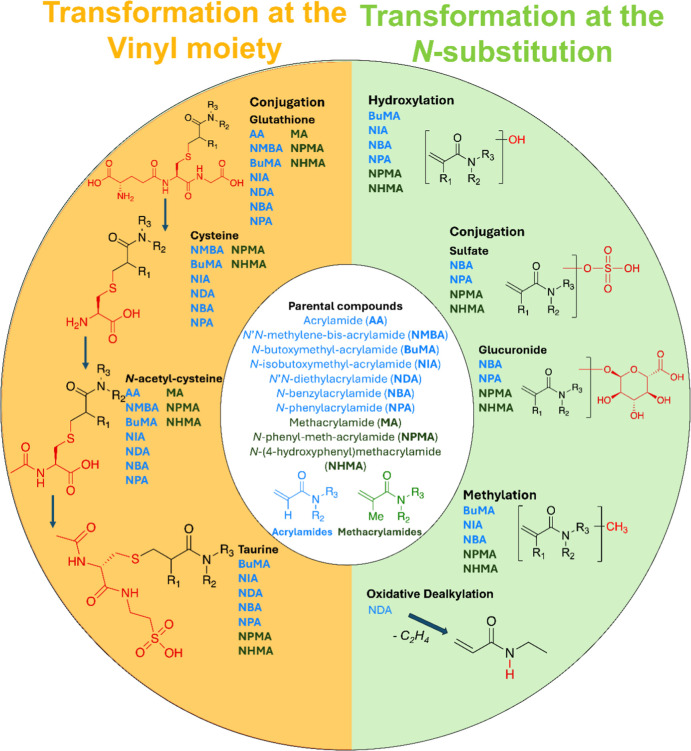 Figure 4
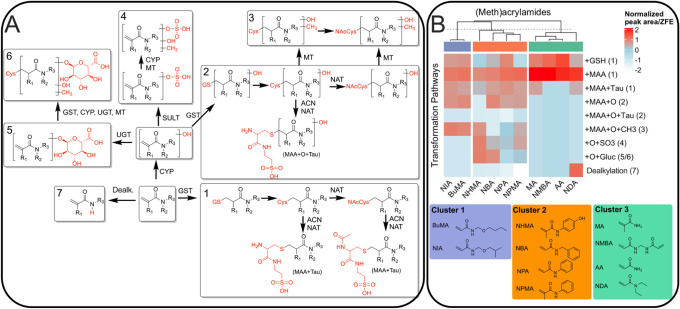 Figure 5
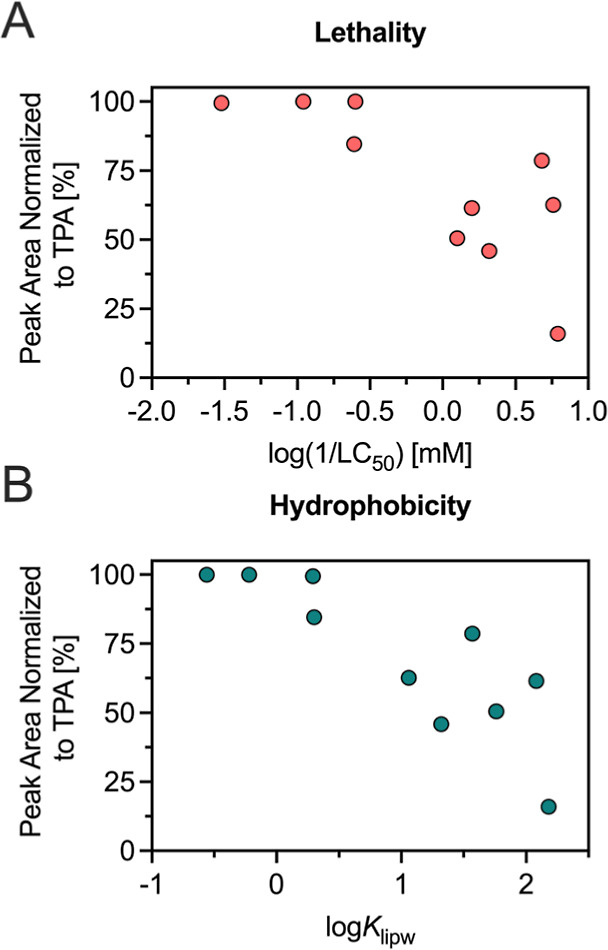 Figure 6
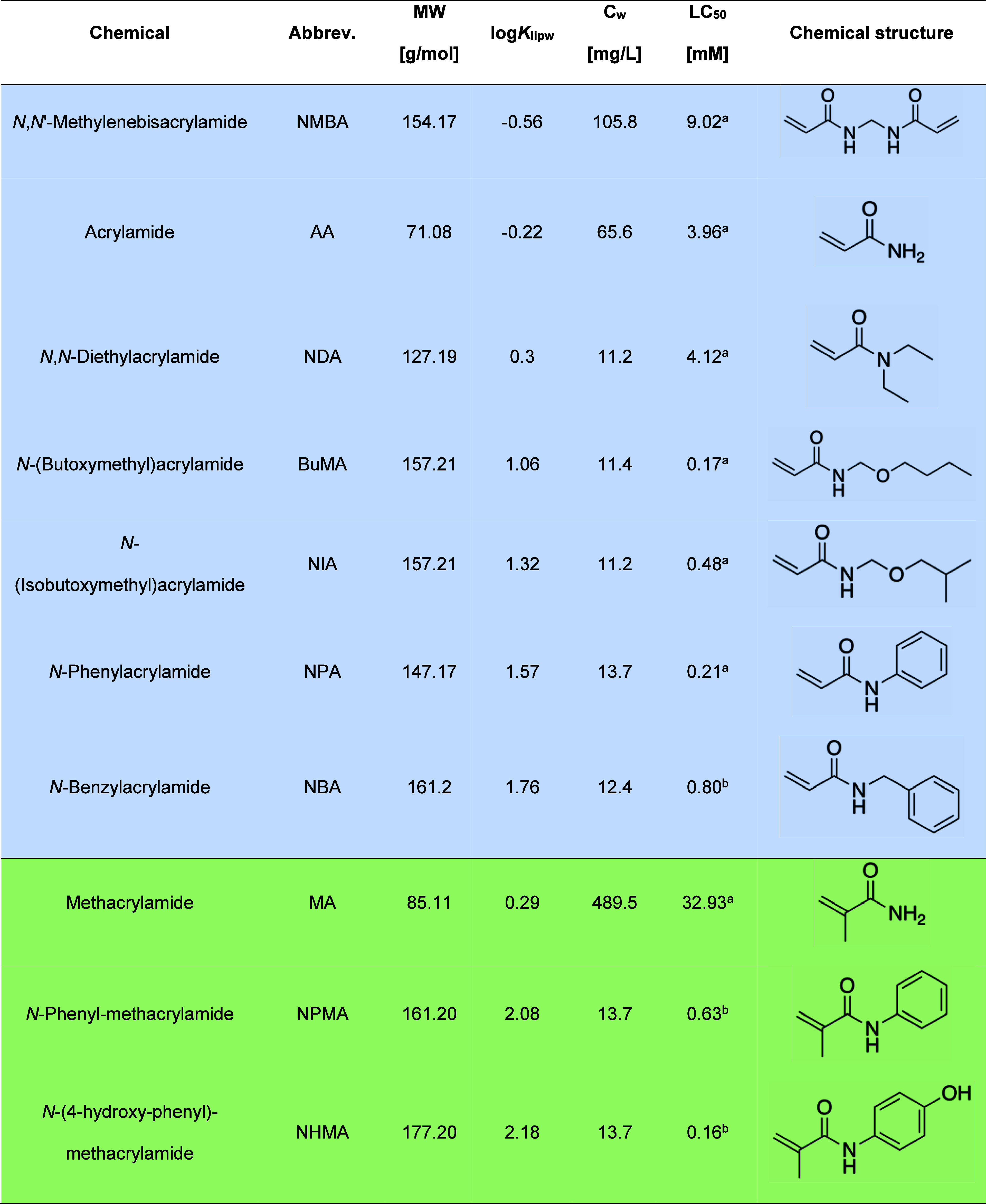 Figure 7
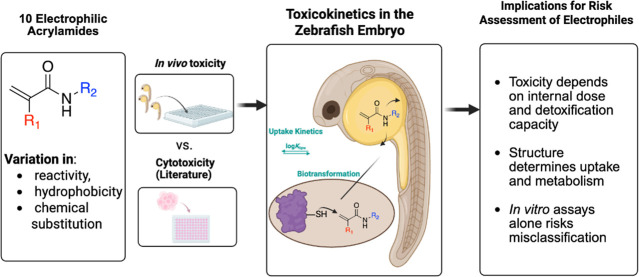 Figure 8
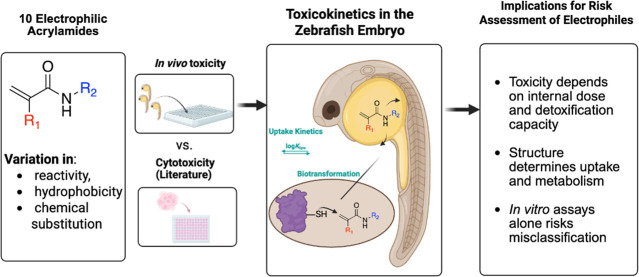 Figure 9
 Figure 10
 Figure 11
Peer Reviews
No public reviews on file for this paper yet. If you reviewed it on a platform where reviews are public (OpenReview, ICLR, NeurIPS, ICML), you can paste yours below so the community can read it here.
Videos
No videos yet. Explain this paper in a talk, walkthrough, or lecture? Add one.
Taxonomy
TopicsPotato Plant Research · Cassava research and cyanide · Melamine detection and toxicity