The genome of the relict earless monitor lizard, Lanthanotus borneensis, and the Toxicofera hypothesis
Magnus Wolf, Axel Janke, Krister T. Smith

TL;DR
This study sequenced the genome of a rare lizard to better understand the evolution of venom systems and water adaptation in lizards and snakes.
Contribution
The paper provides the first genome assembly of Lanthanotus borneensis and offers new insights into the Toxicofera clade's evolutionary history.
Findings
The Toxicofera clade is supported by multiple gene trees, but relationships within it remain unresolved.
Strong positive selection was found on the titin gene in Toxicofera, especially in snakes.
Low heterozygosity and stable population size suggest resilience but limited adaptive potential in L. borneensis.
Abstract
The earless monitor lizard, Lanthanotus borneensis, is a unique living fossil restricted to the island of Borneo and a possible key to understanding the evolution of the venom delivery system and secondary adaptation to water in lizards and snakes (Squamata). We sequenced and de novo assembled the genome of L. borneensis to a total size of 1.5 Gbp, 975 contigs with an N50 of 52 Mbp and an L50 of 9. The genome completeness is estimated to be 93% based on the Sauropsida OrthoDB core gene set. A genome-wide set of Lepidosauria orthologs was compiled to reconstruct and date their phylogeny, resulting in 966 protein-coding sequences amounting to a concatenated alignment of 356 kbp with 188 kbp parsimony-informative sites. Based on this phylogenomic analysis, one of the largest of its kind yet conducted for Squamata, we identified that a Toxicofera clade (comprising Serpentes, Anguimorpha,…
Genes, proteins, chemicals, diseases, species, mutations and cell lines named across the full text — each resolved to its canonical identifier and authoritative record.
Click any figure to enlarge with its caption.
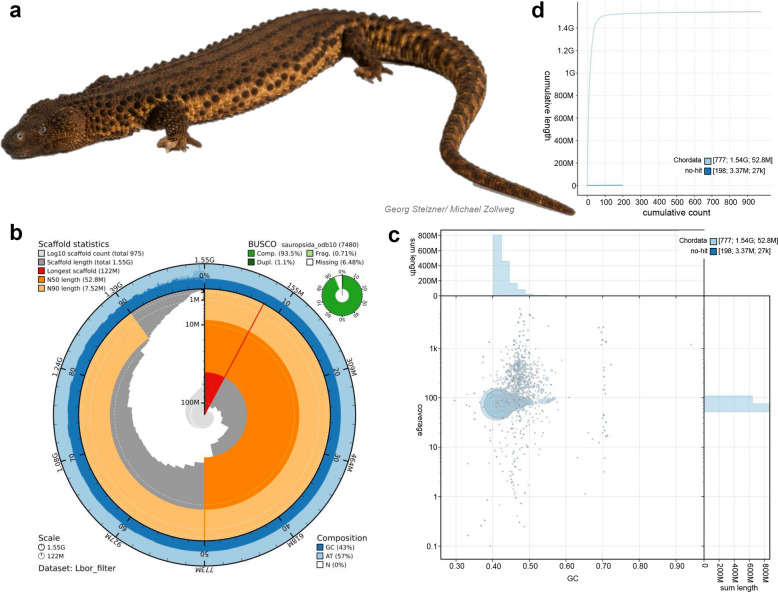 Figure 1
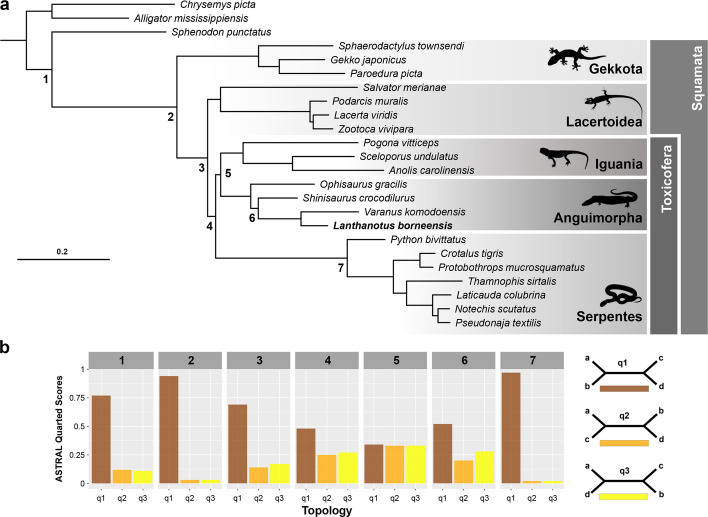 Figure 2
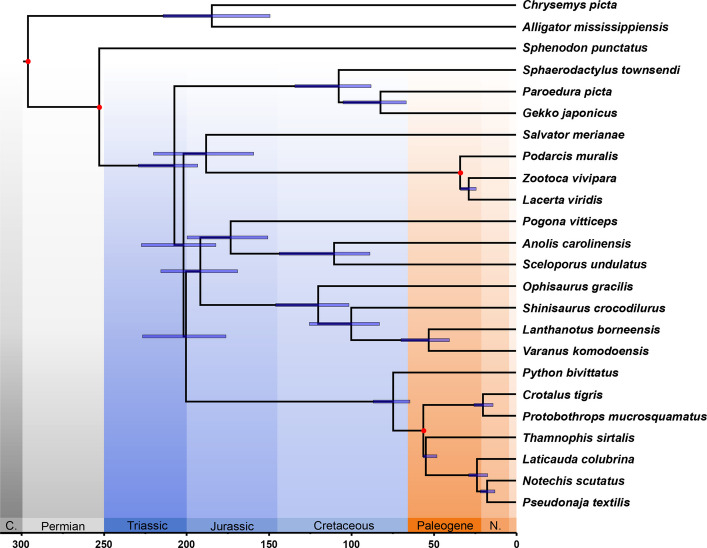 Figure 3
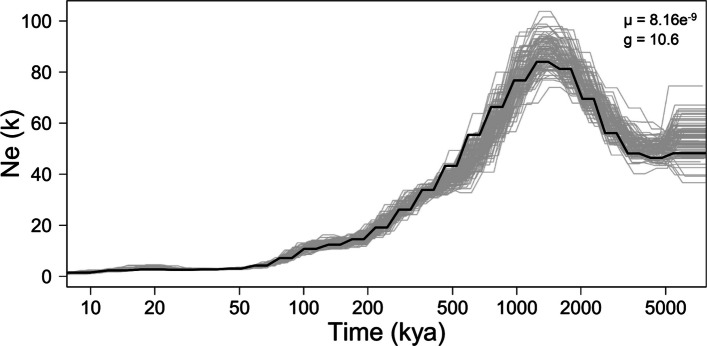 Figure 4
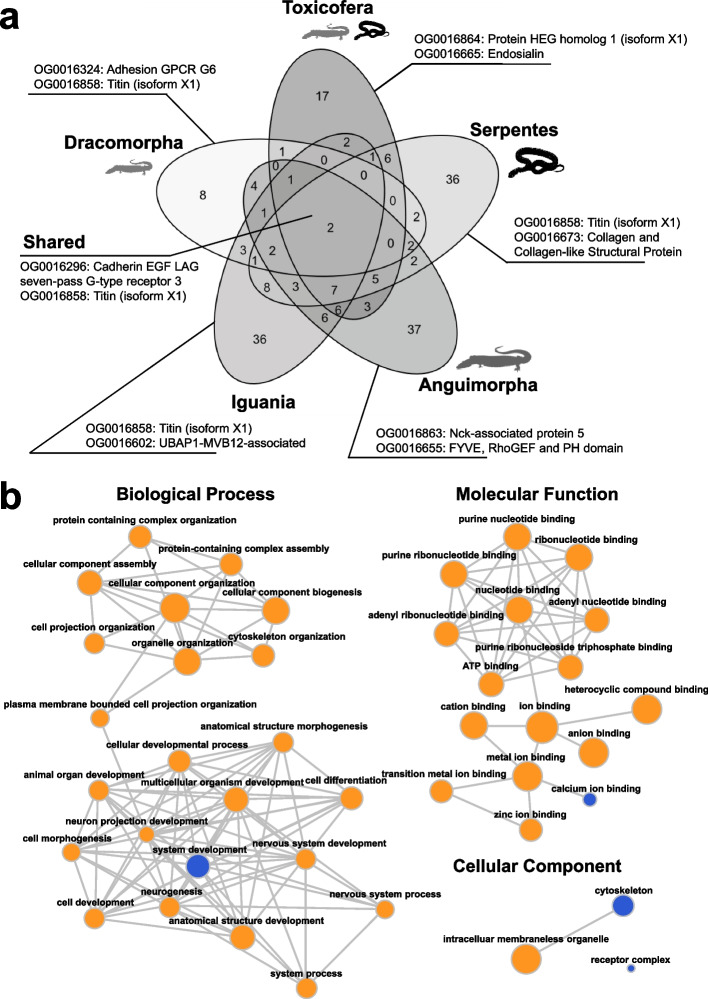 Figure 5
Peer Reviews
No public reviews on file for this paper yet. If you reviewed it on a platform where reviews are public (OpenReview, ICLR, NeurIPS, ICML), you can paste yours below so the community can read it here.
Videos
No videos yet. Explain this paper in a talk, walkthrough, or lecture? Add one.
Taxonomy
TopicsVenomous Animal Envenomation and Studies · Amphibian and Reptile Biology · Fish biology, ecology, and behavior