Rasch models to assess the impact of lack of measurement invariance and reveal hidden differences in anxiety and depression between groups and over time in patients with early-stage melanoma or breast cancer using the RespOnse Shift ALgorithm at the Item level (ROSALI)
Yseulys Dubuy, Myriam Blanchin, Bastien Perrot, Marianne Bourdon, Véronique Sébille

TL;DR
This study uses Rasch models to detect changes in how cancer patients interpret anxiety and depression questions over time, revealing hidden psychological shifts after diagnosis.
Contribution
The study introduces the ROSALI algorithm to detect item-level response shifts and differential item functioning in PROMs for cancer patients.
Findings
DIF and RS were identified in anxiety and depression subscales of the HADS.
Ignoring RS would overestimate the increase in depression over time in breast cancer patients.
ROSALI provides insights into psychological adaptation and distress in cancer patients.
Abstract
Patient-reported outcome measures (PROMs) are often challenging to analyze and interpret. Indeed, patients may give different answers to PROMs over time, not only because their level of the target construct (e.g. anxiety) has changed but also because their interpretation of the items aiming at measuring the construct has changed. For instance, cancer treatment may trigger changes in the patients’ internal standard of measurement (i.e., recalibration response shift, RS), resulting in a lack of measurement invariance over time. In addition, interpretation of PROMs items may differ according to cancer type (differential item functioning, DIF). If ignored, DIF and RS may impact inferences made from PROMs; they are also crucial to investigate as they may be related to patients’ adaptation after a salient health event, e.g. cancer diagnosis. Our objectives were to show how cross-sectional and…
Genes, proteins, chemicals, diseases, species, mutations and cell lines named across the full text — each resolved to its canonical identifier and authoritative record.
Click any figure to enlarge with its caption.
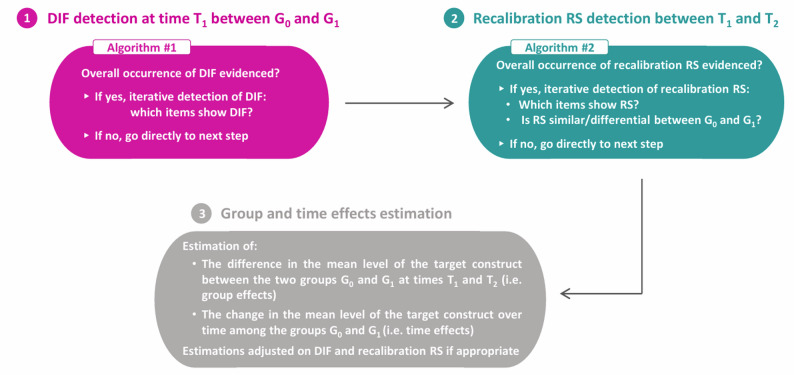 Figure 1
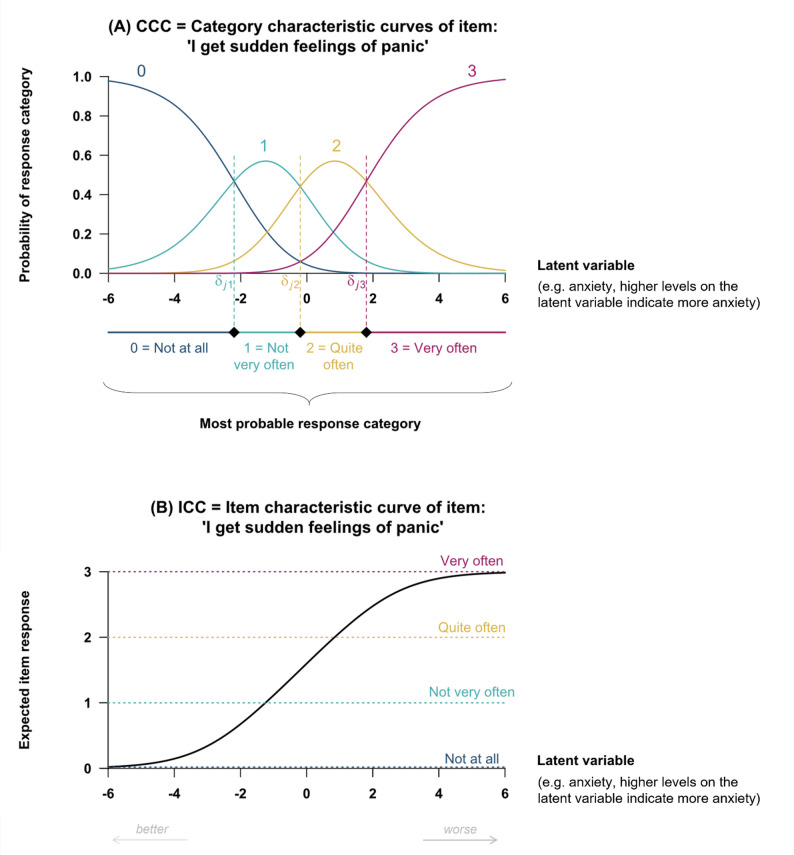 Figure 2
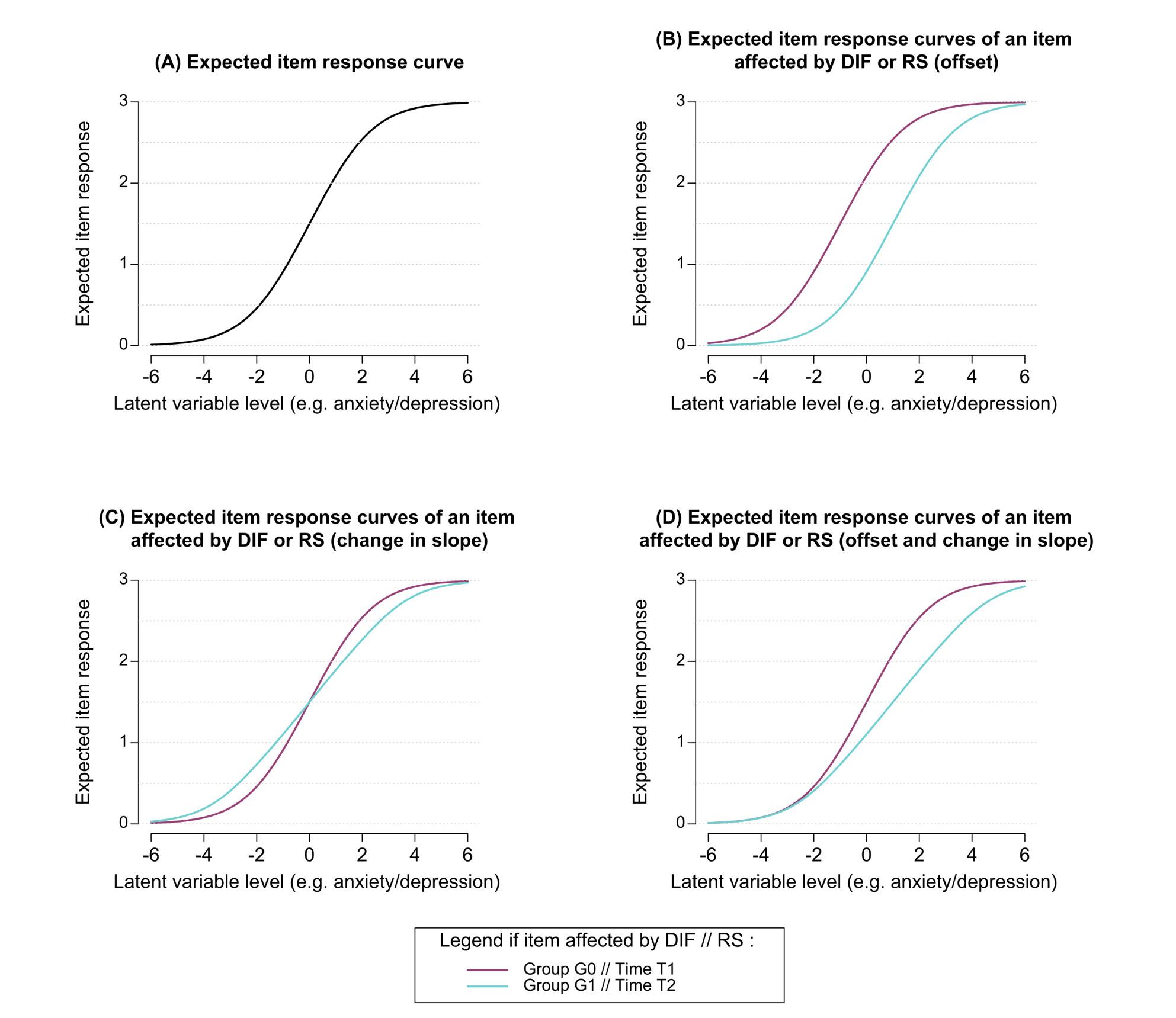 Figure 3
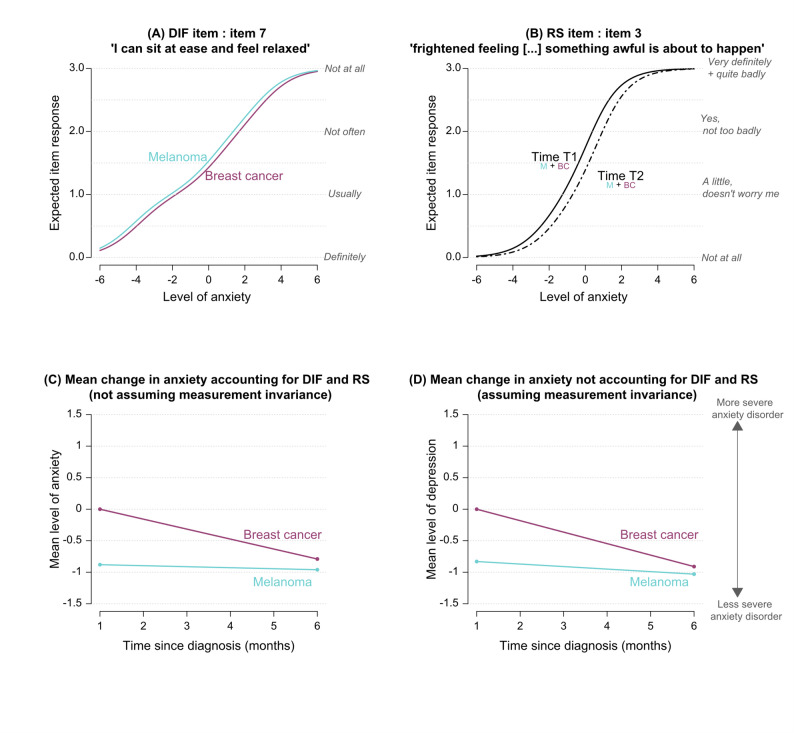 Figure 4
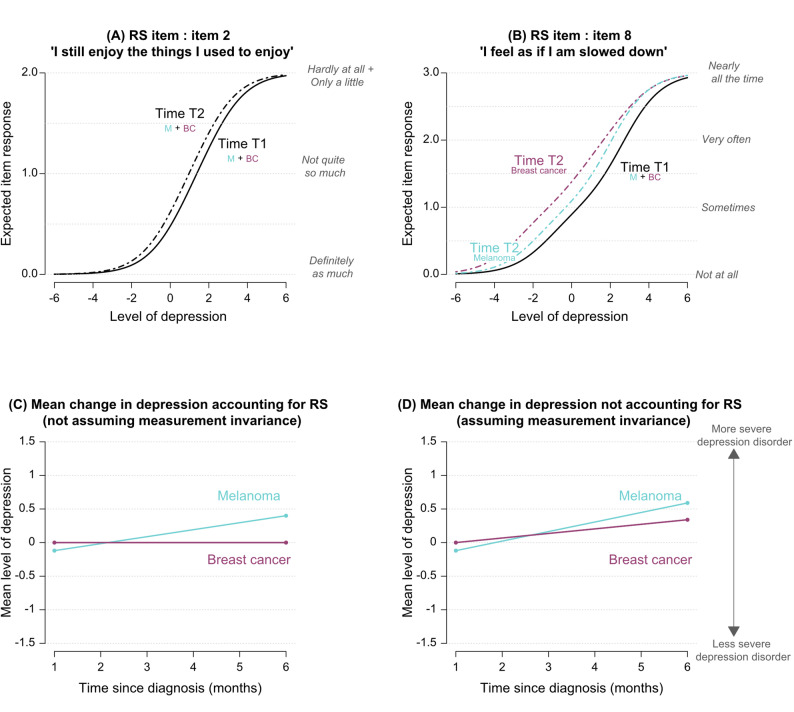 Figure 5
Peer Reviews
No public reviews on file for this paper yet. If you reviewed it on a platform where reviews are public (OpenReview, ICLR, NeurIPS, ICML), you can paste yours below so the community can read it here.
Videos
No videos yet. Explain this paper in a talk, walkthrough, or lecture? Add one.
Taxonomy
TopicsCancer survivorship and care · Psychometric Methodologies and Testing · Global Cancer Incidence and Screening