Exploring neural correlates of automated speech-based cognitive markers through resting-state functional connectivity in aging and at-risk Alzheimer’s disease
Qingyue Li, Zampeta-Sofia Alexopoulou, Martin Dyrba, Elisa Mallick, Johannes Tröger, Eike Spruth, Slawek Altenstein, Claudia Bartels, Wenzel Glanz, Enise I. Incesoy, Michaela Butryn, Ingo Kilimann, Sebastian Sodenkamp, Franziska Maier, Ayda Rostamzadeh, Antje Osterrath

TL;DR
This study explores how speech-based cognitive assessments relate to brain connectivity patterns in aging and Alzheimer’s disease, finding limited utility for detecting functional changes.
Contribution
The study introduces a novel approach linking automated speech features with resting-state brain connectivity in Alzheimer’s disease.
Findings
Greater language network connectivity in the left middle temporal gyrus was associated with increased semantic verbal fluency switching.
Individual speech features showed network-specific associations with executive, language, and default mode networks.
Digital speech assessments currently have limited utility for detecting functional connectivity alterations in at-risk individuals.
Abstract
Digital speech-based assessments provide scalable tools for detecting subtle cognitive decline. Here, we investigated whether digitally derived speech-based composite score of cognition and individual speech features were associated with alterations in functional connectivity (FC) within task-related brain networks in the Alzheimer’s disease spectrum, which are known to reflect cognitive performance and disease-related changes. Data were analyzed from 129 participants of the German PROSPECT-AD study, ranging from cognitively healthy individuals to those with mild cognitive impairment. Speech-based cognitive scores and speech features were derived from automated phone-administered semantic verbal fluency (SVF) and verbal learning tasks (VLT). Resting-state fMRI assessed FC, with intrinsic connectivity networks identified via independent component analysis and dual regression.…
Genes, proteins, chemicals, diseases, species, mutations and cell lines named across the full text — each resolved to its canonical identifier and authoritative record.
Click any figure to enlarge with its caption.
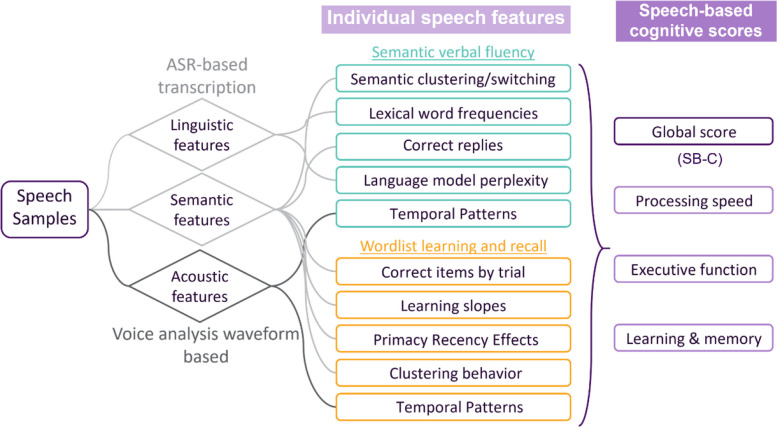 Figure 1
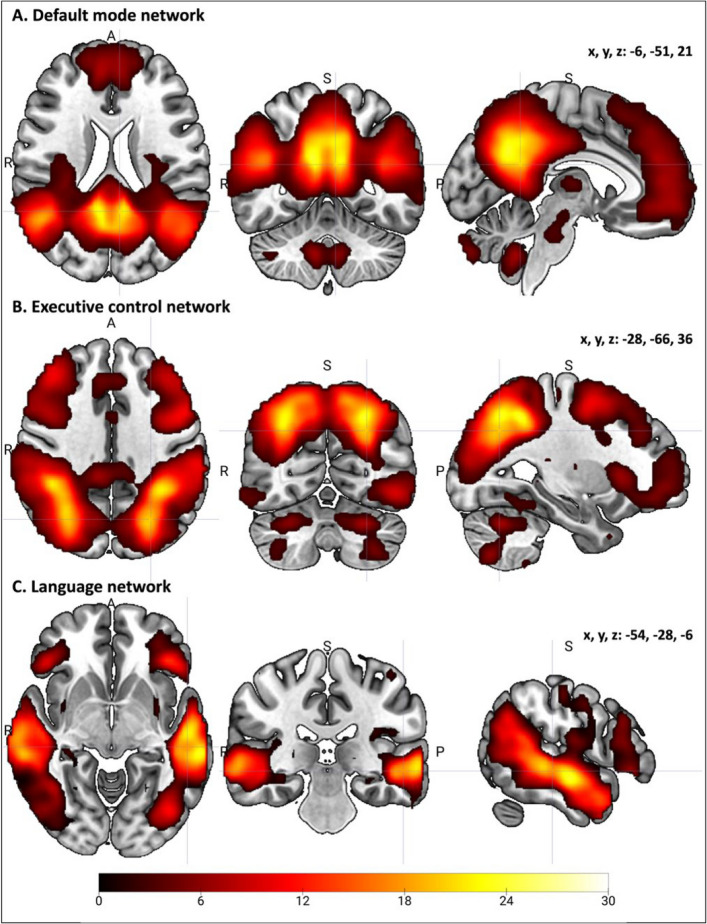 Figure 2
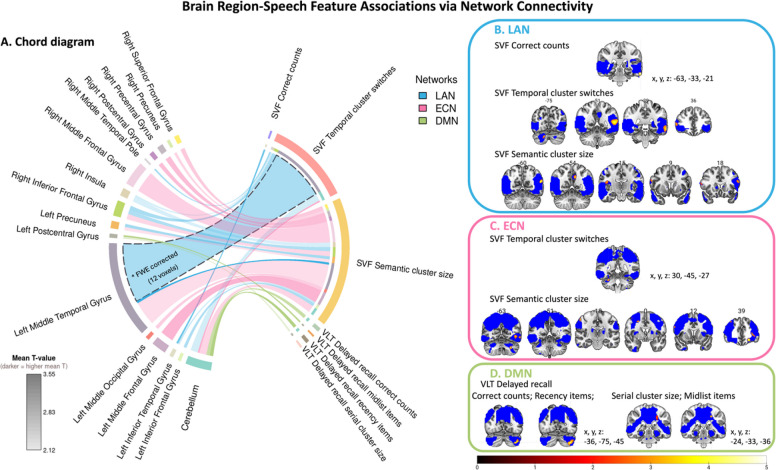 Figure 3
Peer Reviews
No public reviews on file for this paper yet. If you reviewed it on a platform where reviews are public (OpenReview, ICLR, NeurIPS, ICML), you can paste yours below so the community can read it here.
Videos
No videos yet. Explain this paper in a talk, walkthrough, or lecture? Add one.
Taxonomy
TopicsFunctional Brain Connectivity Studies · Advanced MRI Techniques and Applications · Neurobiology of Language and Bilingualism