Indirect estimates of cellular hydration and relative water content and their associations with muscle strength and physical function in older adults: a path analysis from the Pro-Eva study
Weslley Barbosa Sales, Giane Amorim Ribeiro-Samora, Paulo Eduardo e Silva Barbosa, Edgar Ramos Vieira, Gérson Fonseca Souza, Álvaro Campos Cavalcanti Maciel

TL;DR
This study explores how hydration levels in older adults relate to muscle strength and physical function using bioelectrical impedance analysis.
Contribution
The study introduces hydration-related BIA estimates (ICW and TBW/BW%) as indirect indicators of muscle function in older adults.
Findings
Higher intracellular water (ICW) was positively associated with handgrip strength and calf circumference.
TBW/BW% showed smaller but significant associations with physical performance scores.
Education and hypertension were also significant predictors of physical function outcomes.
Abstract
This study aimed to examine the associations between clinical characteristics, body composition parameters, and functional outcomes in older adults, with a specific focus on bioelectrical impedance analysis (BIA)-derived estimates related to hydration status—intracellular water (ICW) and the total body water-to-weight ratio (TBW/BW%). Outcomes included handgrip strength (HGS), performance in the Short Physical Performance Battery (SPPB), and calf circumference (CC), used here as an indirect indicator of muscle mass and lower-limb function. ICW and TBW/BW% were selected instead of extracellular water (ECW) or the ICW/ECW ratio to minimize collinearity and emphasize hydration-related estimates with physiological relevance to muscle function in older adults. A cross-sectional study was conducted with 1,009 community-dwelling older adults (≥ 60 years) from Parnamirim, RN, Brazil. Clinical…
Genes, proteins, chemicals, diseases, species, mutations and cell lines named across the full text — each resolved to its canonical identifier and authoritative record.
Click any figure to enlarge with its caption.
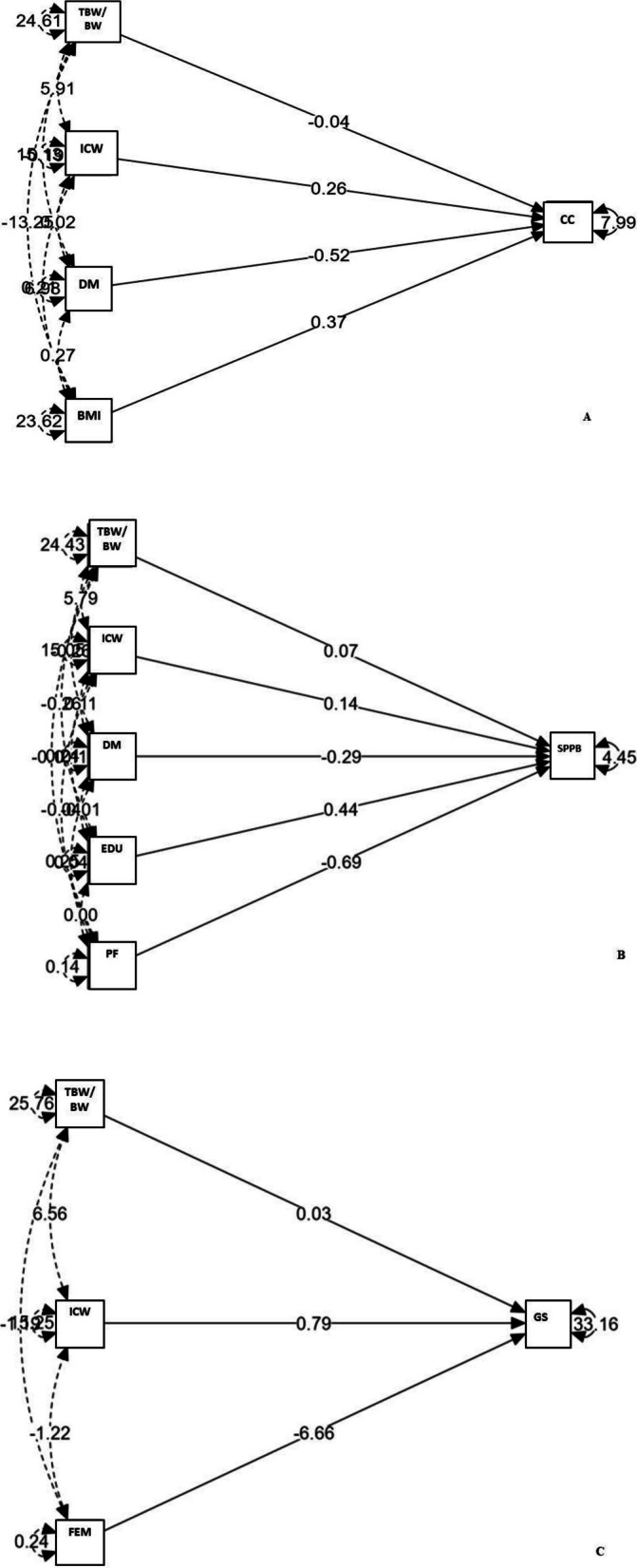 Figure 1
Peer Reviews
No public reviews on file for this paper yet. If you reviewed it on a platform where reviews are public (OpenReview, ICLR, NeurIPS, ICML), you can paste yours below so the community can read it here.
Videos
No videos yet. Explain this paper in a talk, walkthrough, or lecture? Add one.
Taxonomy
TopicsBody Composition Measurement Techniques · Nutrition and Health in Aging · Cardiovascular and exercise physiology