Reporting quality of quantitative polymerase chain reaction (qPCR) methods in scientific publications
Natascha Drude, Camila Baselly, Małgorzata Anna Gazda, Jan-Niklas May, Lena Tienken, Parya Abbasi, Tracey Weissgerber, Steven Burgess

TL;DR
This study finds that many scientific papers still fail to report critical details needed to reproduce qPCR experiments, despite existing guidelines.
Contribution
A systematic evaluation of qPCR reporting in recent top-tier genetics and plant science journals reveals persistent deficiencies.
Findings
Only 7–10% of studies reported RNA integrity, and 14–16% specified methods for integrity evaluation.
Accession numbers for reference genes were provided in just 11% of genetics and 32% of plant science papers.
Critical reagent details were missing in 7–14% of reports, highlighting poor methodological transparency.
Abstract
Reproducibility remains a major concern in scientific research, particularly in complex methods such as quantitative polymerase chain reaction (qPCR). Stringent reporting standards are essential to ensure reproducibility, validity of data, and trustworthiness of conclusions. The MIQE (Minimum Information for Publication of Quantitative Real-Time PCR Experiments) guidelines, introduced in 2009, aimed to improve reporting practices. However, a 2013 study highlighted persistent deficiencies. To further assess the transparency and completeness of qPCR reporting, we conducted a systematic evaluation of recently published research. We systematically reviewed research articles employing qPCR that were published in the top 20 journals in genetics and heredity (n = 186) and plant sciences (n = 246). Articles were assessed for completeness of methodological reporting with respect to RNA quality…
Genes, proteins, chemicals, diseases, species, mutations and cell lines named across the full text — each resolved to its canonical identifier and authoritative record.
Click any figure to enlarge with its caption.
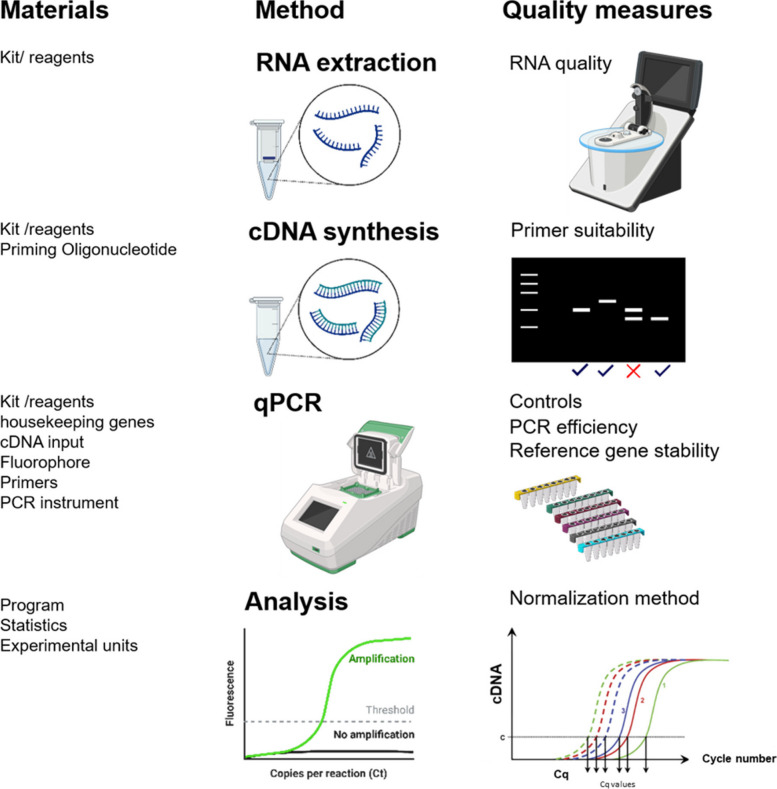 Figure 1
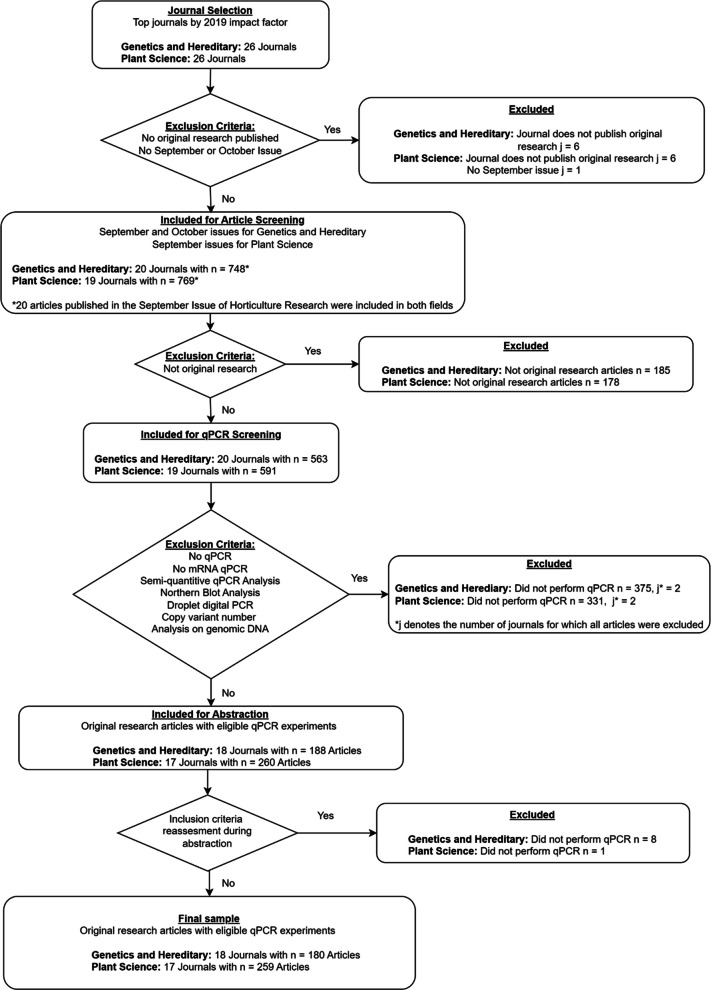 Figure 2
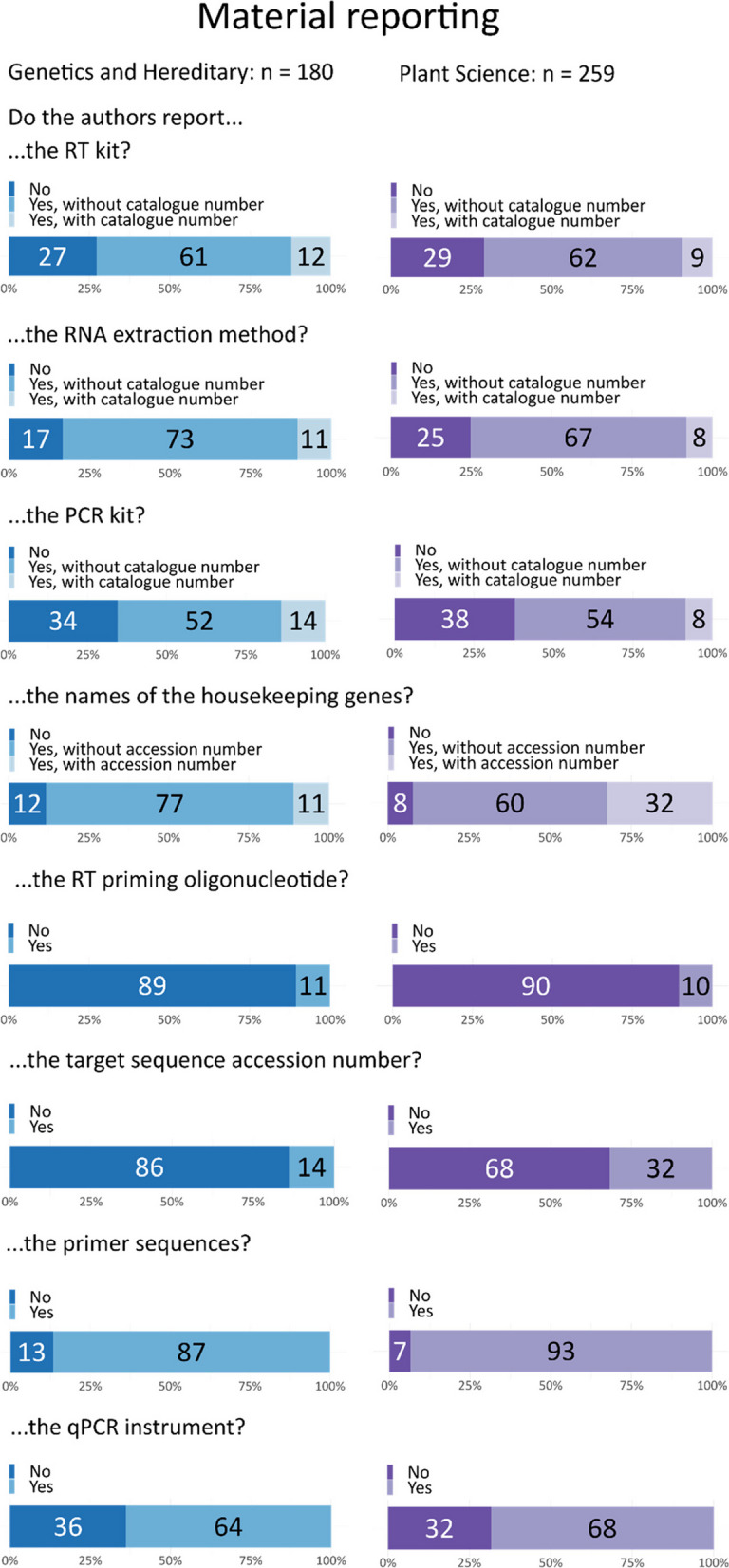 Figure 3
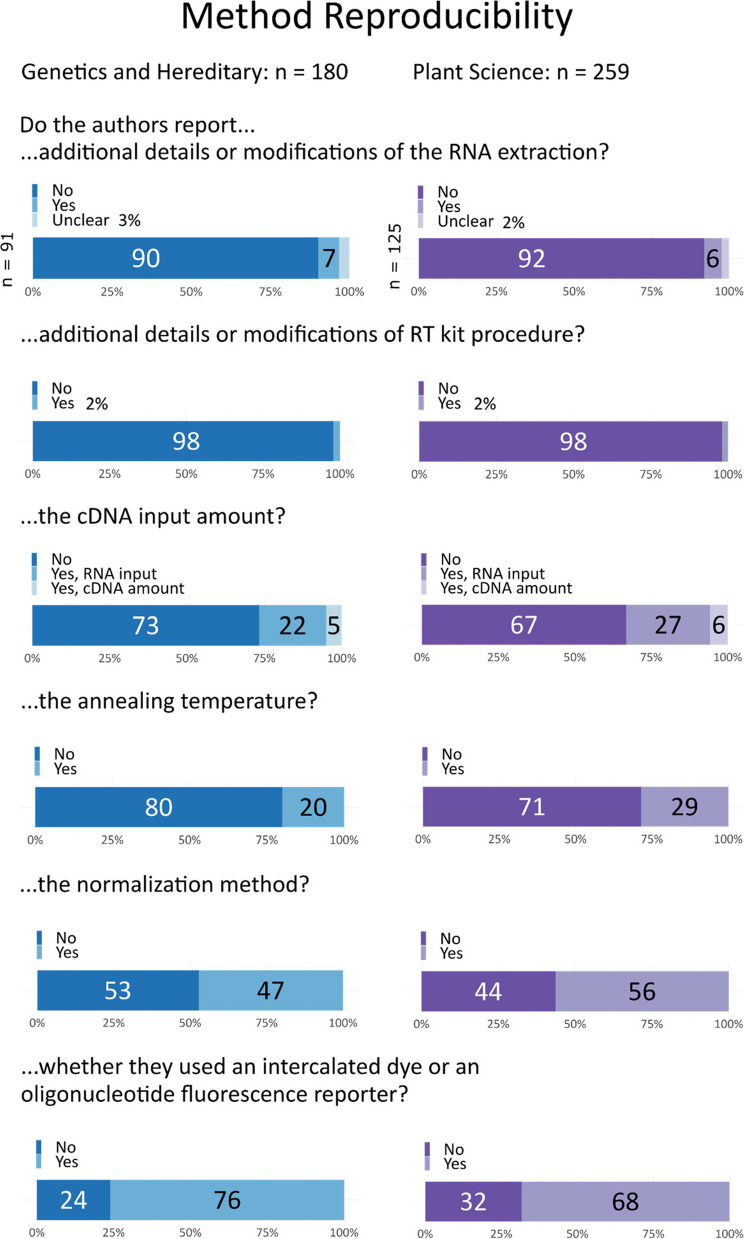 Figure 4
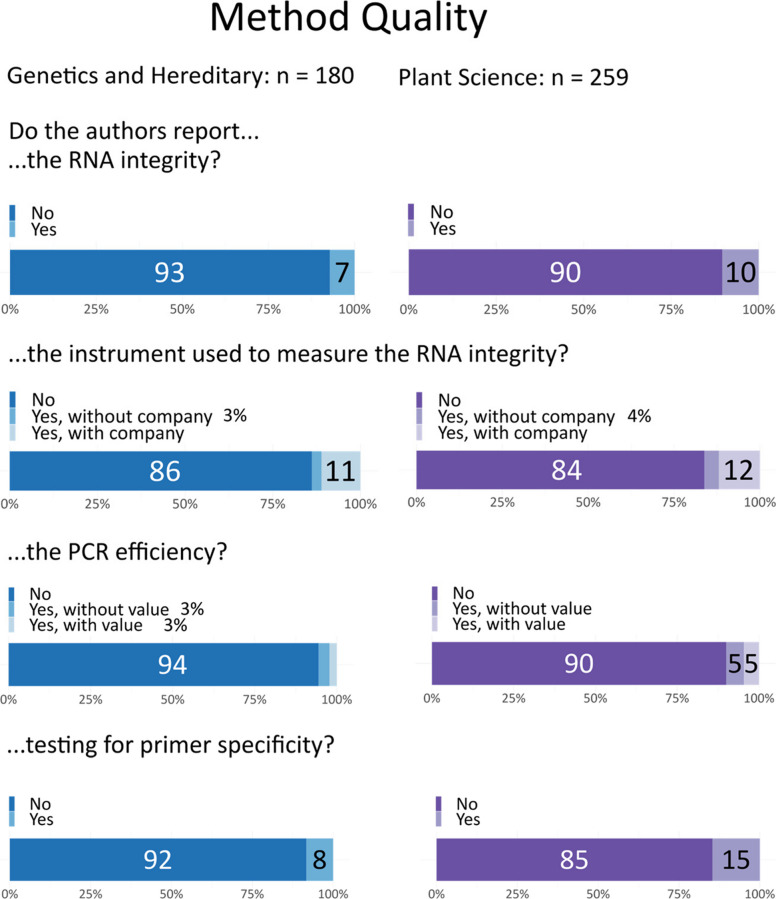 Figure 5
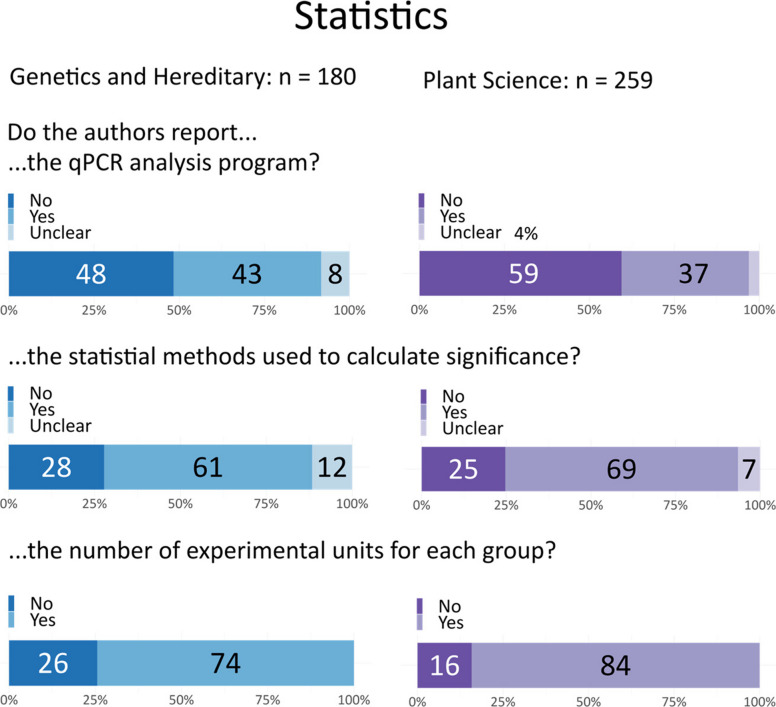 Figure 6
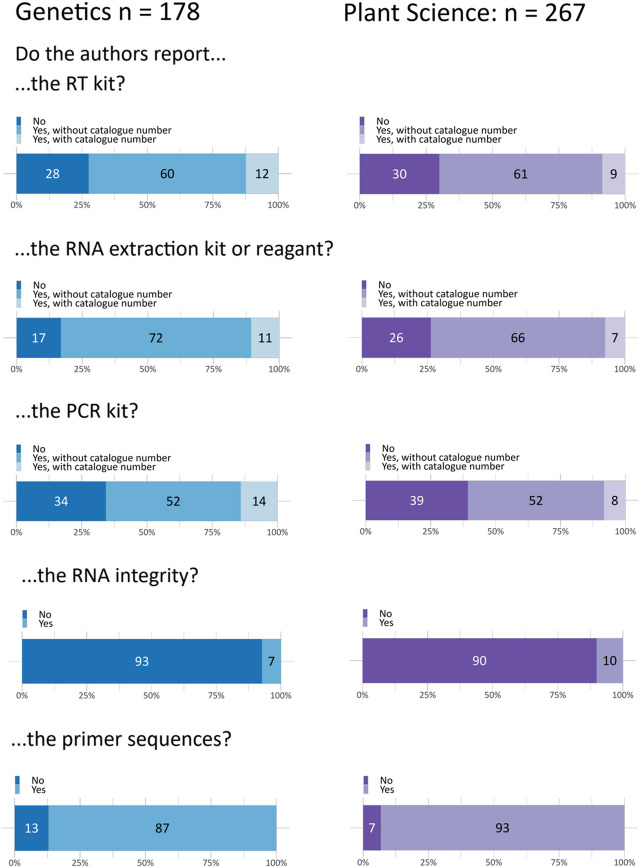 Figure 7
Peer Reviews
No public reviews on file for this paper yet. If you reviewed it on a platform where reviews are public (OpenReview, ICLR, NeurIPS, ICML), you can paste yours below so the community can read it here.
Videos
No videos yet. Explain this paper in a talk, walkthrough, or lecture? Add one.
Taxonomy
TopicsMolecular Biology Techniques and Applications · Gene expression and cancer classification · Animal testing and alternatives