Evaluation of the Bangkok Health Research and Ethics Interest Group: reflecting on the experiences of group members, researchers and facilitators participating in an urban community advisory board in Thailand
Anne Osterrieder, Supanat Ruangkajorn, Bhensri Naemiratch, Tassawan Poomchaichote, Supa-at Asarath, Kanpong Boonthaworn, Phaik Yeong Cheah

TL;DR
This paper evaluates a community advisory board in Bangkok, highlighting how it supports health research and improves communication between researchers and the public.
Contribution
The study provides insights into the challenges and benefits of running an urban community advisory board in an international research setting.
Findings
HREIG members joined to contribute to research and society, and for personal benefits like learning about health research.
Researchers improved communication skills and valued lay perspectives, while facilitators gained skills in online collaboration and explaining research.
The group contributed to various studies, including improving malaria messaging and testing COVID-19 surveys.
Abstract
The Mahidol Oxford Tropical Medicine Research Unit (MORU), headquartered in Bangkok, conducts research on tropical medicine and global health. MORU works closely with a network of community advisory boards (CABs), with members drawn from communities served by its research sites. In 2019, we set up the Bangkok Health Research and Ethics Interest Group (HREIG). HREIG is an urban CAB composed of Bangkok residents from all walks of life who have an interest in health research, but do not have a professional health research background. HREIG advises on clinical research and broader societal issues, complementing MORU’s rural CABs in areas such as the Thai-Myanmar border and northern Cambodia. In 2022, the group had 14 members aged between 22 and 51. Initially, meetings were held in person and in English, to support discussion with international researchers. During COVID-19 restrictions,…
Genes, proteins, chemicals, diseases, species, mutations and cell lines named across the full text — each resolved to its canonical identifier and authoritative record.
Click any figure to enlarge with its caption.
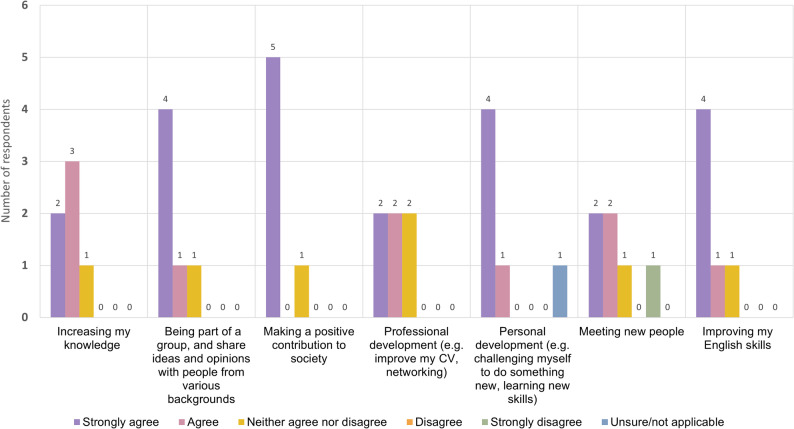 Figure 1
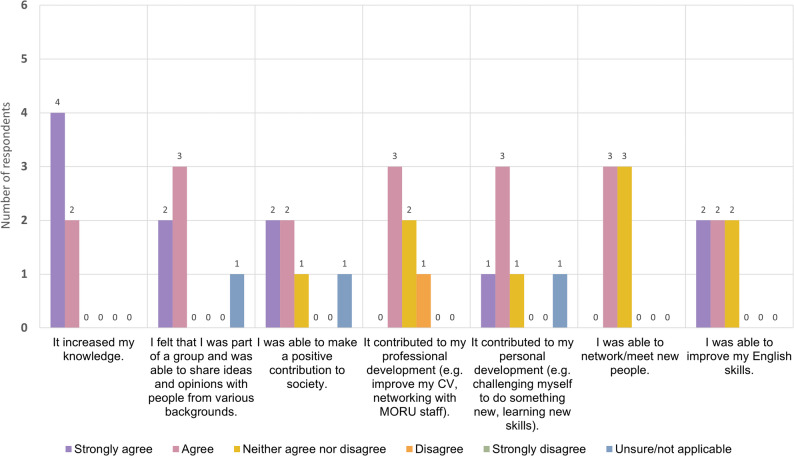 Figure 2
 Figure 3
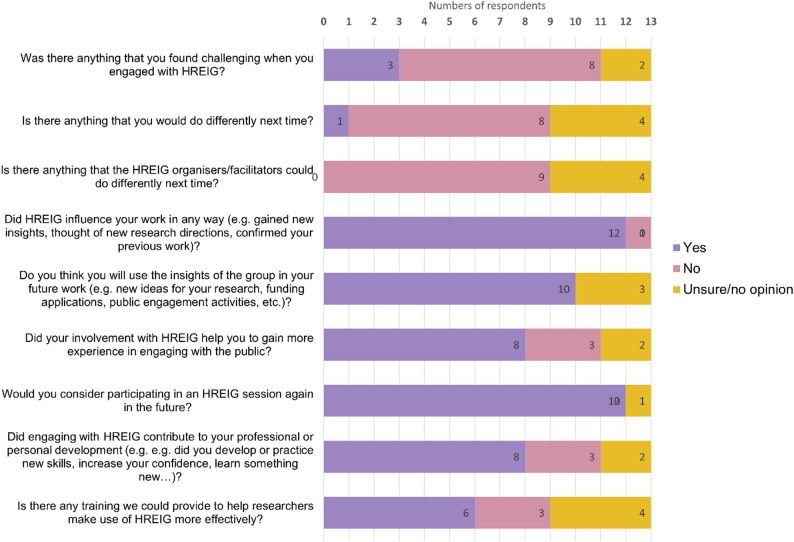 Figure 4
Peer Reviews
No public reviews on file for this paper yet. If you reviewed it on a platform where reviews are public (OpenReview, ICLR, NeurIPS, ICML), you can paste yours below so the community can read it here.
Videos
No videos yet. Explain this paper in a talk, walkthrough, or lecture? Add one.
Taxonomy
TopicsHealth Policy Implementation Science · ICT in Developing Communities · Focus Groups and Qualitative Methods