Re-examining cephalosporin activity against methicillin-susceptible Staphylococcus aureus among clinical isolates from southern Taiwan
Yin-Ting Lin, Shu-Fang Kuo, Chun-Chih Chien, Chien-Hui Hung, Hui-Yen Ming, Tsung-Yu Huang, Chen-Hsiang Lee

TL;DR
This study finds that some methicillin-susceptible Staphylococcus aureus (MSSA) isolates show reduced susceptibility to cephalosporin antibiotics, with varying predictability based on oxacillin MICs.
Contribution
The study provides new empirical evidence on cephalosporin susceptibility variability in MSSA isolates from southern Taiwan and evaluates the predictive value of oxacillin MICs.
Findings
Non-susceptibility rates to first- through fourth-generation cephalosporins ranged from 4.9% to 6.2%.
Oxacillin MICs ≥0.25 mg/L accurately predicted non-susceptibility to first- through fourth-generation cephalosporins but not ceftaroline.
Genetic diversity was observed in isolates with elevated ceftaroline MICs, including 25 novel sequence types.
Abstract
Cephalosporin susceptibility in methicillin-susceptible Staphylococcus aureus (MSSA) is typically inferred from oxacillin or cefoxitin results; however, the reliability of this surrogate approach remains uncertain. This study aimed to evaluate MSSA susceptibility to first- through fifth-generation cephalosporins and assess the predictive value of oxacillin minimum inhibitory concentrations (MICs) for identifying non-susceptibility. A total of 514 MSSA bloodstream isolates were collected from two hospitals in Taiwan. MICs for oxacillin and various cephalosporins were determined using broth microdilution. Receiver operating characteristic (ROC) curve analysis was conducted to evaluate the predictive performance of oxacillin MICs. Multilocus sequence typing (MLST) was performed on isolates exhibiting ceftaroline resistance or the susceptible-dose dependent (SDD) phenotype to examine their…
Genes, proteins, chemicals, diseases, species, mutations and cell lines named across the full text — each resolved to its canonical identifier and authoritative record.
Click any figure to enlarge with its caption.
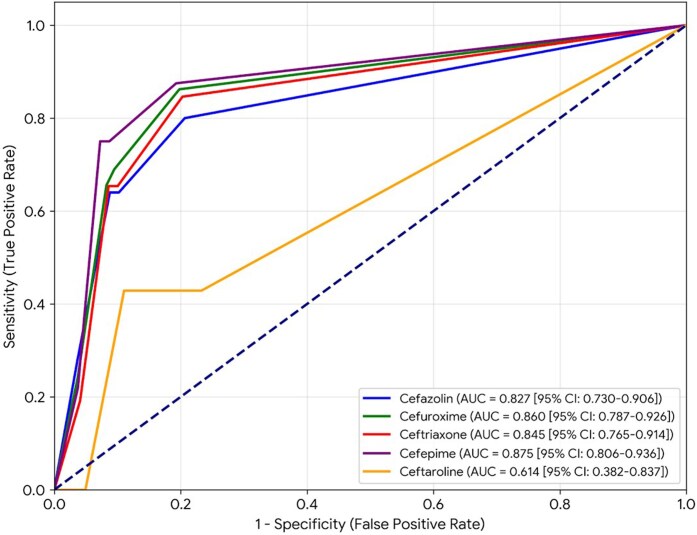 Figure 1
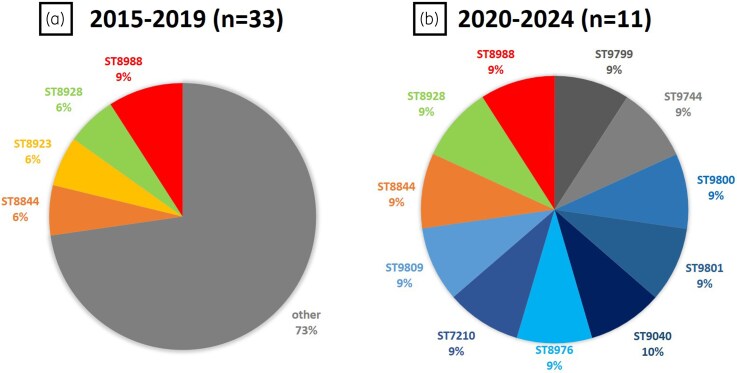 Figure 2
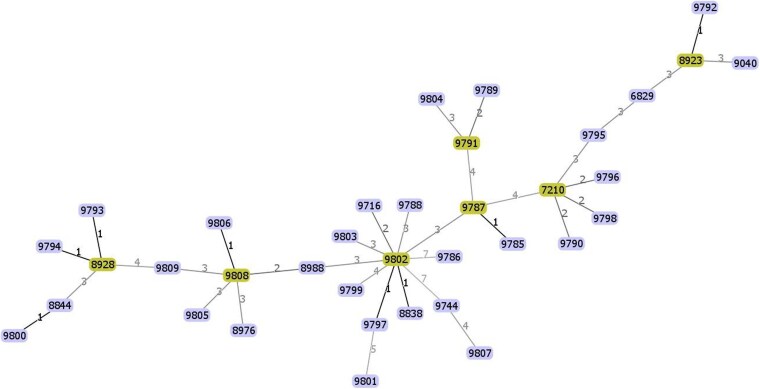 Figure 3
Peer Reviews
No public reviews on file for this paper yet. If you reviewed it on a platform where reviews are public (OpenReview, ICLR, NeurIPS, ICML), you can paste yours below so the community can read it here.
Videos
No videos yet. Explain this paper in a talk, walkthrough, or lecture? Add one.
Taxonomy
TopicsAntimicrobial Resistance in Staphylococcus · Antibiotics Pharmacokinetics and Efficacy · Antibiotic Resistance in Bacteria