Connecting Brown Carbon Composition and Physicochemical Properties of Aqueous Urban PM2.5 to their Photosensitized Production of Singlet Oxygen and Organic Triplet Excited States
Yuting Lyu, Yitao Li, Ruihan Ma, Tianye Zhou, Nadine Borduas-Dedekind, Theodora Nah

TL;DR
This study connects the composition of brown carbon in urban PM2.5 to its ability to produce reactive oxygen species through photosensitization.
Contribution
A new framework is introduced to predict and apportion photosensitizers in brown carbon using optical measurements and statistical modeling.
Findings
Highly oxygenated organic aerosols mainly contribute to singlet oxygen production.
Less oxygenated organic aerosols mainly contribute to organic triplet excited states production.
Statistical models successfully predict reactive species concentrations and quantum yields from optical data.
Abstract
Oxidants, including singlet oxygen (1O2*) and organic triplet excited states (3C*) formed from the photoexcitation of brown carbon (BrC), drive many chemical processes in atmospheric waters. However, due to the chemical complexity of atmospheric BrC, many questions remain about the specific BrC chromophores and physicochemical properties that primarily control 1O2* and 3C* production. In this study, we present a framework for apportioning photosensitizers and predicting the production of 1O2* and 3C* based on measurable physicochemical properties of BrC. This is achieved by combining photochemical experiments with absorbance and fluorescence measurements and statistical modeling of a year-long data set of PM2.5 extracts from Hong Kong SAR, China. Parallel Factor and Non-negative Matrix Factorization analyses of the fluorescence data revealed that highly oxygenated organic aerosols were…
Genes, proteins, chemicals, diseases, species, mutations and cell lines named across the full text — each resolved to its canonical identifier and authoritative record.
Click any figure to enlarge with its caption.
 Figure 1
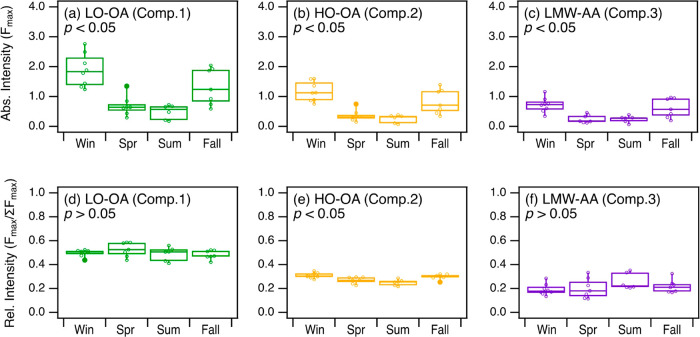 Figure 2
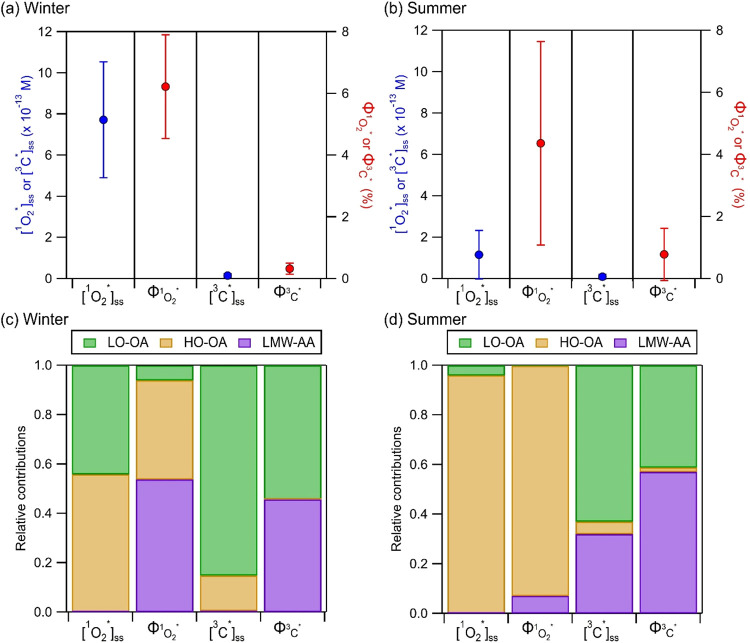 Figure 3
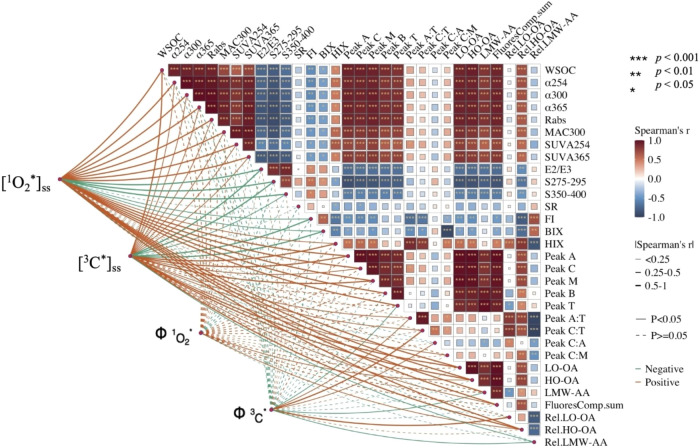 Figure 4
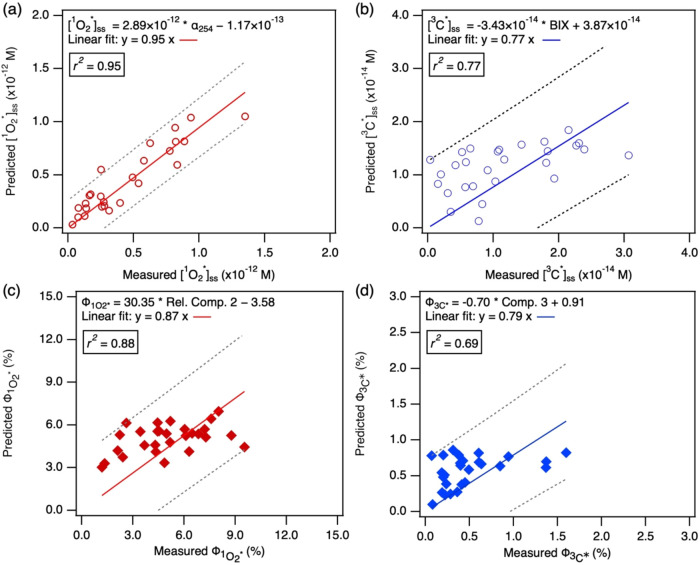 Figure 5
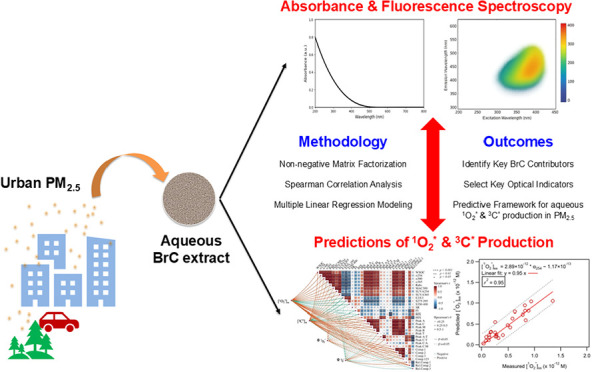 Figure 6
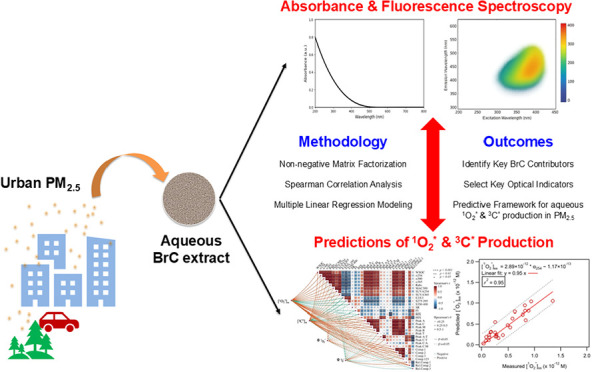 Figure 7
 Figure 8
 Figure 9
 Figure 10
 Figure 11
 Figure 12
 Figure 13
 Figure 14
 Figure 15
 Figure 16
 Figure 17
 Figure 18
 Figure 19
 Figure 20
 Figure 21
 Figure 22
 Figure 23
 Figure 24
 Figure 25
 Figure 26
 Figure 27
 Figure 28
 Figure 29
 Figure 30
 Figure 31
 Figure 32
 Figure 33
 Figure 34
 Figure 35
 Figure 36
 Figure 37
 Figure 38
 Figure 39
 Figure 40
 Figure 41
 Figure 42
 Figure 43
 Figure 44
 Figure 45
 Figure 46
 Figure 47
 Figure 48
 Figure 49
 Figure 50
Peer Reviews
No public reviews on file for this paper yet. If you reviewed it on a platform where reviews are public (OpenReview, ICLR, NeurIPS, ICML), you can paste yours below so the community can read it here.
Videos
No videos yet. Explain this paper in a talk, walkthrough, or lecture? Add one.
Taxonomy
TopicsAtmospheric chemistry and aerosols · Atmospheric Ozone and Climate · Air Quality and Health Impacts