Catalytic pK a Attenuation in a Hydrolytic Metalloenzyme by Genetic Code Expansion
Benjamin P. Manser, Alexandria Deliz Liang

TL;DR
Scientists used a new method to modify an enzyme's metal-binding site, making it work better in acidic conditions.
Contribution
Genetic code expansion was used to alter a metalloenzyme's coordination sphere, improving its performance at lower pH.
Findings
Substituting a histidine residue with Nπ-methyl-l-histidine improved the enzyme's tolerance to acidic conditions.
The modification led to a decrease in the enzyme's catalytic pK a and changes in rate constants.
The approach demonstrated the effectiveness of non-canonical amino acid-based engineering in enzyme optimization.
Abstract
Hydrolytic metalloenzymes employ Lewis-acidic metal cofactors to activate water molecules, generating nucleophilic hydroxide species that facilitate catalysis. Their catalytic efficiency across a wide pH range is often governed by the protonation state of the metal-bound water, reflected in pK a values typically between 6.8 and 9. Modulating this parameter is key to expanding enzymatic activity for improved activity at neutral to acidic pH. Herein, we apply genetic code expansion to mutate the primary metal-coordination sphere of a model metallohydrolase: the dizinc phosphotriesterase from Pseudomonas diminuta. Substitution of the most catalytically indispensable coordinating histidine residue (H55) to N π-methyl-l-histidine (πMH) resulted in substantial enzyme yields, efficient metal coordination for either Zn2+ or Co2+, and up to 5-fold improved tolerance to acidic conditions.…
Genes, proteins, chemicals, diseases, species, mutations and cell lines named across the full text — each resolved to its canonical identifier and authoritative record.
Click any figure to enlarge with its caption.
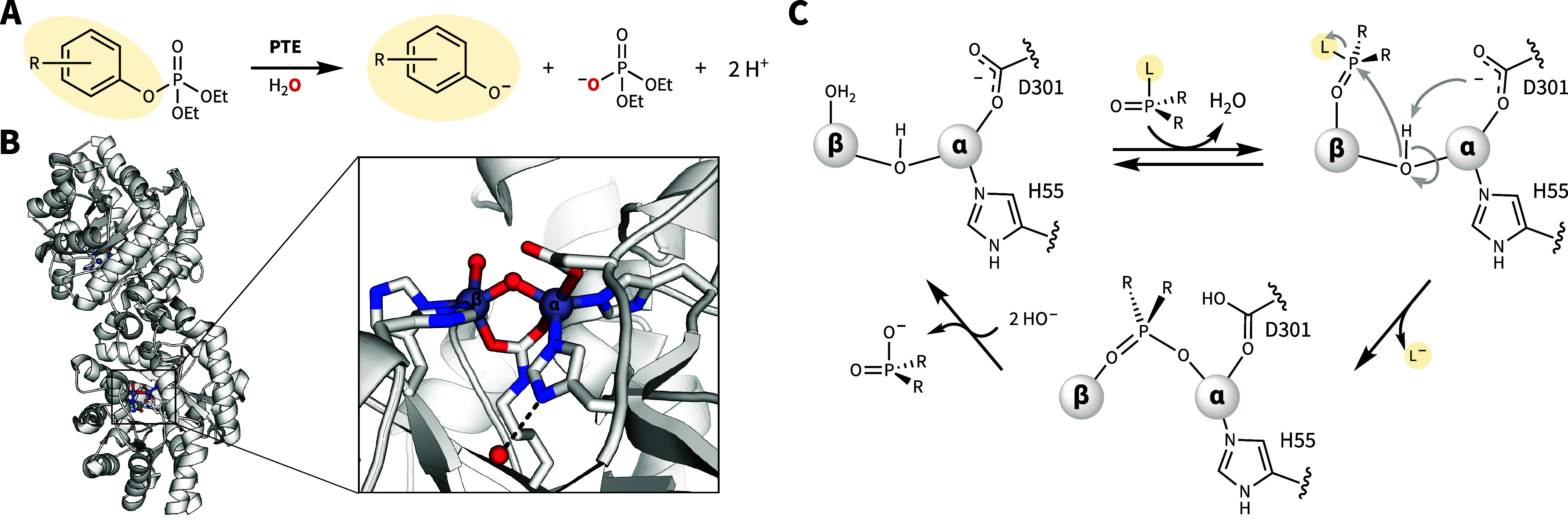 Figure 1
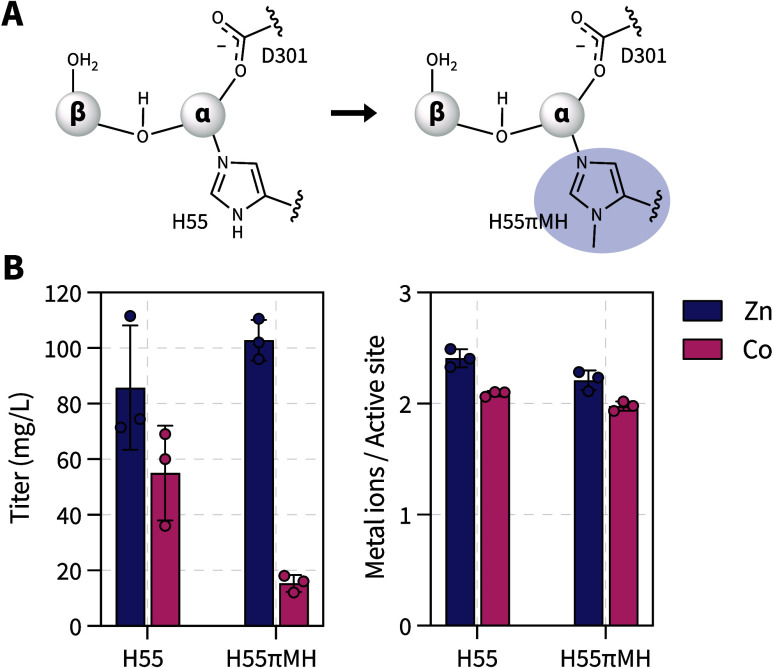 Figure 2
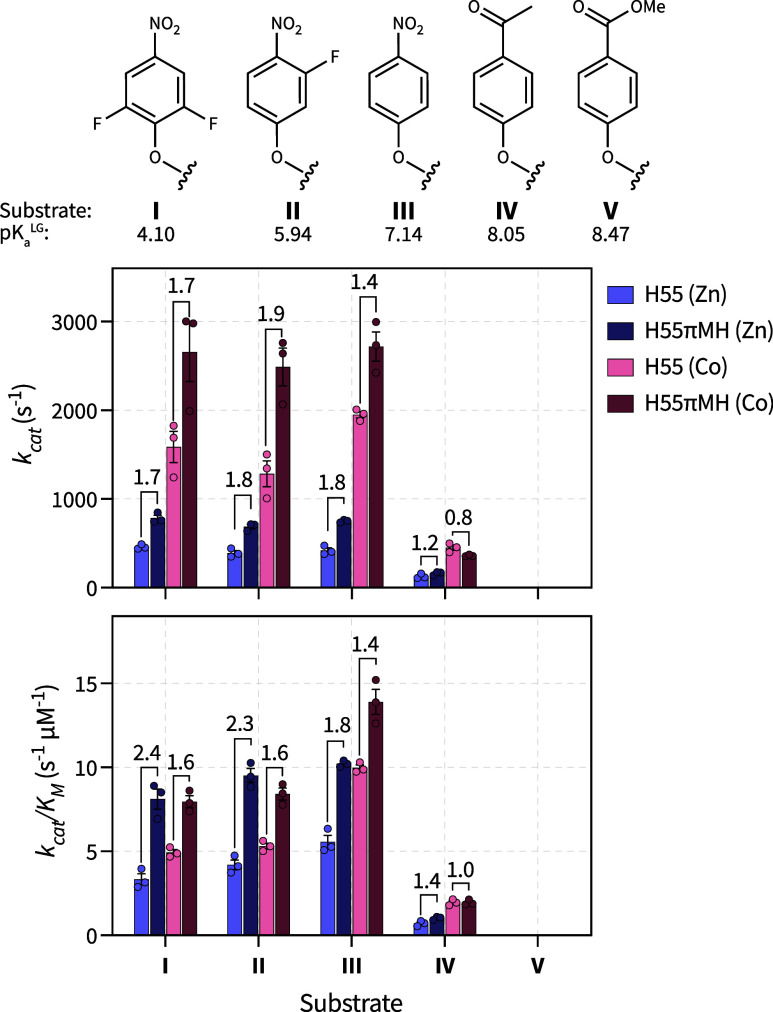 Figure 3
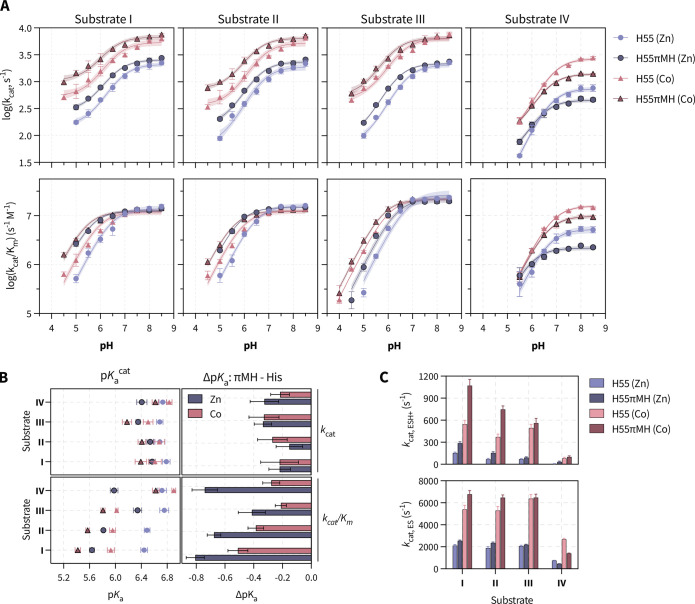 Figure 4
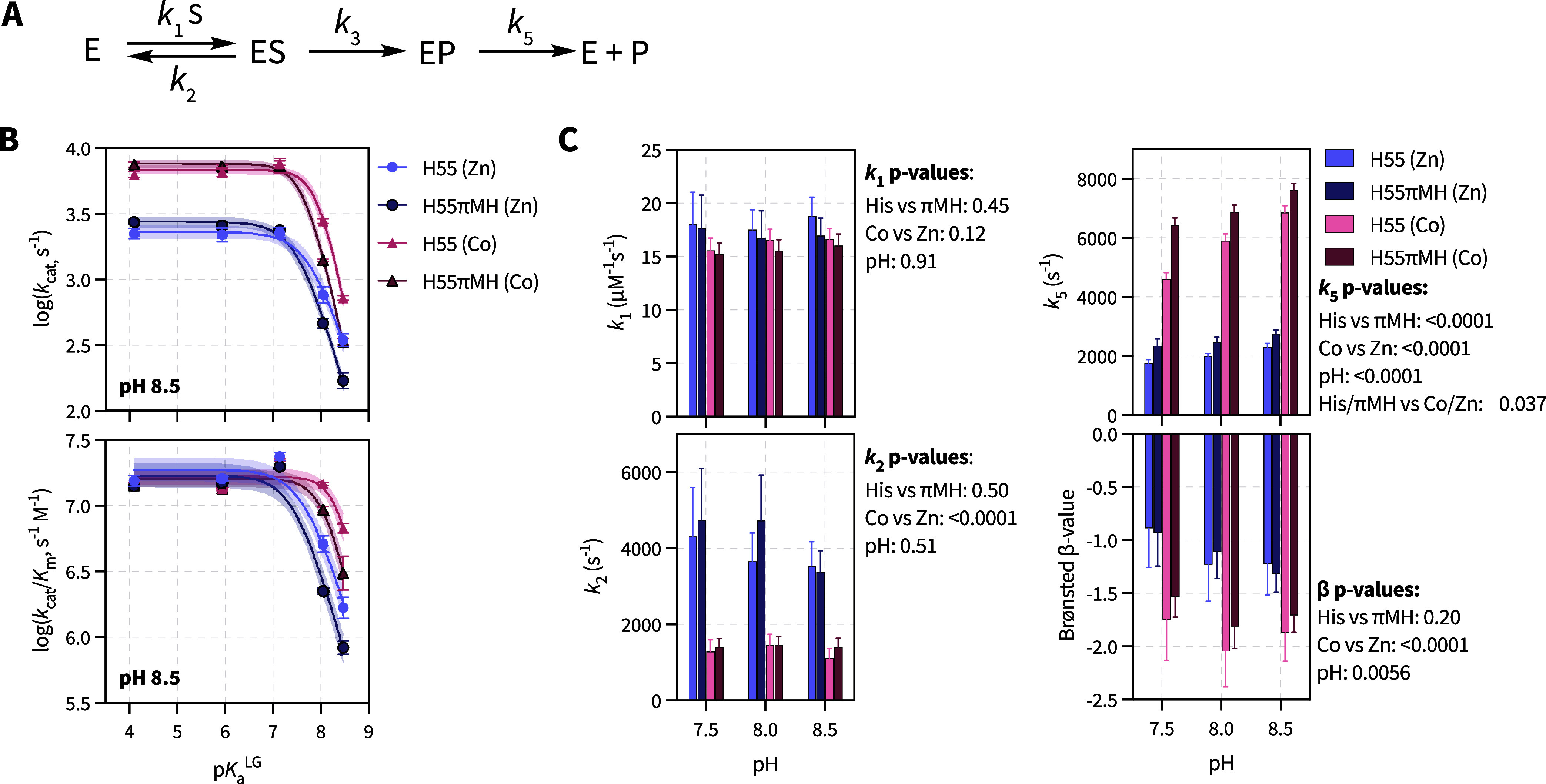 Figure 5
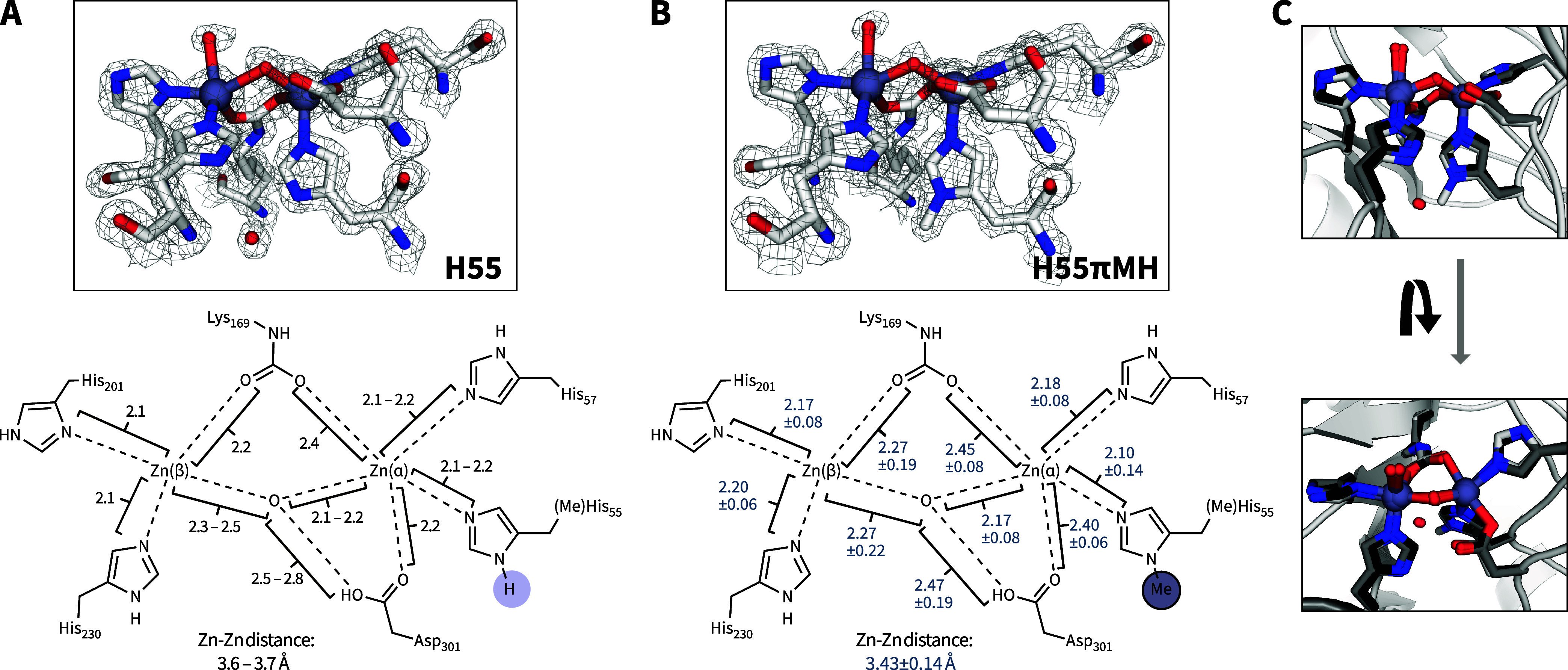 Figure 6
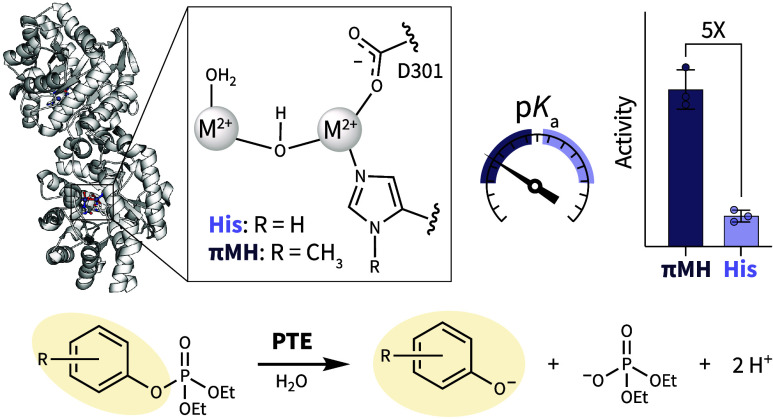 Figure 7
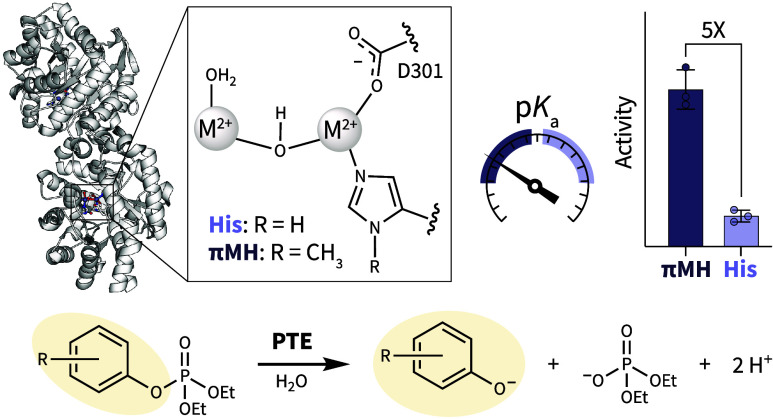 Figure 8
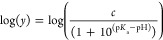 Figure 9
 Figure 10
 Figure 11
 Figure 12
 Figure 13
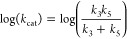 Figure 14
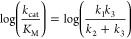 Figure 15
 Figure 16
Peer Reviews
No public reviews on file for this paper yet. If you reviewed it on a platform where reviews are public (OpenReview, ICLR, NeurIPS, ICML), you can paste yours below so the community can read it here.
Videos
No videos yet. Explain this paper in a talk, walkthrough, or lecture? Add one.
Taxonomy
TopicsMetalloenzymes and iron-sulfur proteins · Cyclopropane Reaction Mechanisms · Enzyme Catalysis and Immobilization