Reduced Processivity in a Chitobiohydrolase Enhances LPMO-Assisted Chitin Depolymerization
Amanda K. Votvik, Zarah Forsberg, Alfonso Gautieri, Vincent G. H. Eijsink, Morten Sørlie

TL;DR
Reducing the processivity of a chitin-degrading enzyme improves its performance when working with a helper enzyme, offering insights into efficient breakdown of tough sugars.
Contribution
Engineering a less processive chitobiohydrolase variant that outperforms the wild-type when paired with LPMOs.
Findings
Less processive SmChiB mutants, especially W220Y, showed improved performance with LPMOs.
Molecular dynamics confirmed Trp220's role in substrate binding and processivity.
Combining W220Y with LPMOs doubled soluble product yield compared to wild-type under identical conditions.
Abstract
Efficient enzymatic depolymerization of recalcitrant polysaccharides such as chitin and cellulose relies on processive glycoside hydrolases (GHs), whose efficiency can be enhanced through cooperation with lytic polysaccharide monooxygenases (LPMOs). For processive GHs, retained binding during successive catalytic events aids depolymerization of crystalline substrates but comes at the expense of slow dissociation (low k off) that limits turnover. Here, we engineered a series of mutants of the processive exochitobiohydrolase SmChiB from Serratia marcescens, in which a major determinant of substrate affinity and processivity, Trp220, was replaced by Tyr, Phe, His, Gln, or Ala. Functional analysis showed that these mutants had stepwise reductions in substrate affinity and processivity, with the latter being a signature of an increased k off. Molecular dynamics simulations confirmed that…
Genes, proteins, chemicals, diseases, species, mutations and cell lines named across the full text — each resolved to its canonical identifier and authoritative record.
Click any figure to enlarge with its caption.
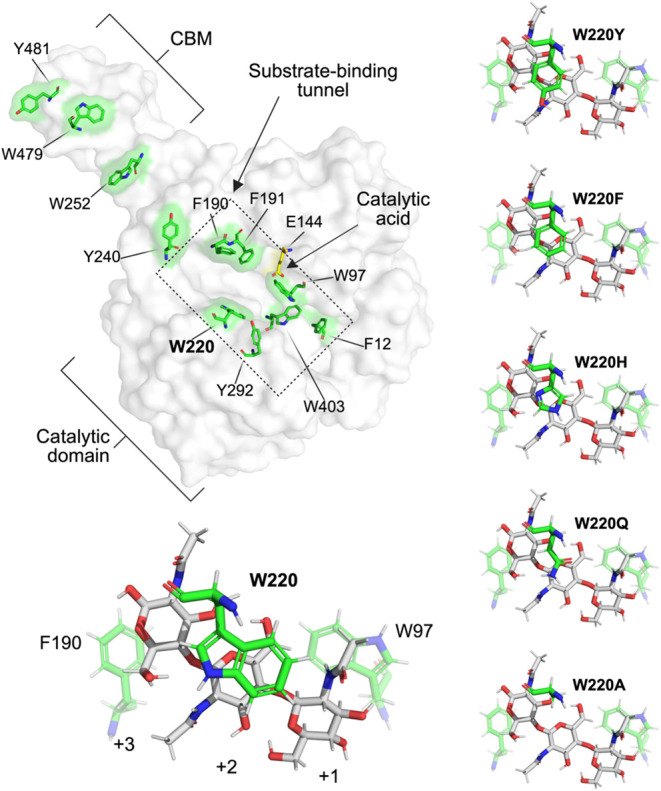 Figure 1
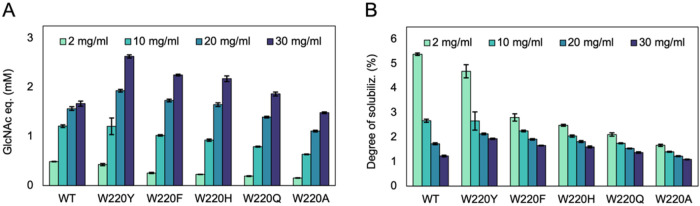 Figure 2
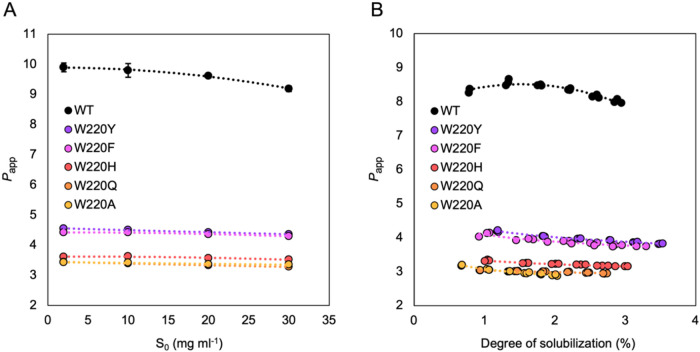 Figure 3
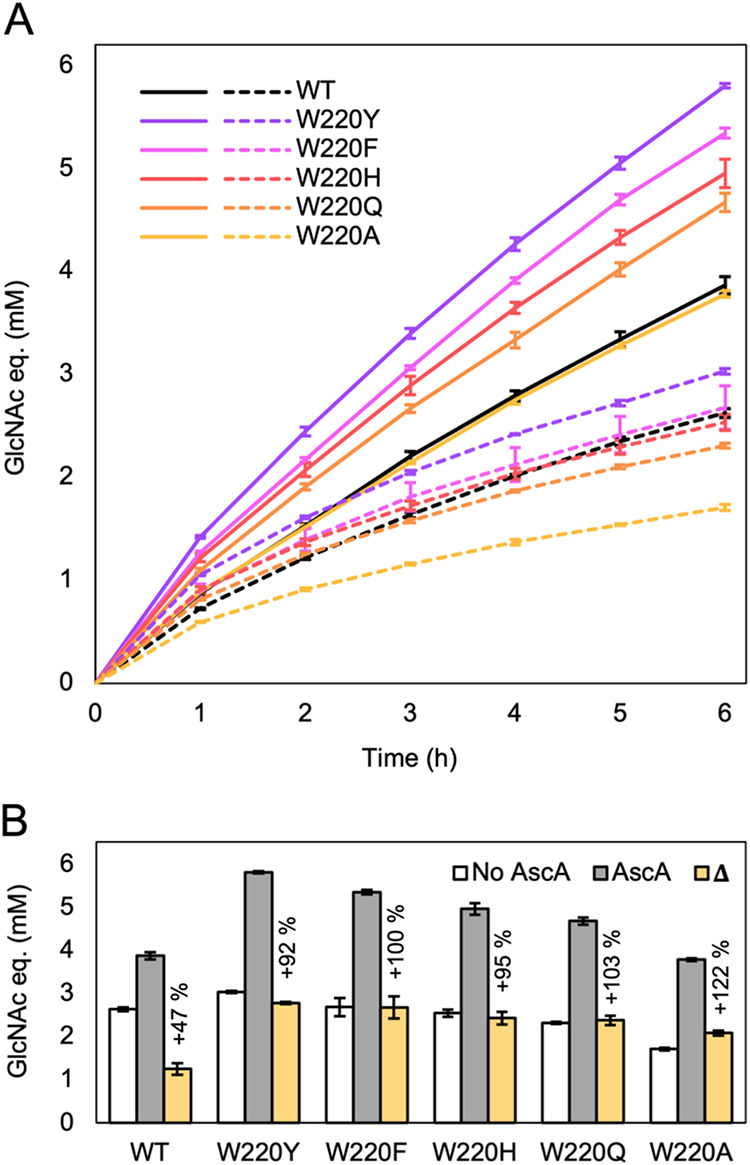 Figure 4
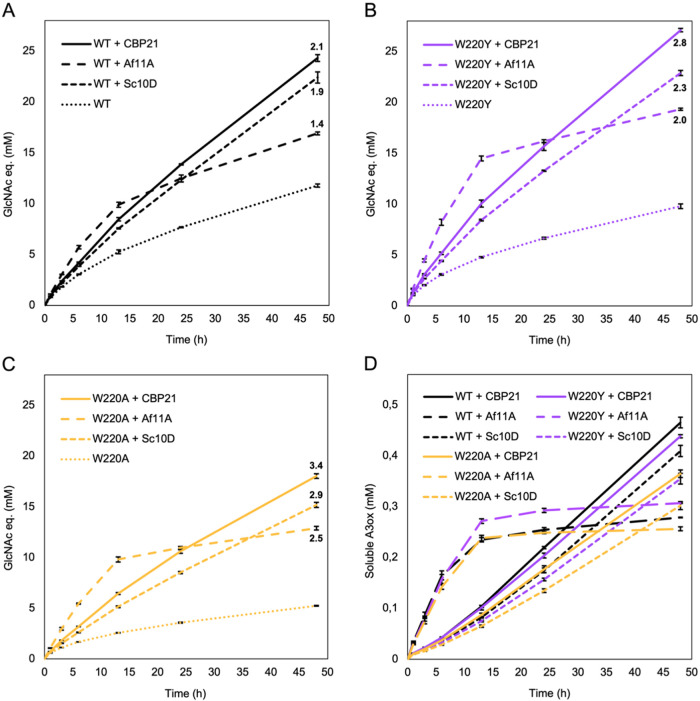 Figure 5
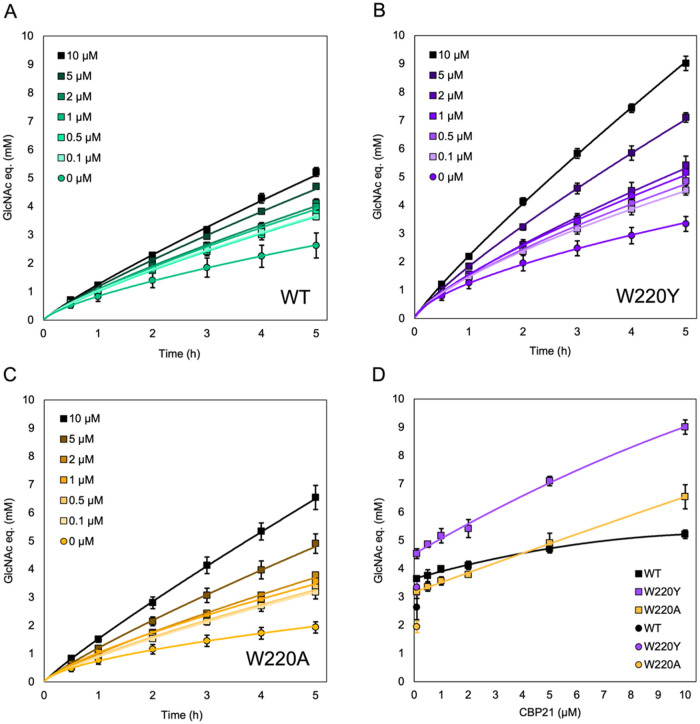 Figure 6
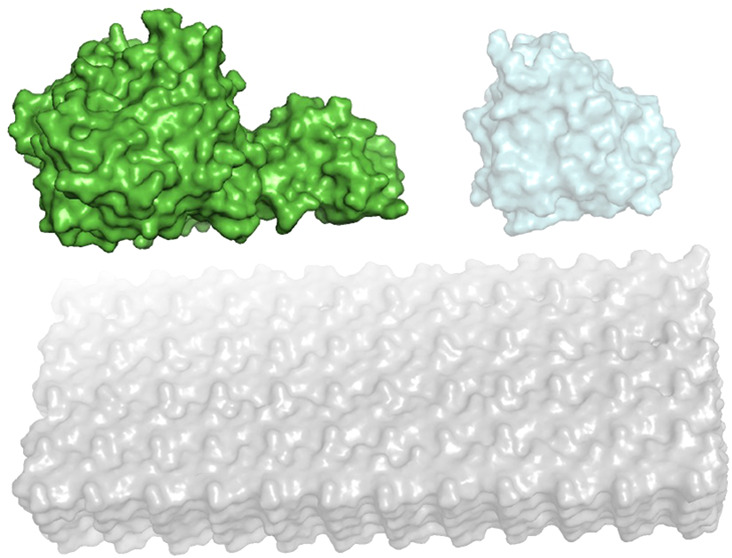 Figure 7
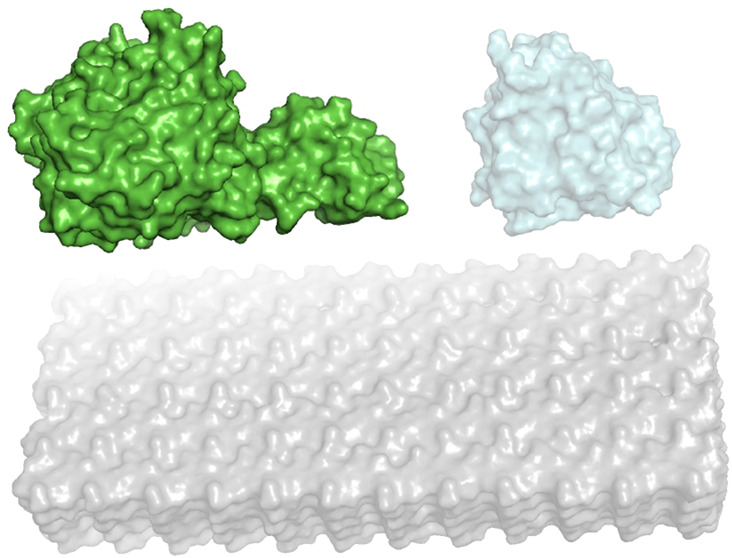 Figure 8
 Figure 9
Peer Reviews
No public reviews on file for this paper yet. If you reviewed it on a platform where reviews are public (OpenReview, ICLR, NeurIPS, ICML), you can paste yours below so the community can read it here.
Videos
No videos yet. Explain this paper in a talk, walkthrough, or lecture? Add one.
Taxonomy
TopicsPolysaccharides and Plant Cell Walls · Polysaccharides Composition and Applications · Biofuel production and bioconversion