Integrated morphological and transcriptomic analysis of sucker development in Octopus minor
Yeonji Kim, Chan-Jun Lee, Kyoung-Bin Ryu, Yam Prasad Aryal, Seonmi Jo, Dae-Cheol Seo, Ji-Hoon Song, Byeong-Gil Jeong, Mi-Jin Lee, Shin-Hong An, Seung-Hyun Jung, Hae-Youn Lee, Sung-Jin Cho

TL;DR
This study explores how octopus suckers develop from embryos to juveniles, combining detailed imaging and gene analysis to reveal molecular and cellular processes involved.
Contribution
The study identifies specific genes and WNT signaling's role in sucker muscle development in octopuses, offering new insights into cephalopod embryonic morphogenesis.
Findings
Suckers initially form symmetrically and become asymmetrical through an embedding process.
Transcriptomic analysis identified 2,349 differentially expressed genes linked to arm and muscle development.
WNT signaling molecules show increased expression in developing suckers, suggesting a conserved role in muscle development.
Abstract
Coleoid cephalopods are excellent models for evolutionary and developmental studies due to their centralized nervous system, short life span, and sophisticated sense organs. Arm suckers, essential for predation, manipulation, and locomotion, have been studied in Decapodiformes, but little is known at the cellular and molecular levels. Here, we investigated sucker development in Octopus minor from the embryo to the juvenile stage using morphological, histological, immunostaining, scanning electron microscopy (SEM), in situ hybridization, and transcriptomic analyses. SEM revealed that suckers initially form symmetrically and later become asymmetrical through an embedding process. Histology showed progressive structural differentiation, while immunostaining with acetylated α-tubulin and phalloidin visualized nerve fiber and muscle development. Transcriptome profiling of embryonic stages…
Genes, proteins, chemicals, diseases, species, mutations and cell lines named across the full text — each resolved to its canonical identifier and authoritative record.
Click any figure to enlarge with its caption.
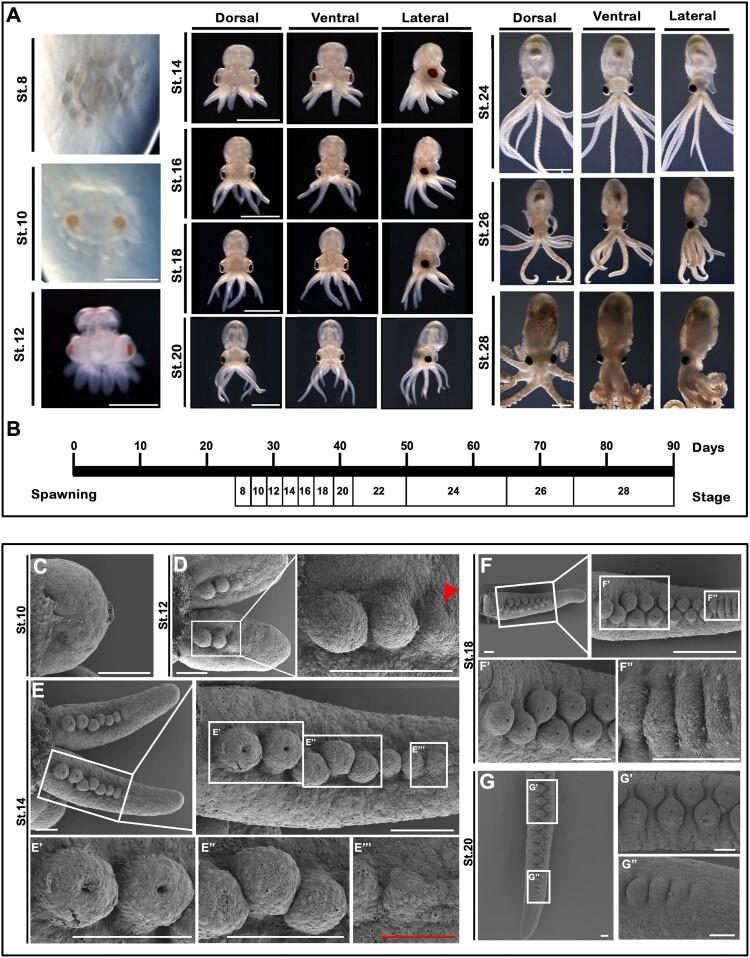 Figure 1
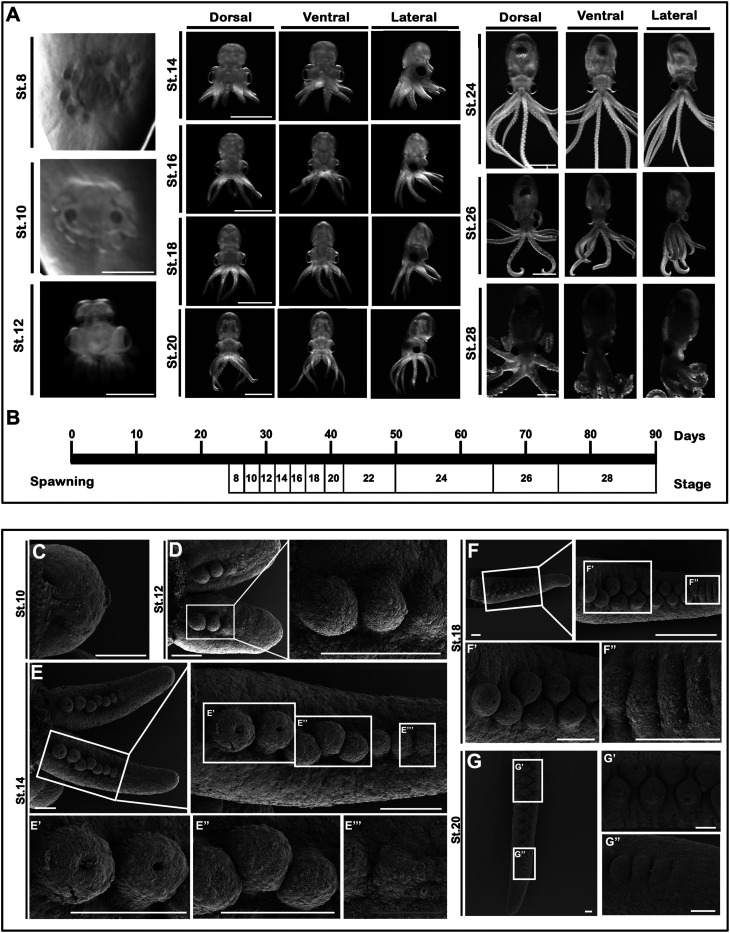 Figure 2
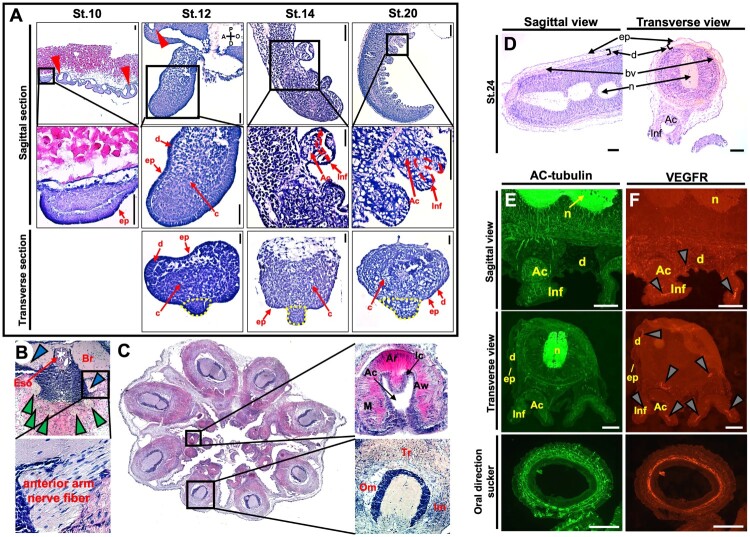 Figure 3
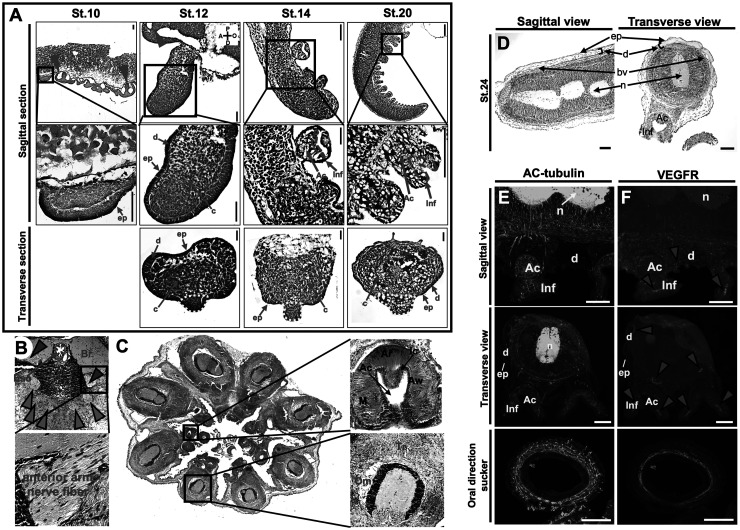 Figure 4
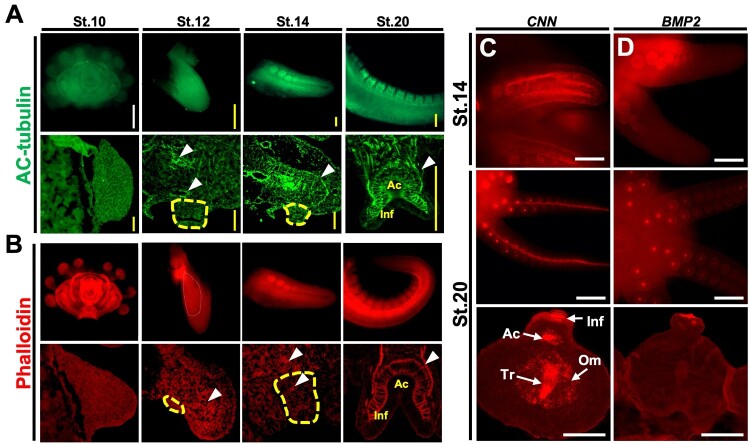 Figure 5
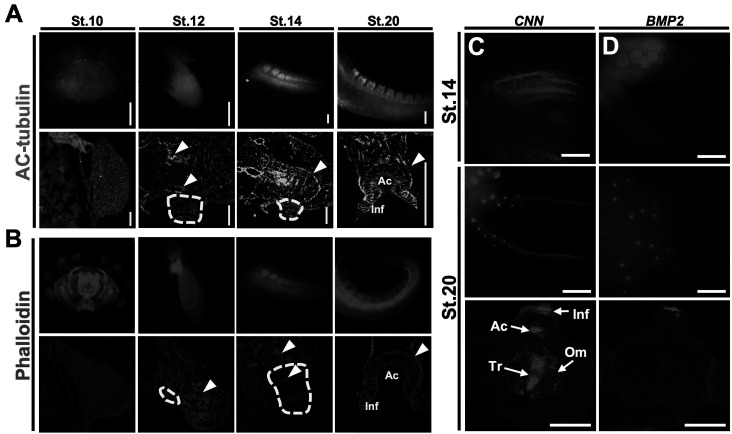 Figure 6
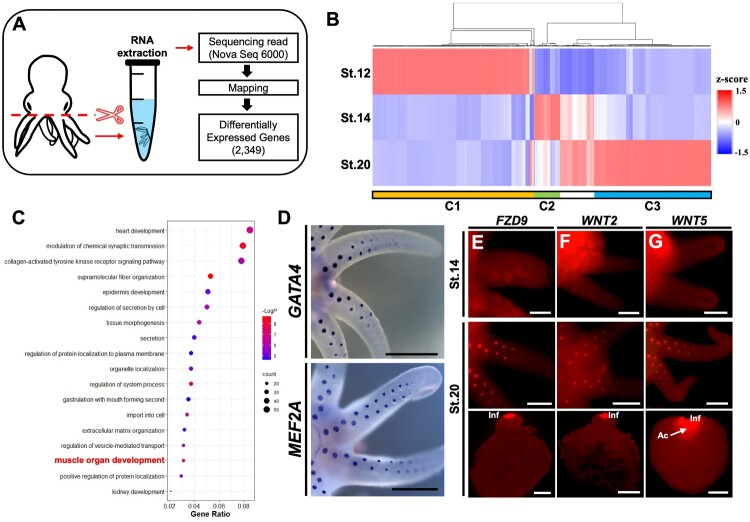 Figure 7
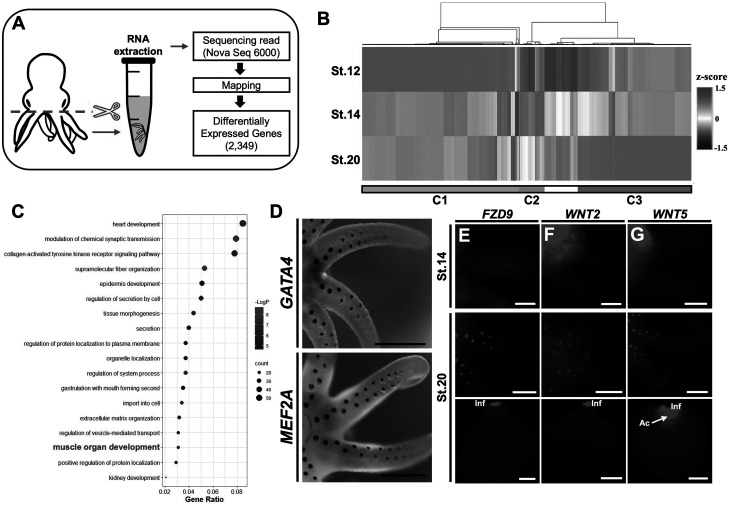 Figure 8
Peer Reviews
No public reviews on file for this paper yet. If you reviewed it on a platform where reviews are public (OpenReview, ICLR, NeurIPS, ICML), you can paste yours below so the community can read it here.
Videos
No videos yet. Explain this paper in a talk, walkthrough, or lecture? Add one.
Taxonomy
TopicsCephalopods and Marine Biology · Echinoderm biology and ecology · Marine Biology and Environmental Chemistry