Neonatal resuscitation skills retention among healthcare providers one year after implementation of in situ low-dose high-frequency simulations using innovative tools across two regions in Tanzania
Florence Salvatory Kalabamu, Vickfarajaeli Daudi, Robert Moshiro, Benjamin Kamala, Paschal Mdoe, Dunstan Bishanga, Jan Terje Kvaløy, Hege Ersdal, Rose Mpembeni

TL;DR
Healthcare providers in Tanzania retained most neonatal resuscitation skills a year after training with innovative simulation tools, though male providers showed more skill decline.
Contribution
Demonstrates the effectiveness of in situ low-dose high-frequency simulations using innovative tools for long-term skill retention in neonatal resuscitation in resource-limited settings.
Findings
174 out of 226 healthcare providers retained resuscitation skills one year after training.
Male healthcare providers were less likely to retain skills compared to females.
A mean skills score drop of 10.2% was observed from baseline to one year post-training.
Abstract
The Safer Births Bundle of Care (SBBC) was introduced in five regions in Tanzania to improve the quality of care around birth. Among the interventions was an initiative to train healthcare providers on neonatal resuscitation following the Helping Babies Breathe curriculum, using innovative simulation tools. This study aimed to assess simulated neonatal resuscitation skills retention and associated factors one year after implementation. A longitudinal study among healthcare providers working in the labour wards of 12 facilities in two regions undergoing SBBC implementation. Healthcare providers were trained and evaluated at baseline and one year after implementation of in situ self-regulated individual skill training. A paired t-test was used to compare the mean difference in skills scores, while factors associated with skills retention were assessed using a modified Poisson regression…
Genes, proteins, chemicals, diseases, species, mutations and cell lines named across the full text — each resolved to its canonical identifier and authoritative record.
Click any figure to enlarge with its caption.
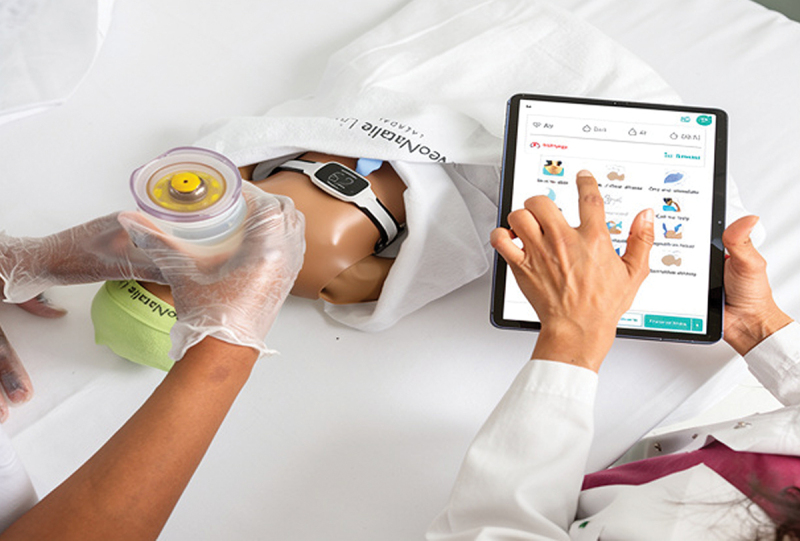 Figure 1
 Figure 2
Peer Reviews
No public reviews on file for this paper yet. If you reviewed it on a platform where reviews are public (OpenReview, ICLR, NeurIPS, ICML), you can paste yours below so the community can read it here.
Videos
No videos yet. Explain this paper in a talk, walkthrough, or lecture? Add one.
Taxonomy
TopicsSimulation-Based Education in Healthcare · Global Maternal and Child Health · Global Health and Surgery