The environmental degradation of naphthalimide, rhodamine and BODIPY fluorophores by hydroxyl radicals: a theoretical insight
Nguyen Linh Nam, Mai Van Bay, Nguyen Thi Hoa, Nguyen Quang Trung, Nguyen Minh Thong, Adam Mechler, Pham Cam Nam, Nguyen Khoa Hien, Duong Tuan Quang, Quan V. Vo

TL;DR
This study uses theoretical methods to explore how three common fluorophores degrade in the environment due to hydroxyl radicals and their potential ecological risks.
Contribution
The paper provides a novel theoretical insight into the environmental degradation and ecological risks of RDA, NPA, and BOD fluorophores by hydroxyl radicals.
Findings
RDA shows strong pH-dependent reactivity with a wide range of lifetimes in natural waters.
NPA degrades more slowly and is more environmentally persistent compared to RDA and BOD.
BOD reacts rapidly under all conditions and may be less ecologically harmful than RDA and NPA.
Abstract
Rhodamine (RDA), naphthalimide (NPA), and BODIPY (BOD) are widely used fluorophores whose environmental fate is hitherto unexplored. In this study, quantum chemical calculations were employed to investigate the HO˙-driven degradation processes of these fluorophores in aqueous and organic media, focusing on the mechanism, kinetics, thermodynamics, and ecological risks. The results suggest that all three fluorophores undergo reactions with HO˙, but their behaviors differ markedly. RDA displays strong pH-dependent reactivity, with overall rate constants ranging from 8.76 × 10⁸ to 4.02 × 10¹⁰ M−1 s−1 depending on protonation state, and lifetimes spanning from hours to years in natural waters. NPA degrades more slowly, with rate constants of 7.06 × 10⁷ M−1 s−1 (neutral form) and 8.20 × 10⁸ M−1 s−1 (anion), resulting in greater environmental persistence. BOD reacts rapidly across all…
Genes, proteins, chemicals, diseases, species, mutations and cell lines named across the full text — each resolved to its canonical identifier and authoritative record.
Click any figure to enlarge with its caption.
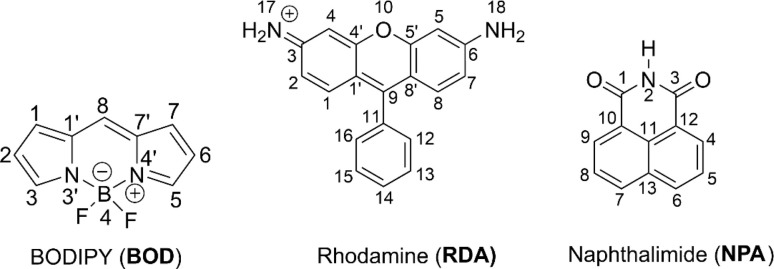 Figure 1
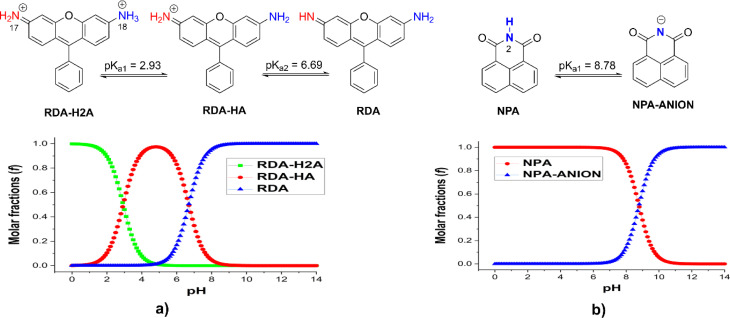 Figure 2
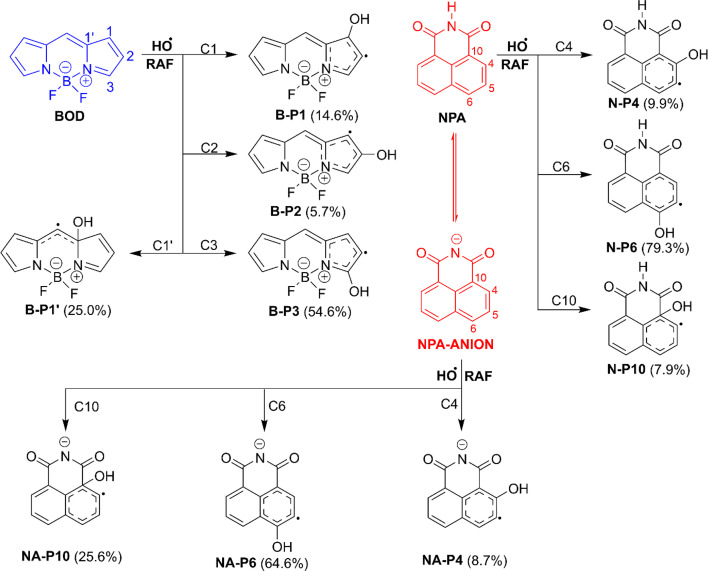 Figure 3
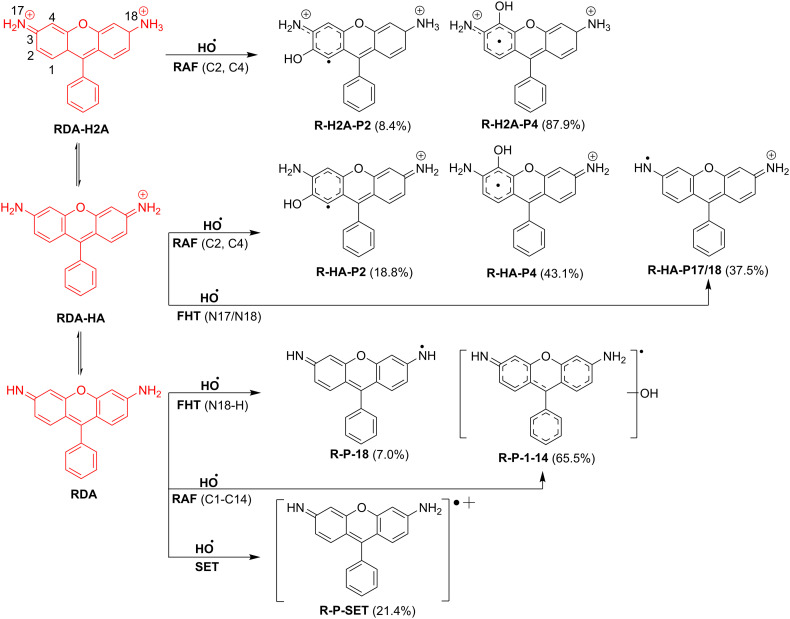 Figure 4
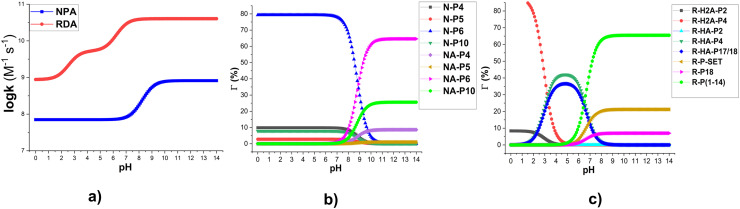 Figure 5
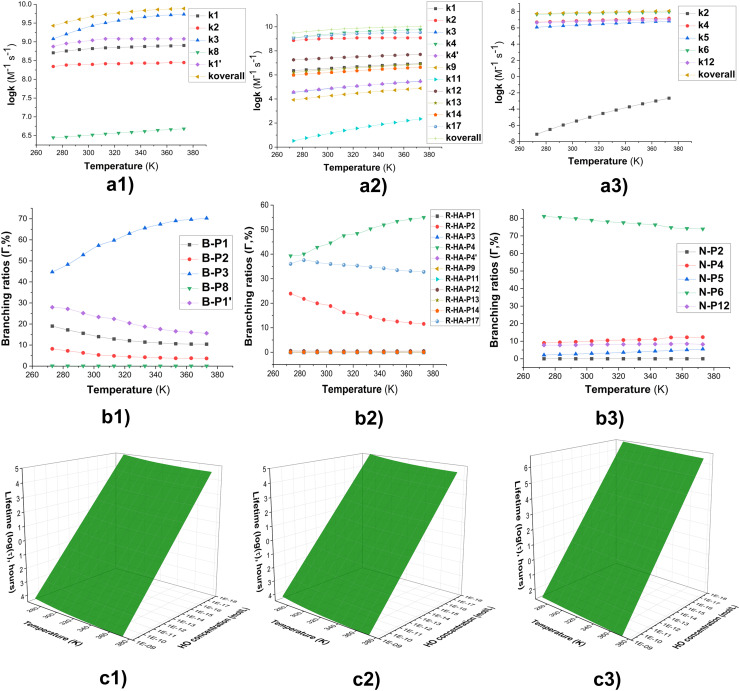 Figure 6
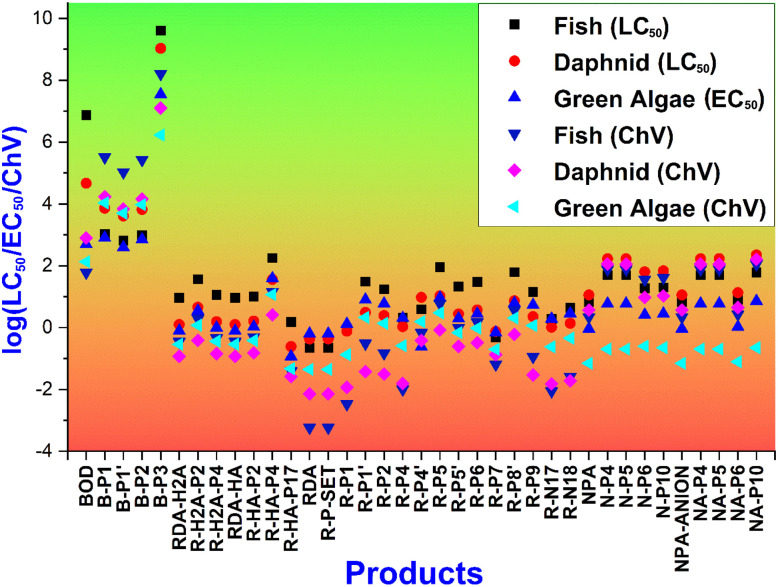 Figure 7
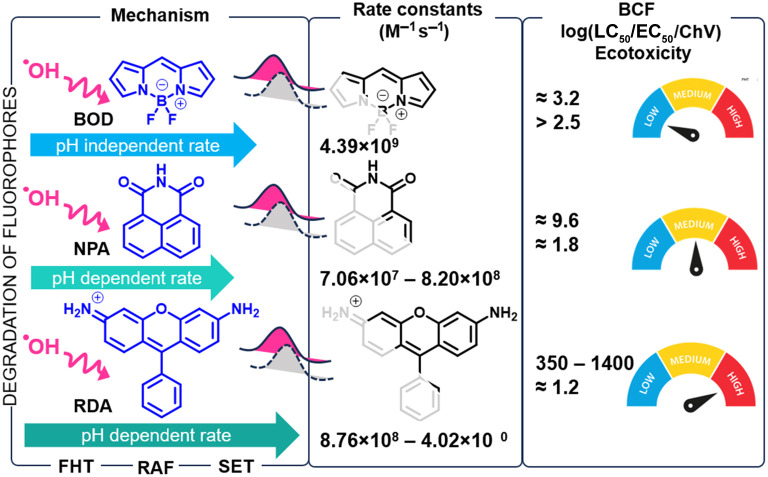 Figure 8
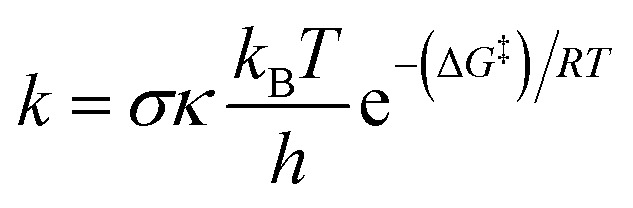 Figure 9
Peer Reviews
No public reviews on file for this paper yet. If you reviewed it on a platform where reviews are public (OpenReview, ICLR, NeurIPS, ICML), you can paste yours below so the community can read it here.
Videos
No videos yet. Explain this paper in a talk, walkthrough, or lecture? Add one.
Taxonomy
TopicsLuminescence and Fluorescent Materials · Photochemistry and Electron Transfer Studies · Per- and polyfluoroalkyl substances research