Clinical characteristics and outcomes associated with preserved ratio impaired spirometry (PRISm) in Saudi Arabia
Abdullah A. Alqarni, Abdulelah M. Aldhahir, Hassan Alwafi, Rayan A. Siraj, Jaber S. Alqahtani, Hanan F. Nassier, Maria M. Kutbi, Joud S. Sager, Hanadi A. Balfas, Ahmed H. Alasimi, Yousef S. Aldabayan, John R. Hurst

TL;DR
This study in Saudi Arabia finds that people with PRISm, a lung function issue, often experience anxiety, depression, and reduced quality of life, highlighting the need for better care.
Contribution
The study is the first to characterize psychological and symptomatic burdens of PRISm in Saudi Arabia and link them to clinical outcomes.
Findings
37.6% of PRISm patients had anxiety symptoms and 26.7% had depression symptoms.
66.3% of PRISm patients had impaired quality of life and 36.6% experienced increased breathlessness.
Depression was associated with more comorbidities and worse health outcomes in PRISm patients.
Abstract
Preserved ratio impaired spirometry (PRISm) is an abnormal spirometric pattern associated with increased morbidity and mortality. However, its psychological and symptomatic burden remains poorly characterized. This study aimed to: (1) assess the prevalence of anxiety, depression, breathlessness, impaired health status, and reduced quality of life; (2) evaluate the impact of psychological and respiratory symptoms on clinical outcomes; and (3) explore the associations of psychological and respiratory symptoms with clinical outcomes among patients with PRISm in Saudi Arabia. Breathlessness was assessed using the modified Medical Research Council (mMRC) Dyspnea Scale. Symptoms of anxiety and depression were evaluated using the Hospital Anxiety and Depression Scale (HADS). Quality of life was measured using the St. George’s Respiratory Questionnaire (SGRQ). Overall health status and the…
Genes, proteins, chemicals, diseases, species, mutations and cell lines named across the full text — each resolved to its canonical identifier and authoritative record.
Click any figure to enlarge with its caption.
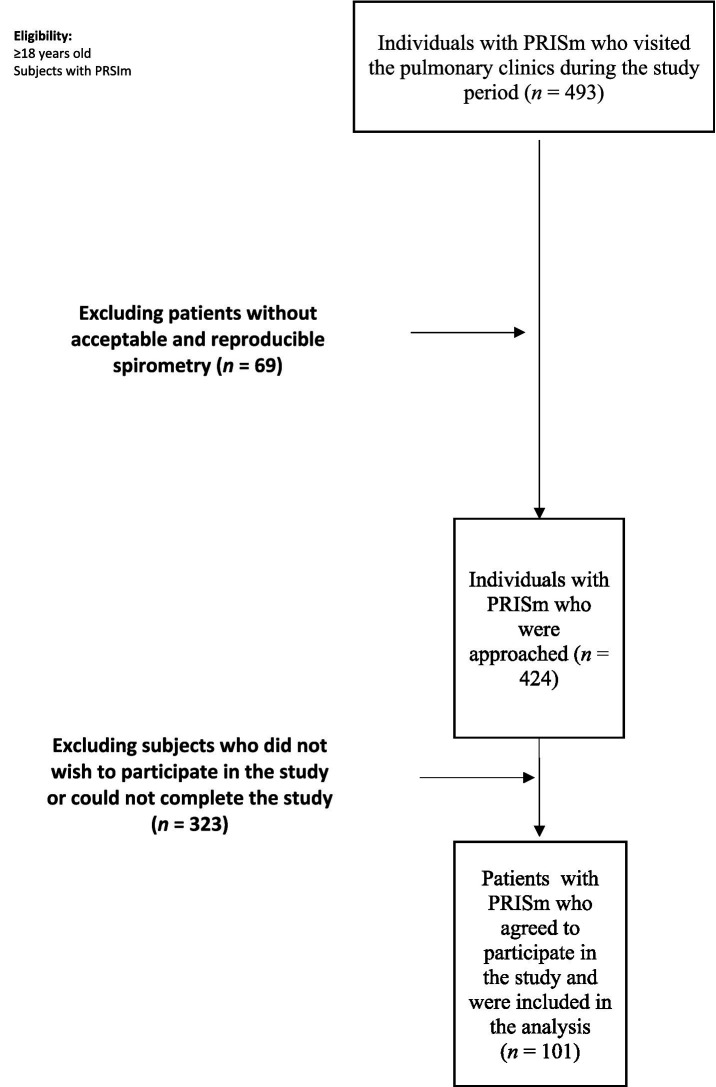 Figure 1
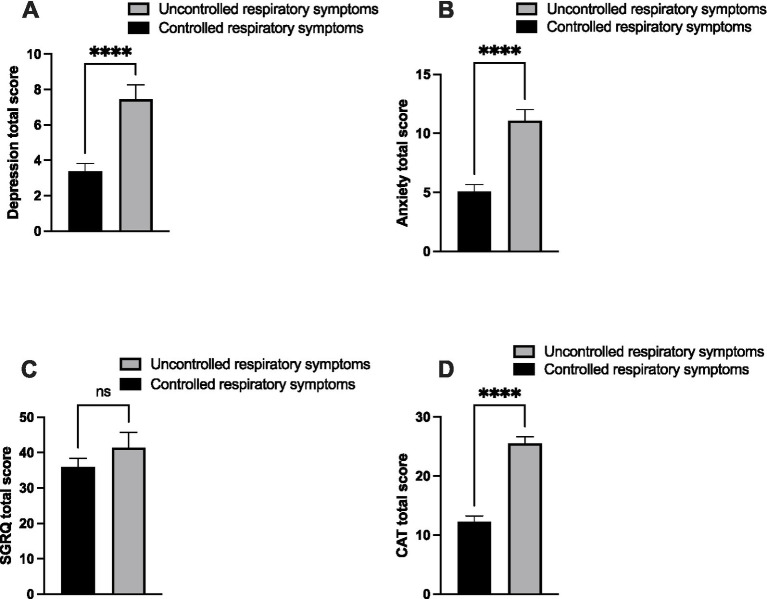 Figure 2
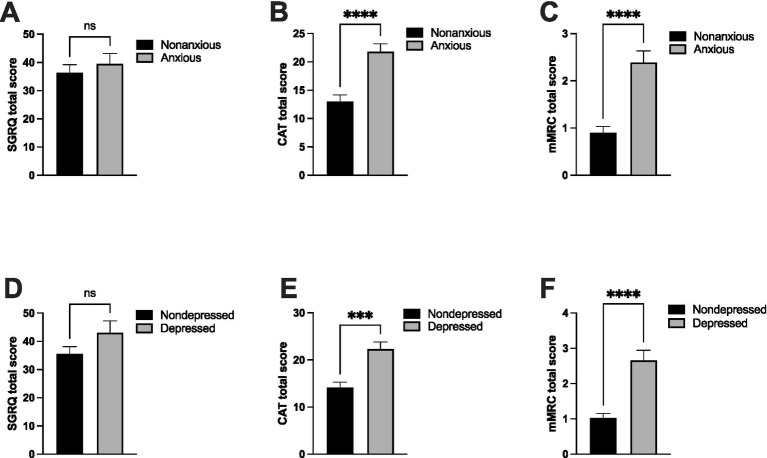 Figure 3
Peer Reviews
No public reviews on file for this paper yet. If you reviewed it on a platform where reviews are public (OpenReview, ICLR, NeurIPS, ICML), you can paste yours below so the community can read it here.
Videos
No videos yet. Explain this paper in a talk, walkthrough, or lecture? Add one.
Taxonomy
TopicsChronic Obstructive Pulmonary Disease (COPD) Research · Delphi Technique in Research · Respiratory and Cough-Related Research