Effect of Region-of-Interest Prompting on Gemini 2.5 Pro in MRI Classification of Anterior Cruciate Ligament Injury
Nitin Chetla, Shivam Patel, Luis Rodriguez, Harlene Kaur, Andrew Bouras, William Wang, Adamya Gupta, Samuel Rice

TL;DR
This study tested how different prompts affect the ability of Gemini 2.5 Pro to classify ACL injuries in knee MRI scans, finding minimal improvement with region-of-interest prompting.
Contribution
The study evaluates the impact of prompt engineering on a large language model's performance in ACL injury classification using MRI data.
Findings
ROI prompting (P3) achieved the highest weighted F1-score (0.31) but showed only minor improvement.
All prompts demonstrated poor overall classification performance with low sensitivity and accuracy.
Confusion matrices indicated better discrimination of completely ruptured ACLs with P3.
Abstract
Background: Artificial intelligence (AI) has shown promise in musculoskeletal imaging, yet the diagnostic contribution of large language models (LLMs) remains unclear. Prompt engineering may critically shape performance. Objective: To evaluate the diagnostic accuracy of Google Gemini 2.5 Pro in classifying anterior cruciate ligament (ACL) status on knee magnetic resonance imaging (MRI) and to compare three prompting strategies; the primary endpoint was weighted F1-score. Methods: A retrospective diagnostic study used 150 proton-density fat-suppressed (PD-FS) knee MRI volumes (50 each: healthy, partially injured, completely ruptured) drawn from a publicly available dataset (Clinical Hospital Centre Rijeka, Croatia; 2006-2014). Gemini 2.5 Pro received multimodal inputs via the official Python software development kit (SDK). Three prompts were tested: (P1) general series prompt, (P2)…
Genes, proteins, chemicals, diseases, species, mutations and cell lines named across the full text — each resolved to its canonical identifier and authoritative record.
Click any figure to enlarge with its caption.
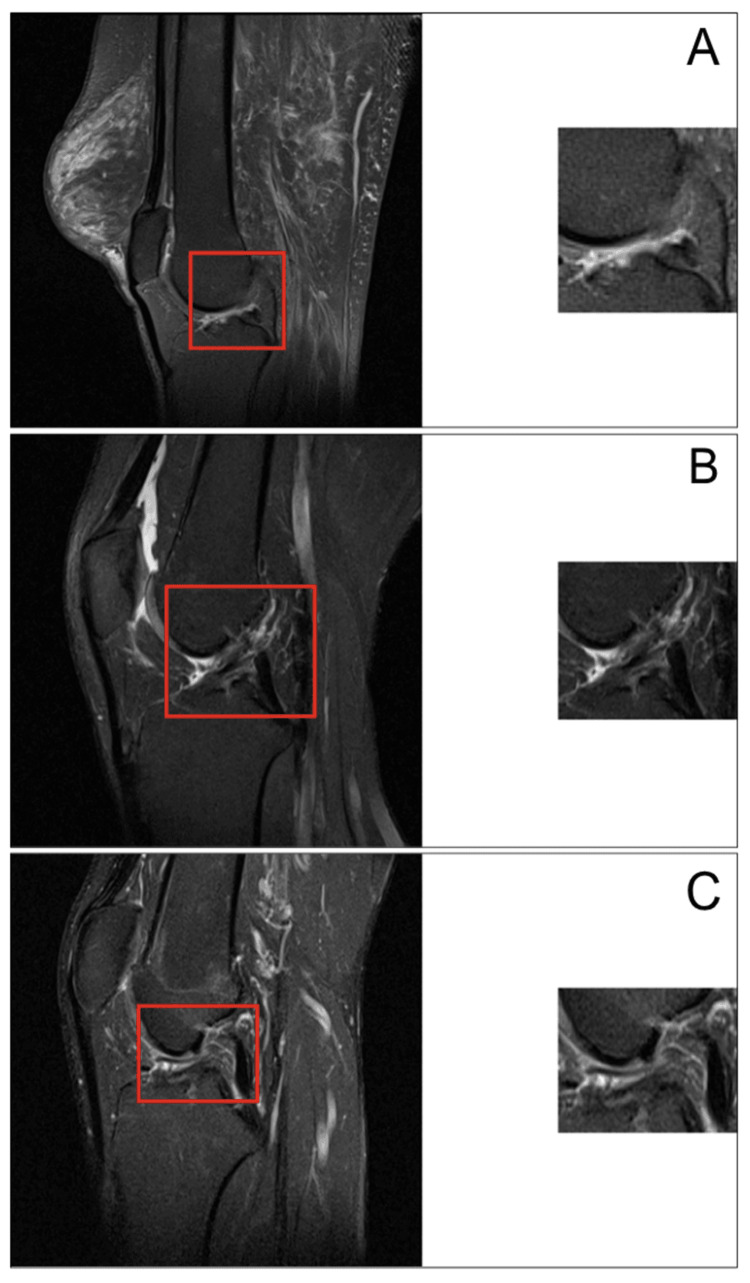 Figure 1
Peer Reviews
No public reviews on file for this paper yet. If you reviewed it on a platform where reviews are public (OpenReview, ICLR, NeurIPS, ICML), you can paste yours below so the community can read it here.
Videos
No videos yet. Explain this paper in a talk, walkthrough, or lecture? Add one.
Taxonomy
TopicsKnee injuries and reconstruction techniques · Artificial Intelligence in Healthcare and Education · Osteoarthritis Treatment and Mechanisms