Novel RAD50 variants lead to Nijmegen Breakage Syndrome–like disorder and unplanned recombinant human growth hormone treatment response
Yan Gong, MingYu Jiang, ShengNan Wu, Sheng Guo, YongFen Lyu

TL;DR
A boy with RAD50 gene mutations showed Nijmegen Breakage Syndrome-like symptoms and responded to growth hormone treatment, but with potential tumor risks.
Contribution
First report on unplanned recombinant human growth hormone treatment response in RAD50-related disorder and its tumor risk implications.
Findings
Two novel RAD50 variants (p.His1269Argfs2 and p.Ser844Asn) were identified in a patient with Nijmegen Breakage Syndrome-like disorder.
Recombinant human growth hormone improved growth but may increase tumor risk in RAD50-mutated individuals.
Long-term follow-up showed no tumor formation after growth hormone discontinuation.
Abstract
Human RAD50 gene mutations cause Nijmegen Breakage Syndrome-like disease, characterized by severe prenatal and postpartum growth retardation and microcephaly. It is very rare (less than 5 cases) with limited clinical data and treatment experience. Clinical information was collected on a boy with microcephaly and severe growth restriction, including birth history, clinical features, unplanned response to recombinant human growth hormone treatment, and five-year follow-up after growth hormone discontinuation. The child underwent trio-based whole-exome sequencing and Sanger sequencing to validate the mutation. Constructed variant plasmids were used for in vitro functional experiments and Western blots to evaluate the potential impact of the variants. The boy was born at full term, with substantial growth retardation from infancy to early childhood. At the age of 4.5 years, the child with…
Genes, proteins, chemicals, diseases, species, mutations and cell lines named across the full text — each resolved to its canonical identifier and authoritative record.
Click any figure to enlarge with its caption.
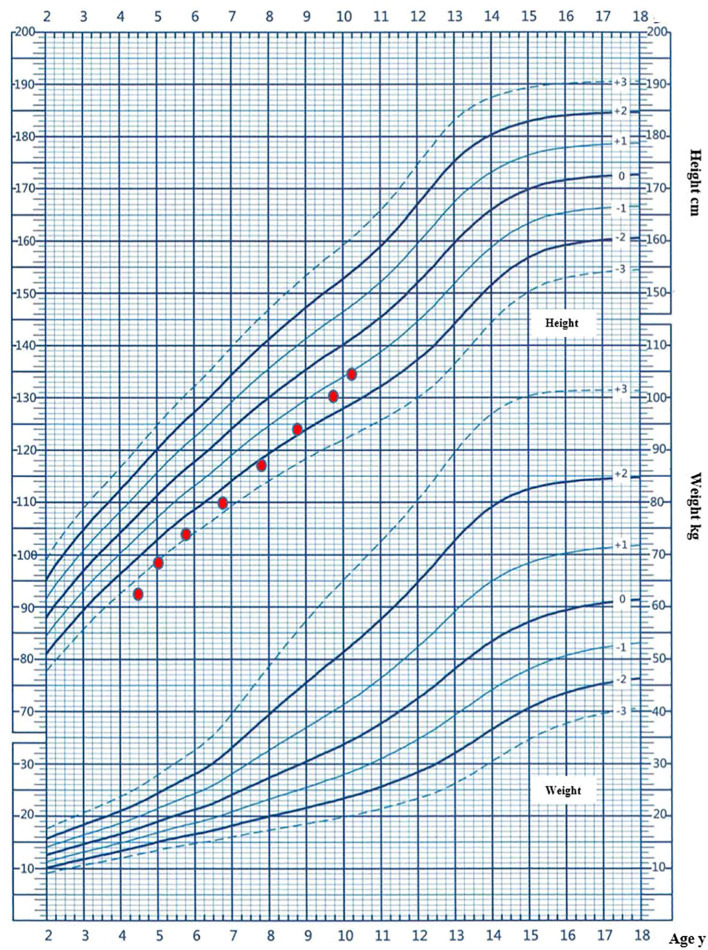 Figure 1
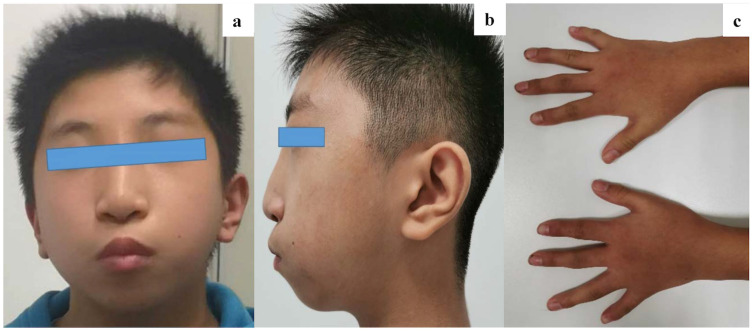 Figure 2
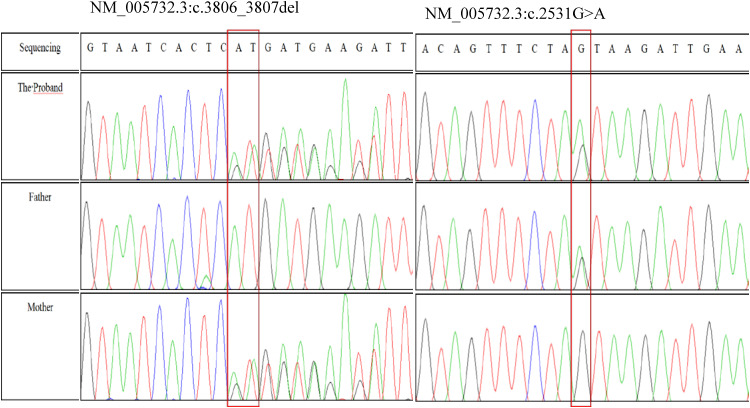 Figure 3
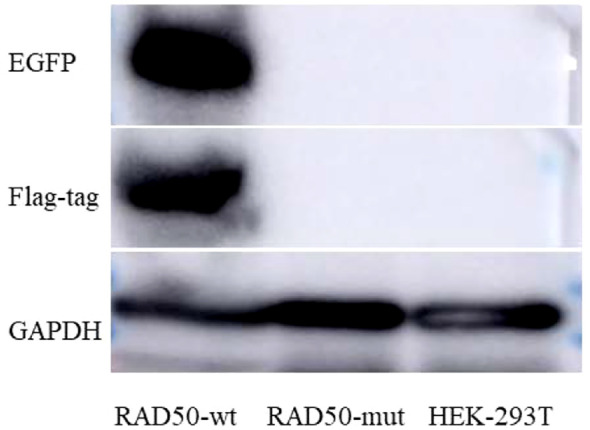 Figure 4
Peer Reviews
No public reviews on file for this paper yet. If you reviewed it on a platform where reviews are public (OpenReview, ICLR, NeurIPS, ICML), you can paste yours below so the community can read it here.
Videos
No videos yet. Explain this paper in a talk, walkthrough, or lecture? Add one.
Taxonomy
TopicsGrowth Hormone and Insulin-like Growth Factors · Nuclear Structure and Function · Congenital limb and hand anomalies