Employment of Two-Acid Promoter System in Pictet–Spengler Reaction: A Robust Two-Step Synthesis of Aza-Heterocycles
Dario Gentili, Gabriele Lupidi, Francesco Catalini, Alessio Petrellini, Vishnuprasad Ponnarassery Aravindakshan, Federico Vittorio Rossi, Alessandro Guzzini, Giacomo Di Giambattista, Cristina Cimarelli, Serena Gabrielli, Enrico Marcantoni

TL;DR
This paper introduces a sustainable two-step method for making aza-heterocycles using a two-acid promoter system, which is efficient and produces high yields with minimal waste.
Contribution
A novel two-acid promoter system using graphene oxide and Amberlyst 15 for the Pictet–Spengler reaction is introduced.
Findings
The method achieves up to 92% yield without further purification.
Promoters can be reused over multiple cycles while maintaining efficiency.
The approach is tolerant to various functional groups and avoids interference between acids.
Abstract
The growing demand for increasingly sustainable chemical processes continues to stimulate organic chemistry to develop highly efficient, low-energy-consuming new reactions that require minimal effort to isolate intermediates and produce reduced waste. In this context, two-step reactions play an important role, and a good approach is the two-step synthesis, in which reagents and catalysts or promoters are introduced sequentially. Among these, the Pictet–Spengler-type cyclization (PS) is a powerful stepwise strategy for the synthesis of heterocyclic compounds. This article presents a novel and environmentally friendly two-step strategy for the Pictet–Spengler reaction, employing graphene oxide and Amberlyst 15 as acid promoters that yields a diverse product library (up to 92% yield) without the need for further purification. Both promoters can be reused over multiple reaction cycles,…
Genes, proteins, chemicals, diseases, species, mutations and cell lines named across the full text — each resolved to its canonical identifier and authoritative record.
Click any figure to enlarge with its caption.
 Figure 1
 Figure 2
 Figure 3
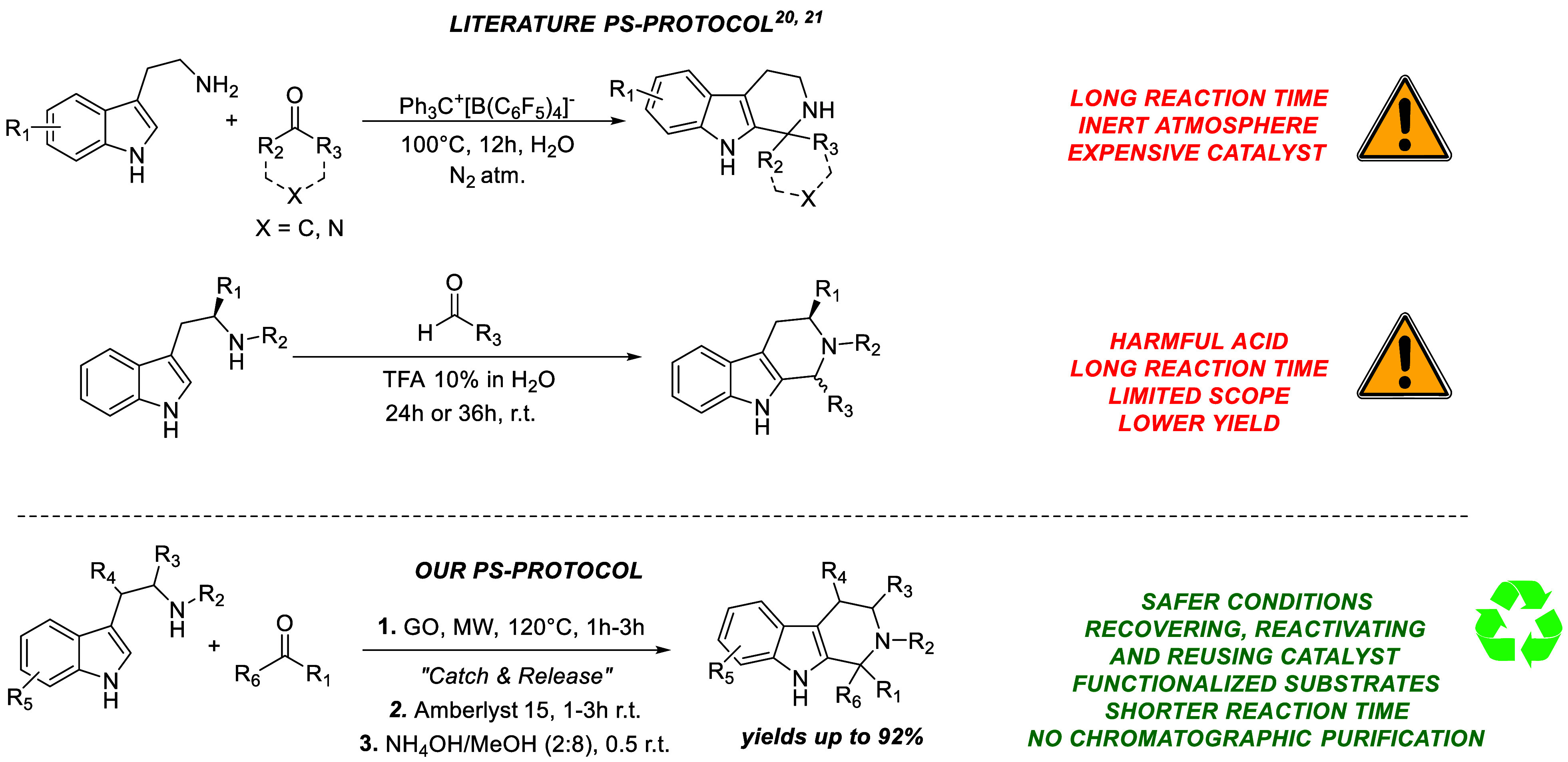 Figure 4
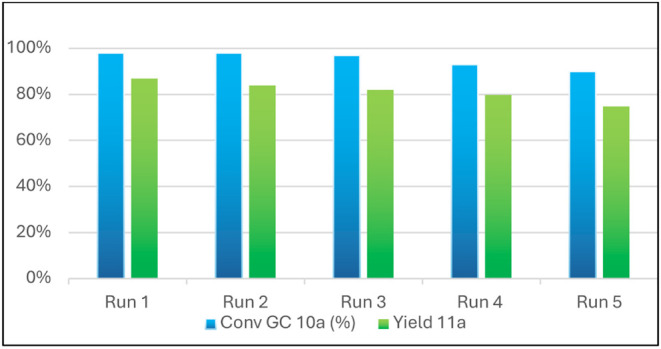 Figure 5
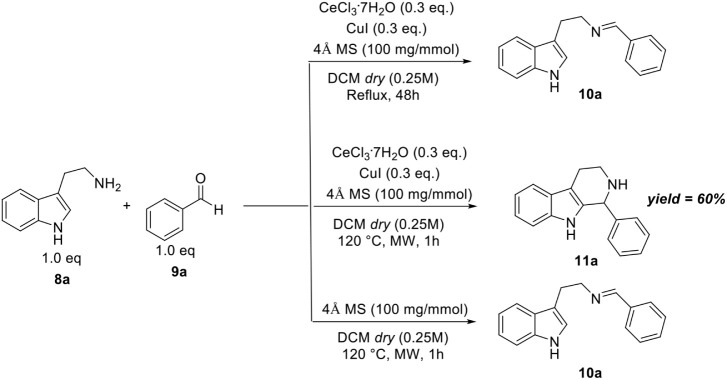 Figure 6
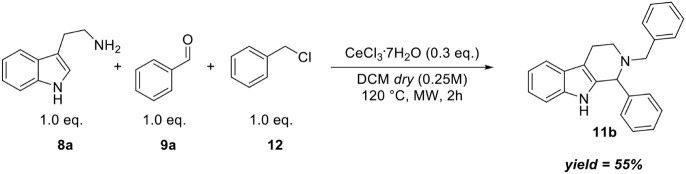 Figure 7
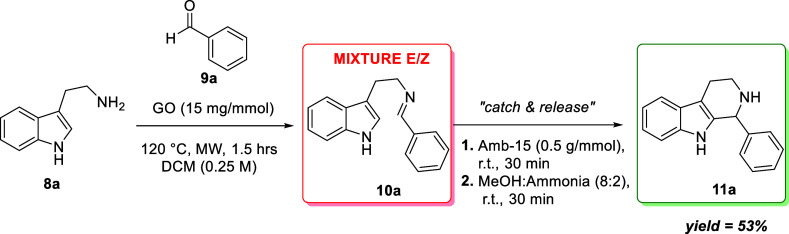 Figure 8
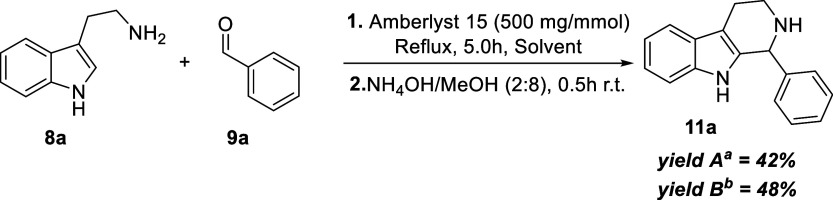 Figure 9
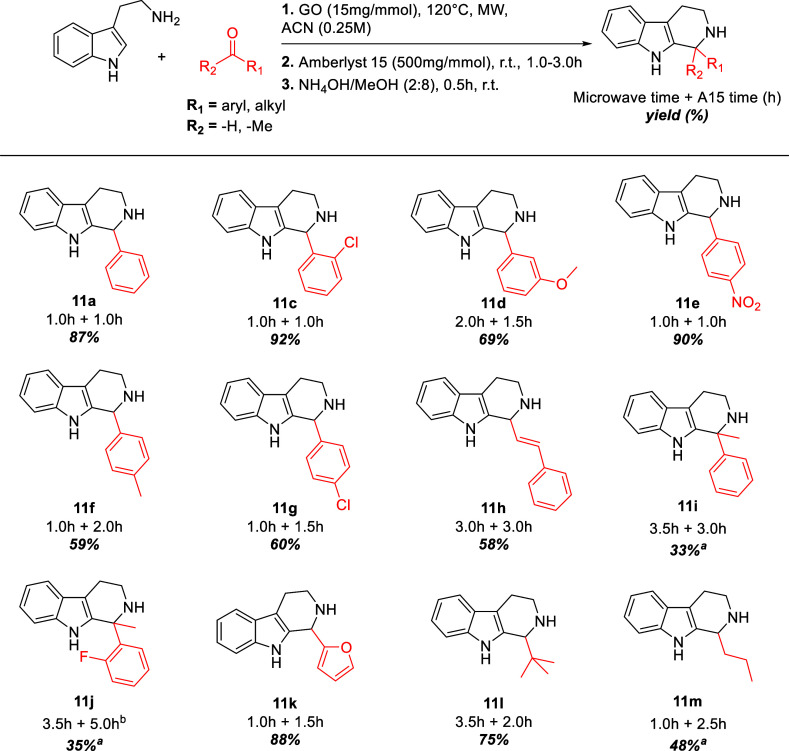 Figure 10
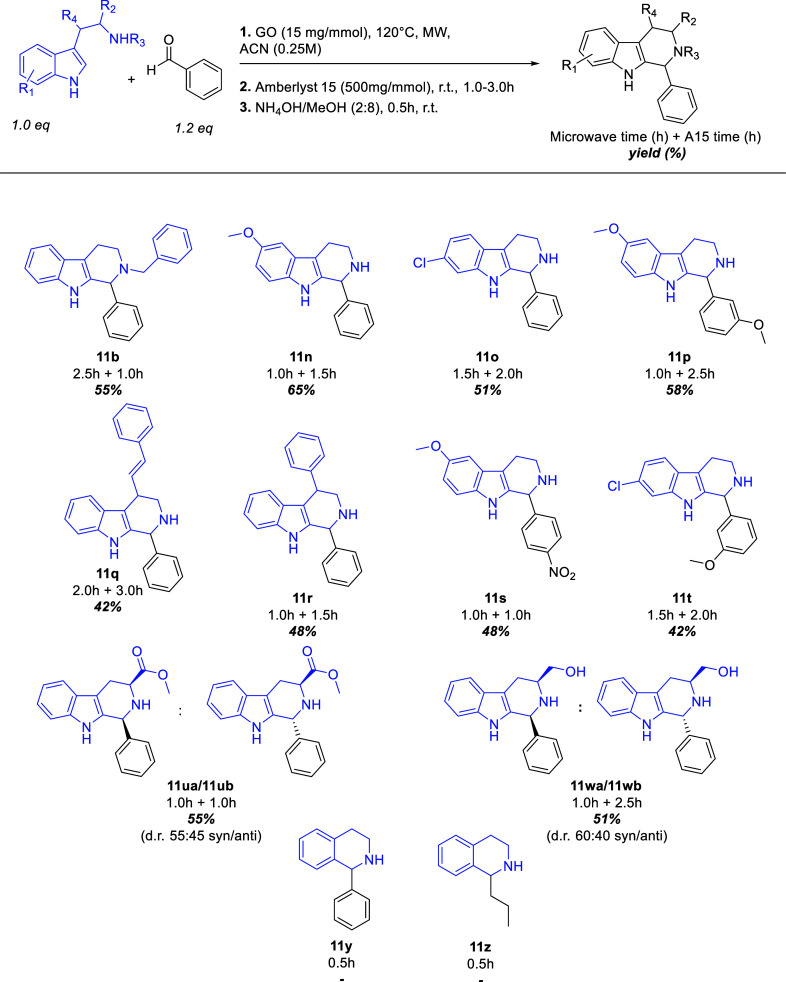 Figure 11
 Figure 12
 Figure 13
 Figure 14
 Figure 15
 Figure 16
Peer Reviews
No public reviews on file for this paper yet. If you reviewed it on a platform where reviews are public (OpenReview, ICLR, NeurIPS, ICML), you can paste yours below so the community can read it here.
Videos
No videos yet. Explain this paper in a talk, walkthrough, or lecture? Add one.
Taxonomy
TopicsSynthesis and bioactivity of alkaloids · Catalytic C–H Functionalization Methods · Multicomponent Synthesis of Heterocycles