Amenability of the Gatekeeper Enzyme HphA to Engineering in the Homologation Pathway of l‑Phenylalanine and l‑Tyrosine through Homology-Based Site-Directed Mutagenesis
Rebecca M. Lang Harman, H. Grace Blackstone, Favor O. Aruna, Shivam R. Patel, Minho Shin, Reed K. NeSmith, D. Brooks Dickson, Angela C. Spencer, Shogo Mori

TL;DR
Scientists modified an enzyme called HphA to change how it interacts with amino acids, potentially improving the stability and availability of peptides.
Contribution
The study identifies residue A73 in HphA as key to substrate specificity and shows that mutating it relaxes the enzyme's selectivity.
Findings
The A73L mutation in HphA significantly broadened its substrate specificity.
HphA A73L showed activity with multiple substrates including l-Tyr, l-Val, l-Leu, l-Ser, l-Trp, and l-Asp.
Kinetic assays confirmed that the A73L mutation made HphA more flexible in substrate use compared to the wild type.
Abstract
Homologation of amino acids, the addition or deletion of a methylene group onto their side chains, has the potential to increase the biostability and bioavailability of peptide natural products. The first enzyme in the homologation pathway, HphA, was previously characterized and is substrate selective. Bioinformatics studies were used to identify amino acids in the active site of HphA that may play a role in substrate selection, by comparison to homologous enzymes, homocitrate synthase (HCS) and 2-isopropylmalate synthase (IPMS). Single-point mutants for five amino acid residues in HphA’s active site were created to mimic those found in HCS and IPMS. Their activities were measured via time-course assays with the natural substrates for HCS and IPMS. Residue A73 was identified as important for the substrate specificity of HphA; therefore, six additional mutations were generated and tested…
Genes, proteins, chemicals, diseases, species, mutations and cell lines named across the full text — each resolved to its canonical identifier and authoritative record.
Click any figure to enlarge with its caption.
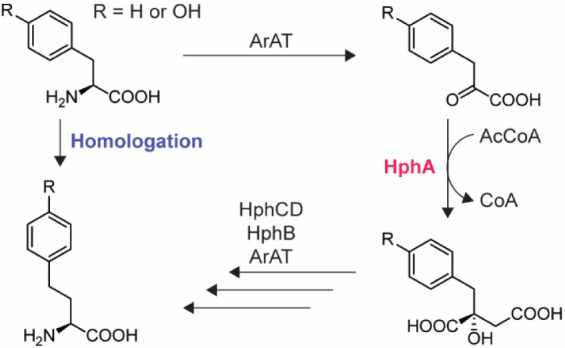 Figure 1
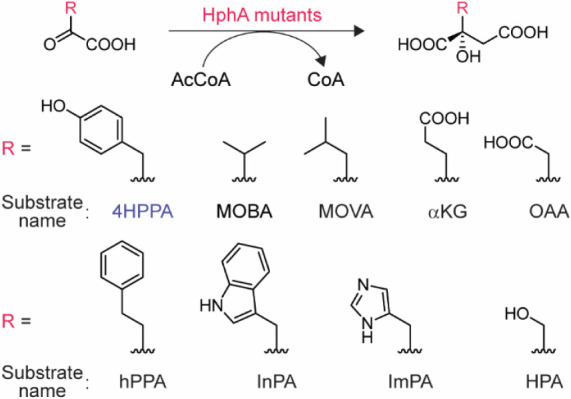 Figure 2
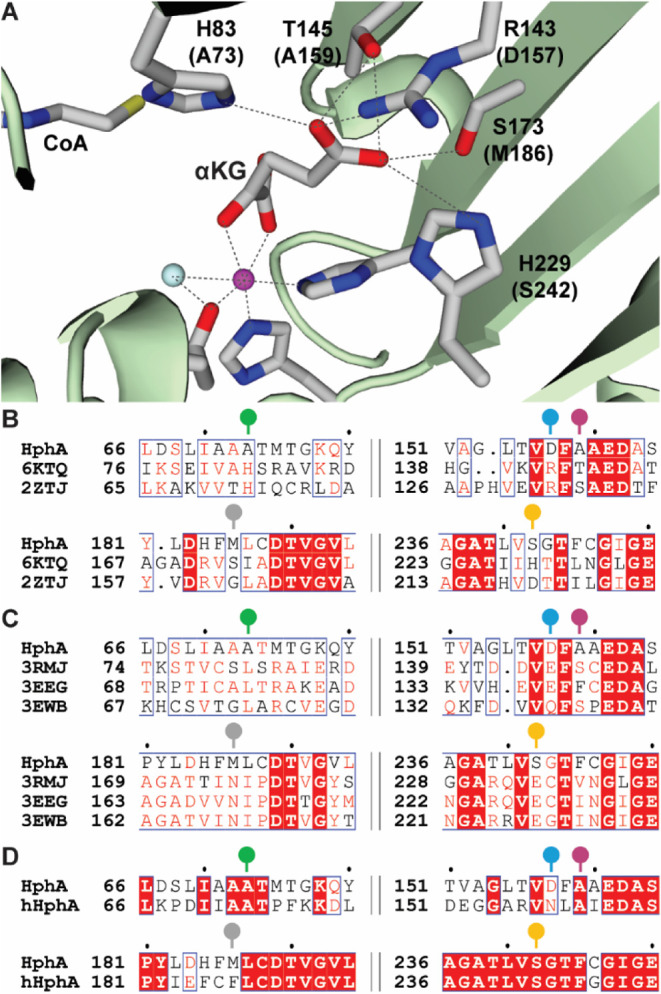 Figure 3
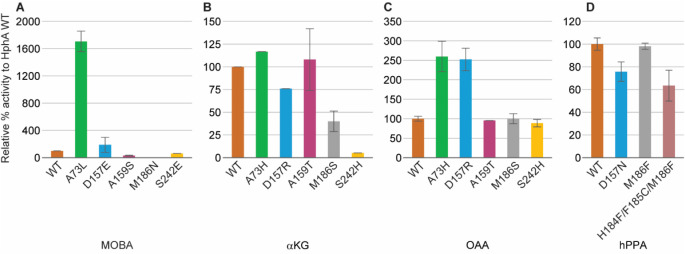 Figure 4
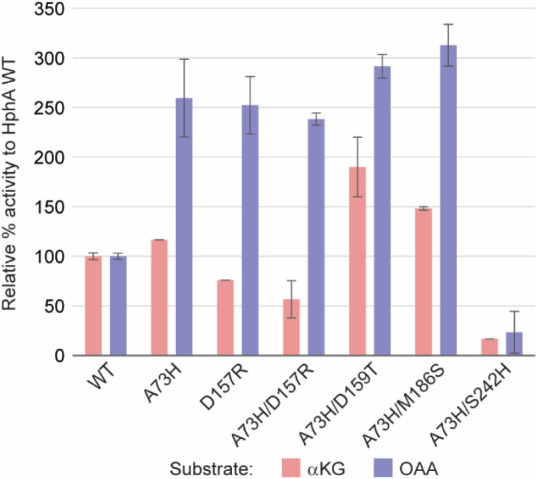 Figure 5
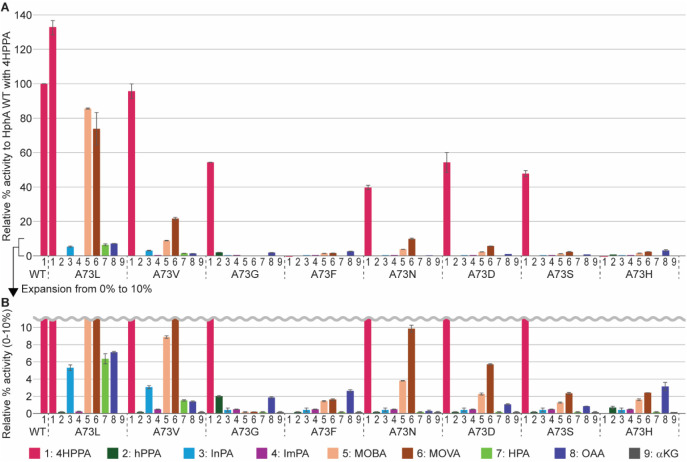 Figure 6
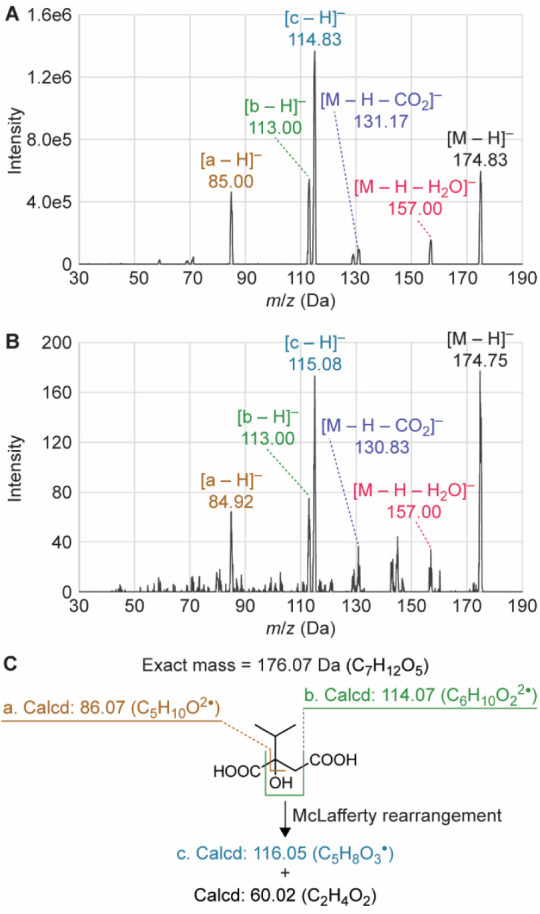 Figure 7
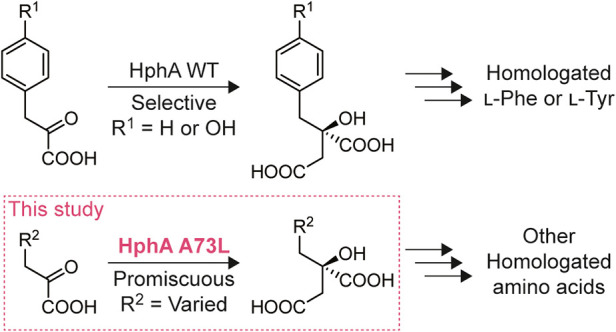 Figure 8
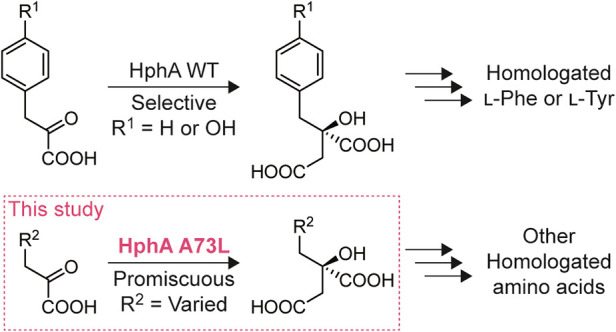 Figure 9
 Figure 10
Peer Reviews
No public reviews on file for this paper yet. If you reviewed it on a platform where reviews are public (OpenReview, ICLR, NeurIPS, ICML), you can paste yours below so the community can read it here.
Videos
No videos yet. Explain this paper in a talk, walkthrough, or lecture? Add one.
Taxonomy
TopicsPlant Gene Expression Analysis · Metabolism and Genetic Disorders · Enzyme Catalysis and Immobilization