Salvadora persica Fruit Methanolic Extract, Nutritional Profiling, Therapeutic Potential in High‐Fat Diet‐Induced Hyperlipidemic Rats: In Vivo, In Vitro, and In Silico Approaches
Nudrat Khursheed, Mostafa A. Abdel‐Maksoud, Salman Alrokayan, Khurram Afzal, Muhammad Naeem Zubairi, Muhammad Tauseef Sultan, Asad Abbas, Hassan Raza, Ahmad Mujtaba Noman, Heba A. S. El‐Nashar, Mohammad S. Mubarak

TL;DR
Salvadora persica fruit extract shows strong antioxidant and health benefits in rats with high-fat diet-induced hyperlipidemia.
Contribution
The study combines in vivo, in vitro, and in silico methods to demonstrate the therapeutic potential of S. persica extract.
Findings
The extract significantly reduced oxidative stress and improved lipid profiles in hyperlipidemic rats.
GC–MS identified oleic acid as the main bioactive compound in the extract.
Molecular docking showed strong binding of extract compounds to HMG-CoA reductase.
Abstract
This manuscript presents original research on Salvadora persica fruit, investigating its antioxidant and metabolic properties using in vivo, in vitro, and in silico approaches in high‐fat‐diet induced hyperlipidemic rat models. Nutritional profiling, phytochemical analysis (TPC, DPPH, FRAP, ABTS), and GC–MS analysis identified key bioactive compounds. The antioxidant tests revealed high activity of the methanolic extract, with TPC (62.1 mg GAE/g), DPPH (67.8%), FRAP (335.4 μmol Fe2+/g), and ABTS (540.2 μmol Trolox/g) assays. GC–MS analysis revealed oleic acid as the predominant compound (56.64%), followed by (9E,11E)‐octadecadienoic acid (18.10%) and n‐hexadecanoic acid (10.92%). Molecular docking studies confirmed strong binding affinities with HMG‐CoA reductase. Furthermore, in vivo studies in male Wistar albino rats (n = 5 per group) confirmed that S. persica significantly restored…
Genes, proteins, chemicals, diseases, species, mutations and cell lines named across the full text — each resolved to its canonical identifier and authoritative record.
Click any figure to enlarge with its caption.
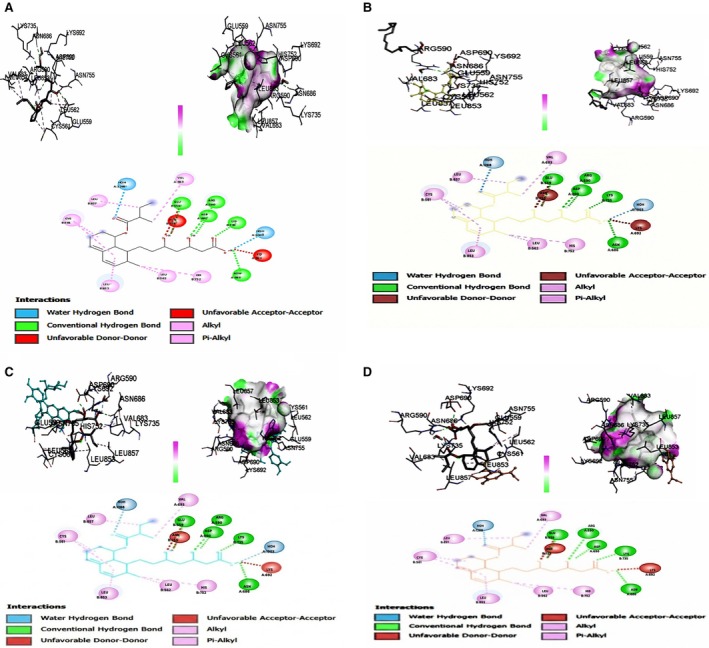 Figure 1
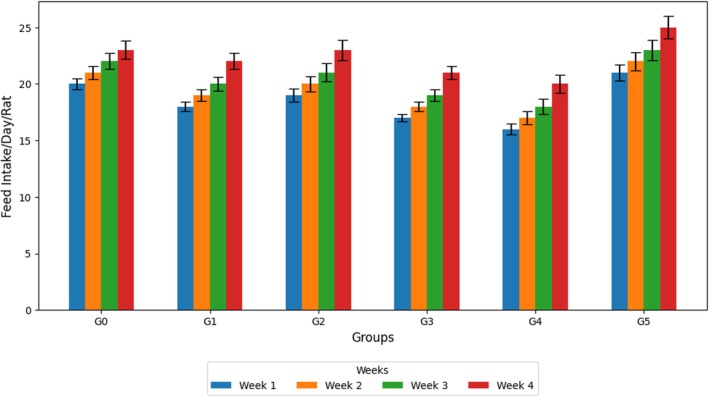 Figure 2
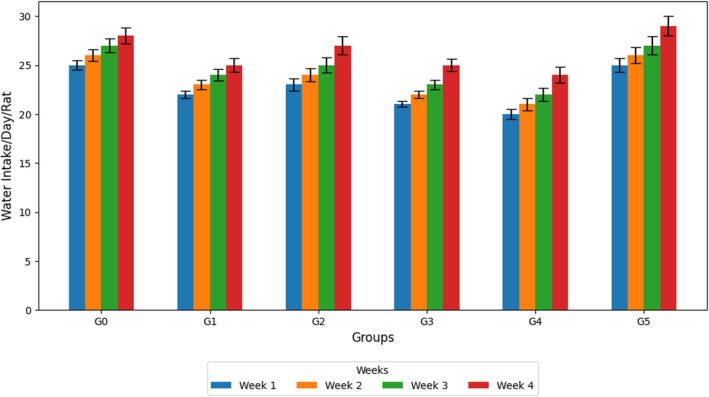 Figure 3
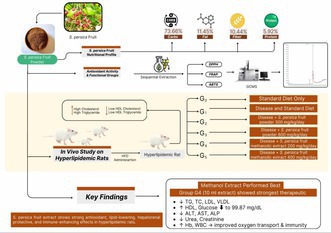 Figure 4
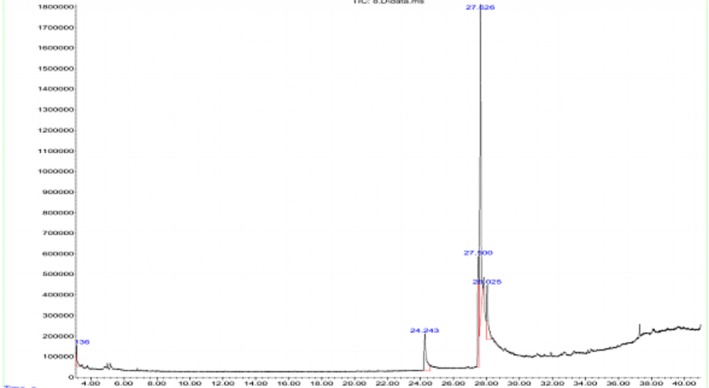 Figure 5
Peer Reviews
No public reviews on file for this paper yet. If you reviewed it on a platform where reviews are public (OpenReview, ICLR, NeurIPS, ICML), you can paste yours below so the community can read it here.
Videos
No videos yet. Explain this paper in a talk, walkthrough, or lecture? Add one.
Taxonomy
TopicsNatural Antidiabetic Agents Studies · Pharmacology and Obesity Treatment · Phytochemicals and Antioxidant Activities