From Chemistry to Functionality: HPLC–DAD/LC–MS/MS Characterization of Bee Product-Enriched Prunus spinosa L. Kombucha with In Vitro Antidiabetic Activity and Bioaccessibility
Melikenur Türkol, Çiğdem Yıldırım Maviş, Seydi Yıkmış

TL;DR
This study explores how adding bee products to blackthorn kombucha improves its health benefits, particularly for diabetes, through detailed chemical and sensory analysis.
Contribution
The paper introduces a novel kombucha formulation enriched with bee products and blackthorn juice, demonstrating its antidiabetic potential and bioaccessibility.
Findings
Bee bread-enriched kombucha had the highest total phenolic and flavonoid content, along with strong antioxidant activity.
Propolis-enriched kombucha showed the highest antidiabetic activity, inhibiting key digestive enzymes.
Phenolic compounds like chlorogenic acid and catechin hydrate were prominent in enriched samples.
Abstract
This study aimed to sensorially optimize kombucha tea enriched with Prunus spinosa L. (blackthorn) juice and bee products (propolis, pollen, and bee bread), and to elucidate the product’s bioactive profile and functional potential (antidiabetic activity and in vitro bioaccessibility) using advanced analytical approaches. The formulations were optimized using response surface methodology (RSM). Alongside the evaluation of total phenolic content (TPC), total flavonoid content (TFC), DPPH• radical scavenging activity, and total antioxidant capacity (TAC), detailed compositional analyses were conducted. The phenolic composition was quantitatively characterized by HPLC–DAD, organic acid profiles were determined using HPLC, and free amino acids were quantified by triple quadrupole LC–MS/MS. In sensory evaluation, the bee bread-enriched kombucha (BB-BKT) received the highest general…
Genes, proteins, chemicals, diseases, species, mutations and cell lines named across the full text — each resolved to its canonical identifier and authoritative record.
Click any figure to enlarge with its caption.
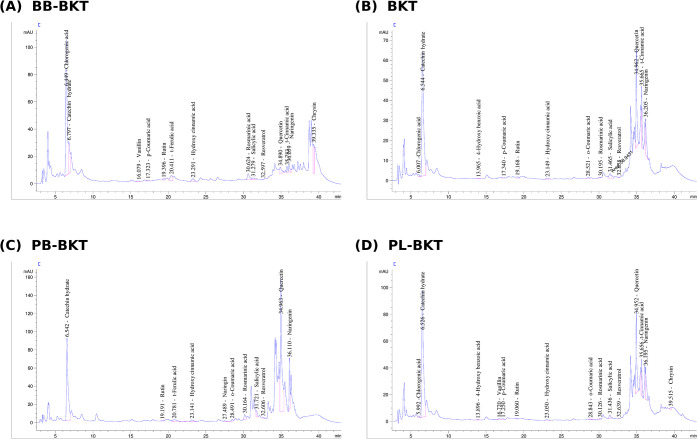 Figure 1
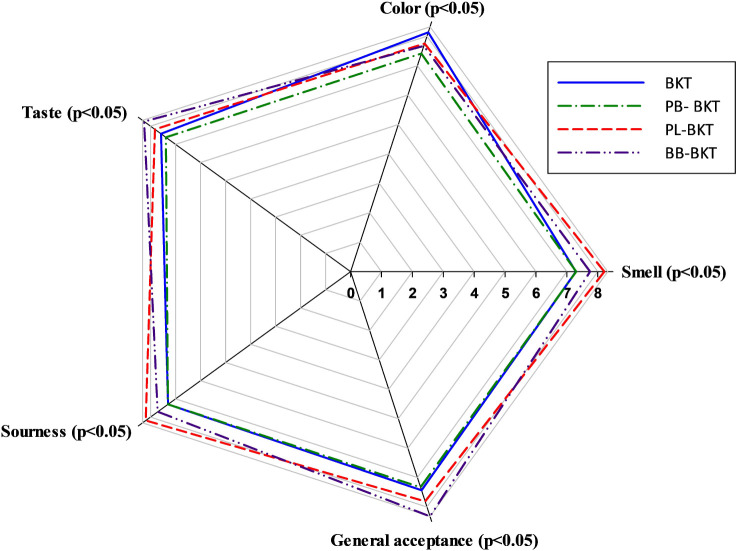 Figure 2
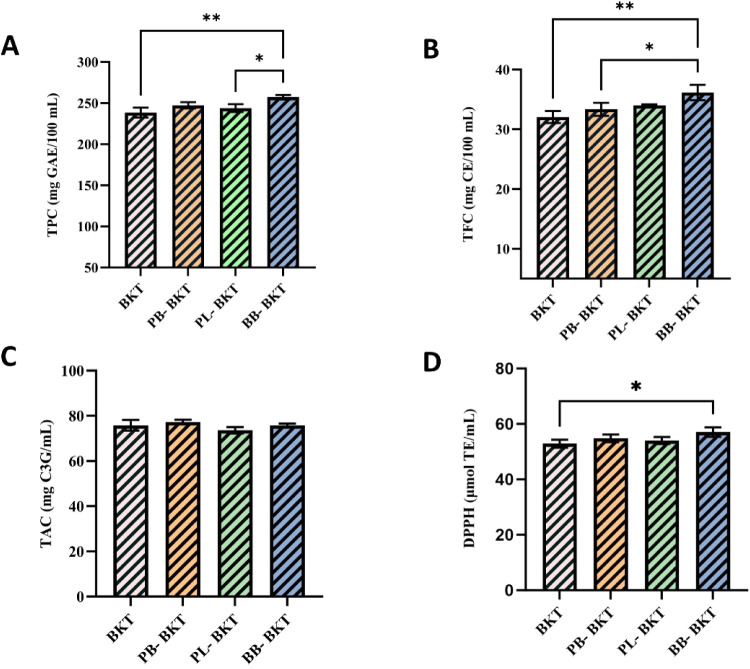 Figure 3
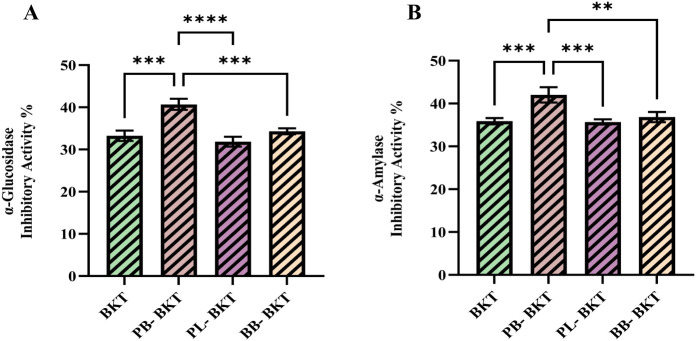 Figure 4
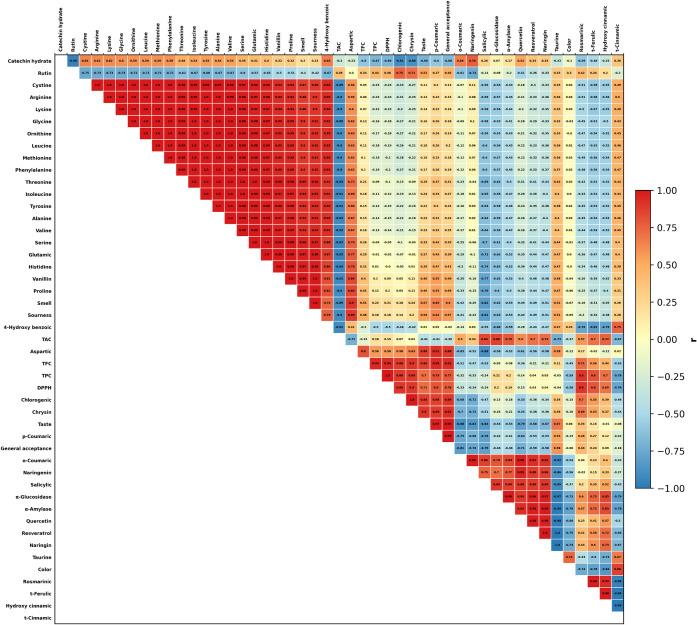 Figure 5
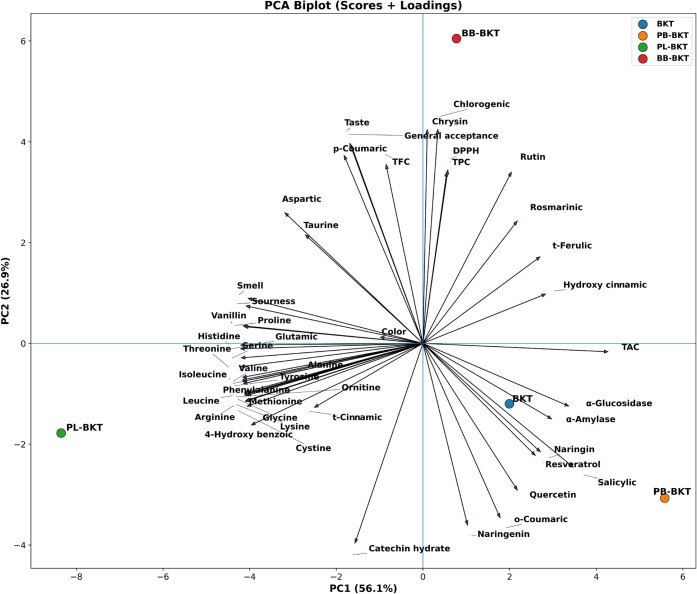 Figure 6
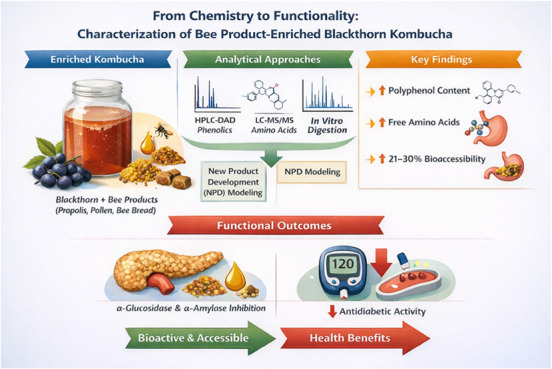 Figure 7
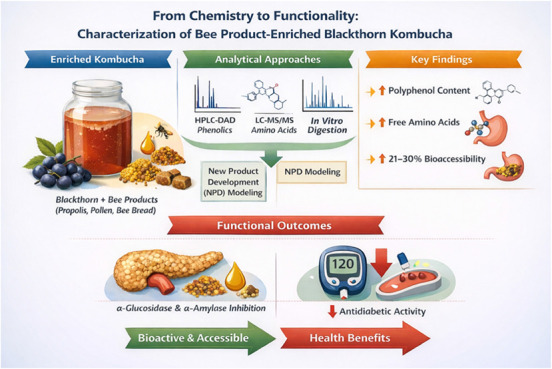 Figure 8
 Figure 9
 Figure 10
 Figure 11
 Figure 12
 Figure 13
 Figure 14
 Figure 15
 Figure 16
 Figure 17
 Figure 18
 Figure 19
 Figure 20
 Figure 21
 Figure 22
 Figure 23
 Figure 24
 Figure 25
 Figure 26
 Figure 27
Peer Reviews
No public reviews on file for this paper yet. If you reviewed it on a platform where reviews are public (OpenReview, ICLR, NeurIPS, ICML), you can paste yours below so the community can read it here.
Videos
No videos yet. Explain this paper in a talk, walkthrough, or lecture? Add one.
Taxonomy
TopicsBioactive Compounds in Plants · Tea Polyphenols and Effects · Neurological Disease Mechanisms and Treatments