PIK‐III‐Mediated Elevation of Thiamine Re‐Sensitises Renal Cell Carcinoma to Cuproptosis via Activating PDHA1
Dongdong Xie, Yu Wang, Wenjie Cheng, Minbo Yan, Kunyu Li, Xiang Wu, Jiaqing Wu, Zhuangzhuang Zhang, Yingbo Dai

TL;DR
PIK-III helps make kidney cancer cells more sensitive to a type of cell death called cuproptosis by restoring thiamine metabolism and activating PDHA1.
Contribution
PIK-III is identified as a novel cuproptosis sensitizer that reactivates thiamine metabolism in resistant renal cell carcinoma.
Findings
PIK-III synergizes with elesclomol to suppress tumor growth in RCC models.
PIK-III activates PDHA1 by replenishing thiamine pyrophosphate.
The combination therapy shows no systemic toxicity in vivo.
Abstract
Cuproptosis, a copper‐dependent cell death mechanism driven by tricarboxylic acid (TCA) cycle collapse, shows limited efficacy in hypoxic or glycolytic renal cell carcinoma (RCC). Here, through systematic screening of 688 glycolysis inhibitors combined with elesclomol (ES), we identified PIK‐III as a potent cuproptosis sensitiser. Multi‐omics analysis revealed that PIK‐III restores sensitivity by rewiring thiamine metabolism. Mechanistically, PIK‐III induces macropinocytosis, enabling thiamine uptake to replenish thiamine pyrophosphate (TPP), which activates pyruvate dehydrogenase E1‐alpha 1 (PDHA1) and redirects pyruvate into the TCA cycle. Concurrently, ES‐induced DLAT oligomerisation disrupts TCA flux, creating a metabolic crisis. In vivo, PIK‐III synergises with ES to suppress tumour growth in xenograft and patient‐derived models without systemic toxicity. Our work uncovers a…
Genes, proteins, chemicals, diseases, species, mutations and cell lines named across the full text — each resolved to its canonical identifier and authoritative record.
Click any figure to enlarge with its caption.
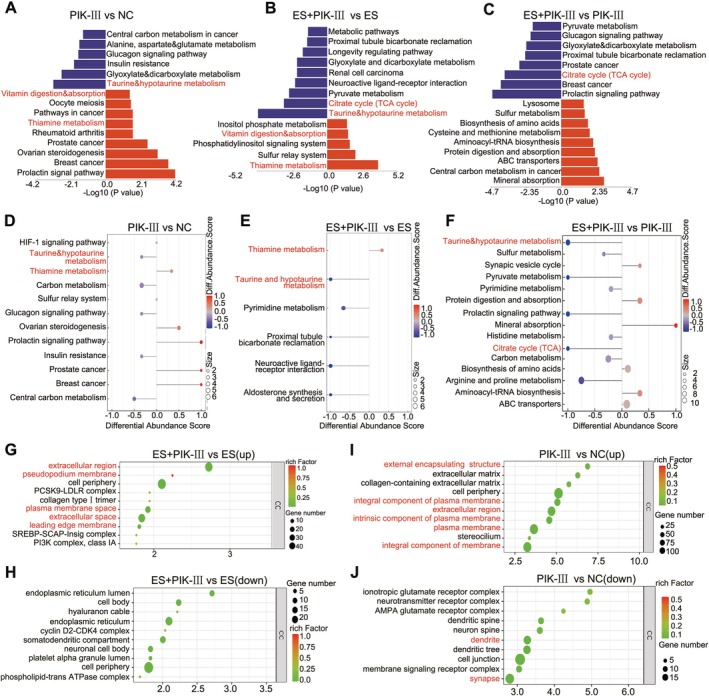 Figure 1
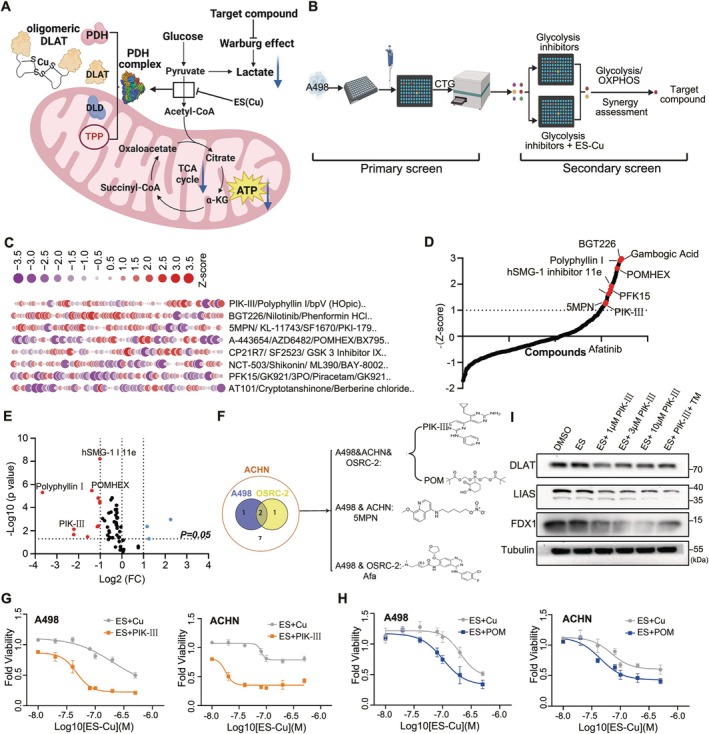 Figure 2
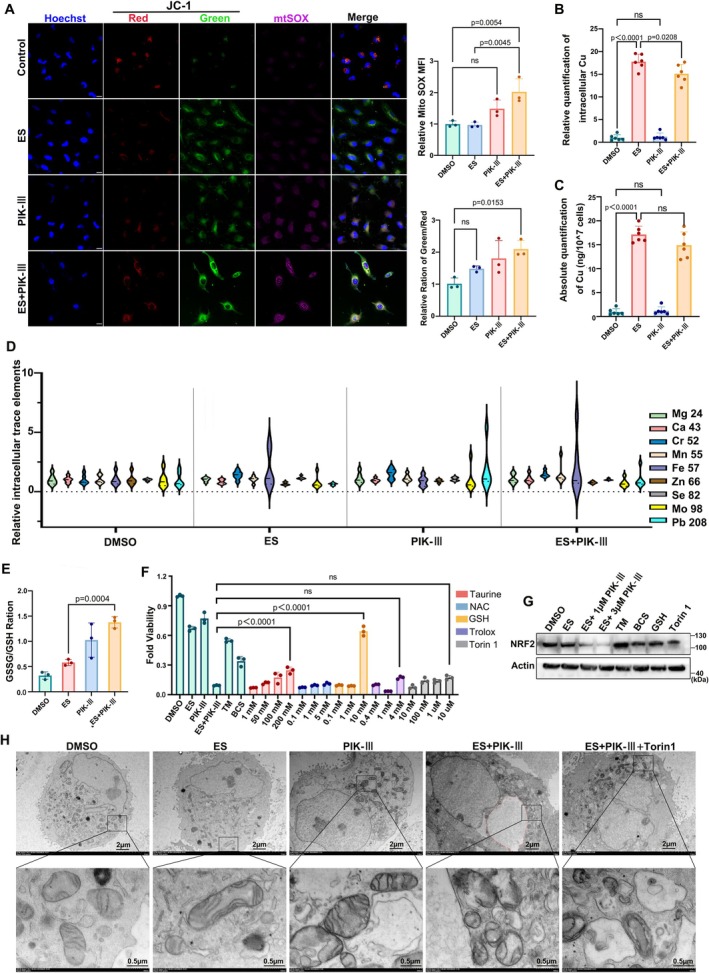 Figure 3
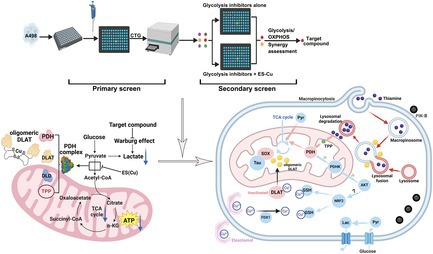 Figure 4
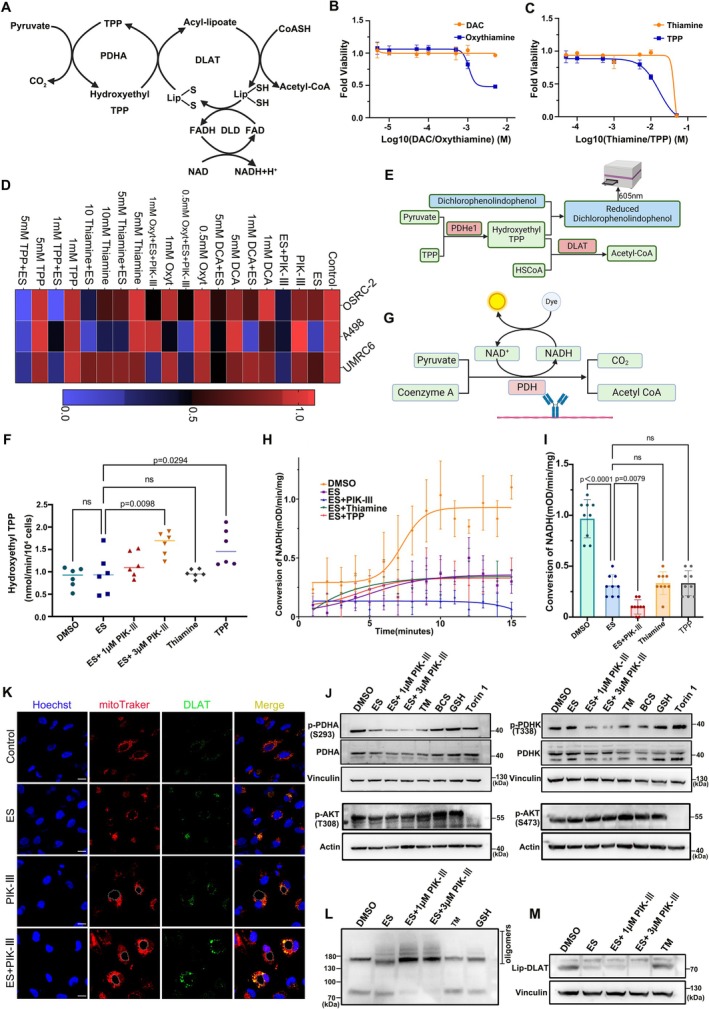 Figure 5
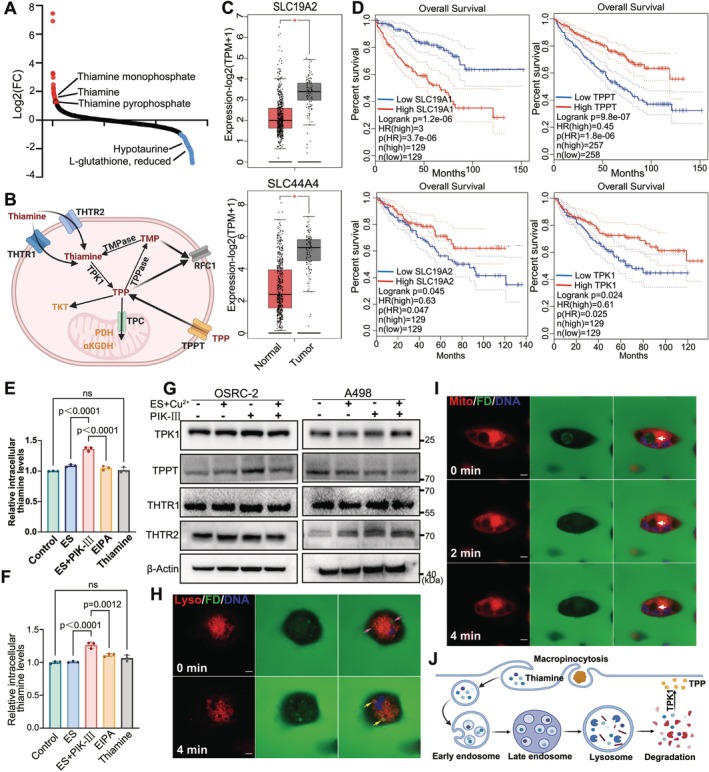 Figure 6
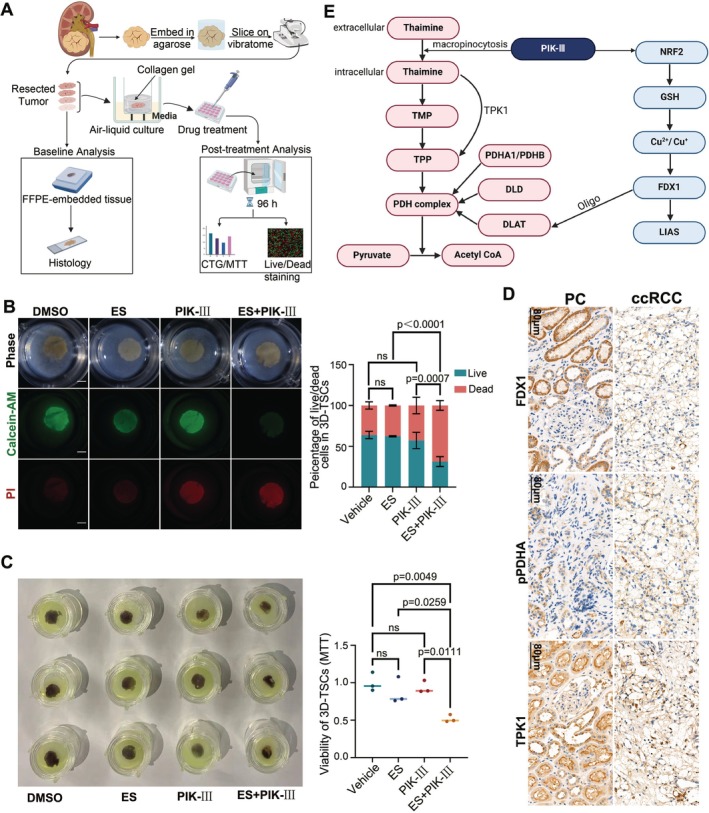 Figure 7
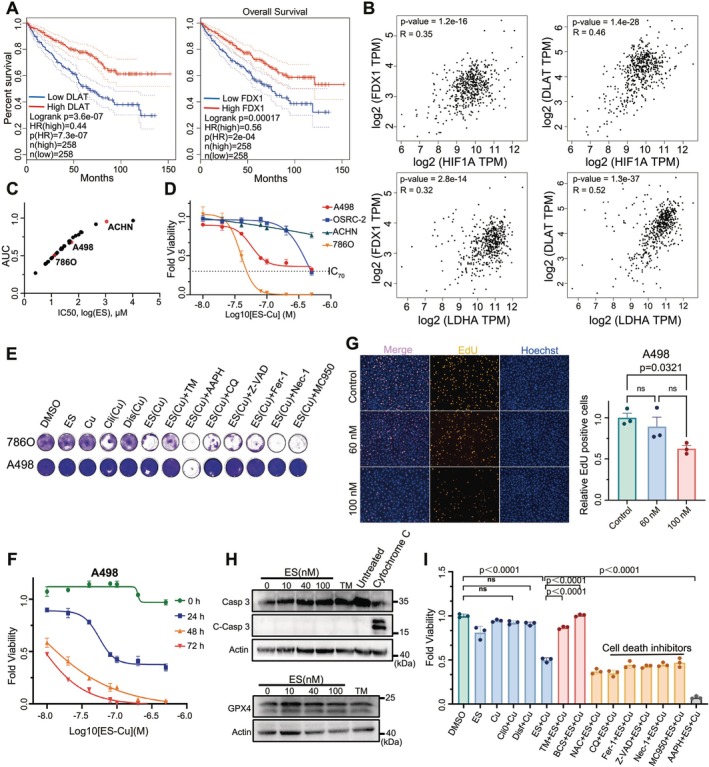 Figure 8
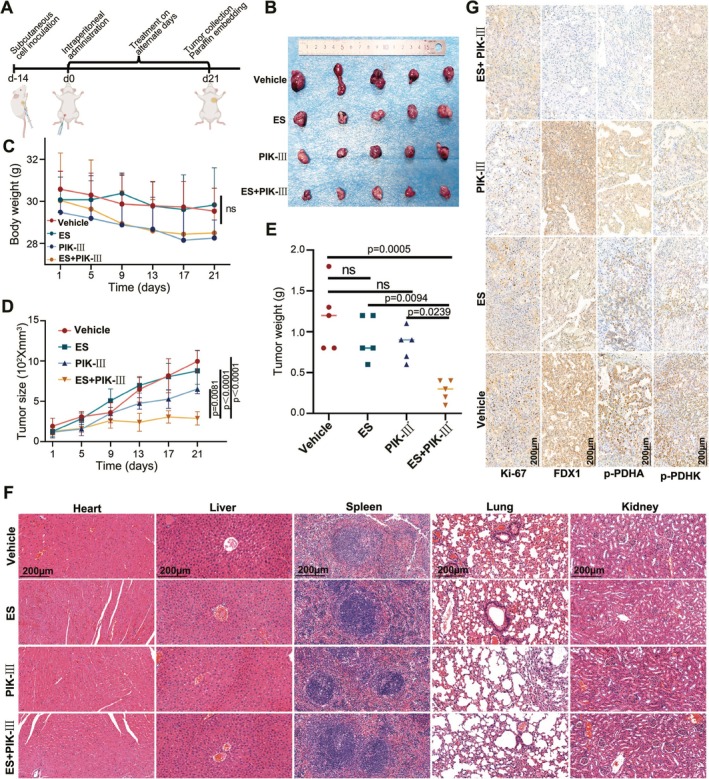 Figure 9
Peer Reviews
No public reviews on file for this paper yet. If you reviewed it on a platform where reviews are public (OpenReview, ICLR, NeurIPS, ICML), you can paste yours below so the community can read it here.
Videos
No videos yet. Explain this paper in a talk, walkthrough, or lecture? Add one.
Taxonomy
TopicsAlcoholism and Thiamine Deficiency · Cancer, Hypoxia, and Metabolism · Metabolism and Genetic Disorders