Nanocarriers Derived from Annona squamosa Seed Oil Amplify the Anti-inflammatory Effect of Carvacrol in Human Neutrophils
Sarah Brenda Ferreira dos Santos, Stéfano Arrais Pereira, Maria Júlia Pereira dos Santos, Louhana Moreira Rebouças, Francisco Alessandro Marinho Rodrigues, João Francisco Câmara Neto, Matheus da Silva Campelo, Luzia Kalyne Almeida Moreira Leal, Francisca Rayssa Mesquita

TL;DR
Researchers developed nanoemulsions from Annona squamosa seed oil to deliver carvacrol, which reduced inflammation in human neutrophils more effectively than free carvacrol.
Contribution
The study introduces a novel nanoemulsion system using Annona squamosa seed oil to enhance carvacrol's anti-inflammatory effects in neutrophils.
Findings
Nanoemulsions showed colloidal stability with particle sizes around 170 nm and high encapsulation efficiency (>99%).
Carvacrol-loaded nanoemulsions reduced neutrophil degranulation at lower concentrations than free carvacrol.
The Korsmeyer–Peppas model best described the prolonged carvacrol release from the nanoemulsions.
Abstract
This research aimed to prepare nanoemulsions based on Annona squamosa seed oil (ASSO) for encapsulation of carvacrol (CARV) and subsequent evaluation of its cytotoxicity and anti-inflammatory potential in human neutrophils. The chemical composition of ASSO is rich in long-chain fatty acids, especially oleic and linoleic acids. The treatment of human neutrophils with ASSO demonstrated its low cytotoxicity (1–50 μg mL–1), as well as anti-inflammatory effect at 25 and 50 μg mL–1, being able to attenuate the release of myeloperoxidase (MPO). The nanocarriers presented colloidal stability with particle sizes around 170 nm, ζ-potential greater than |30 mV| and moderate polydispersity. The encapsulation efficiency of the nanosystems was greater than 99%, evidencing the effectiveness of the applied methodology for CARV entrapment. The drug release tests demonstrated that the nanoemulsions were…
Genes, proteins, chemicals, diseases, species, mutations and cell lines named across the full text — each resolved to its canonical identifier and authoritative record.
Click any figure to enlarge with its caption.
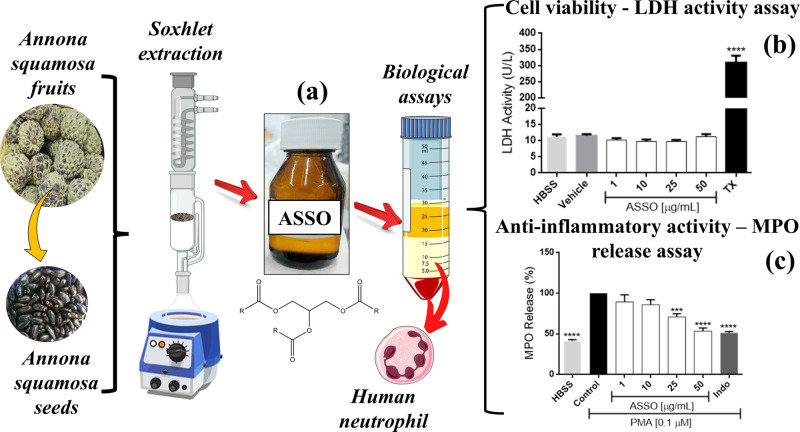 Figure 1
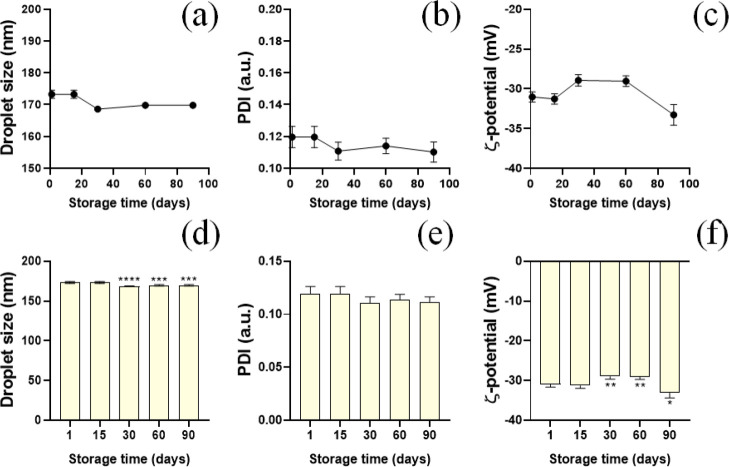 Figure 2
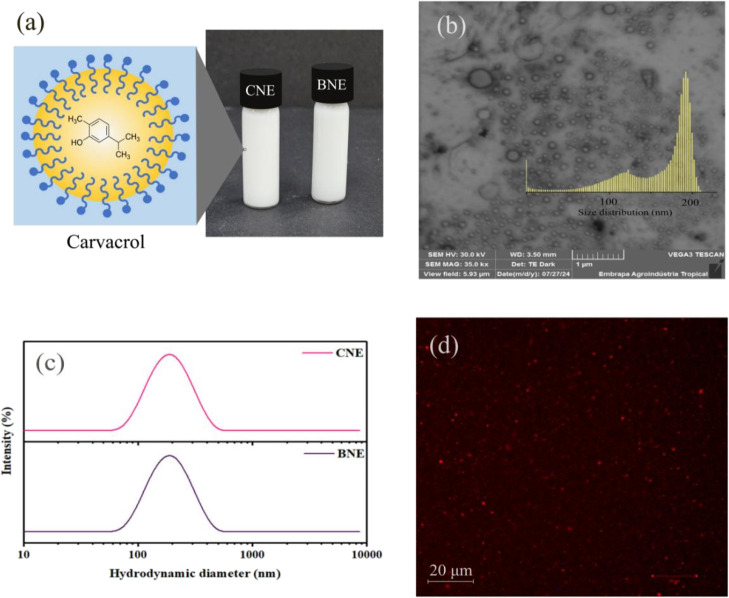 Figure 3
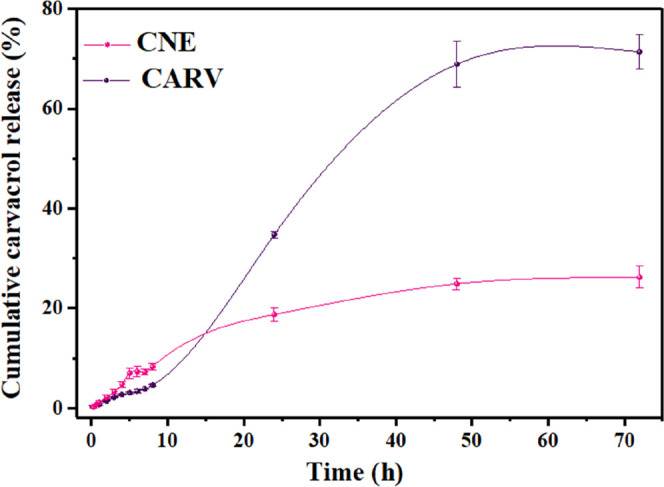 Figure 4
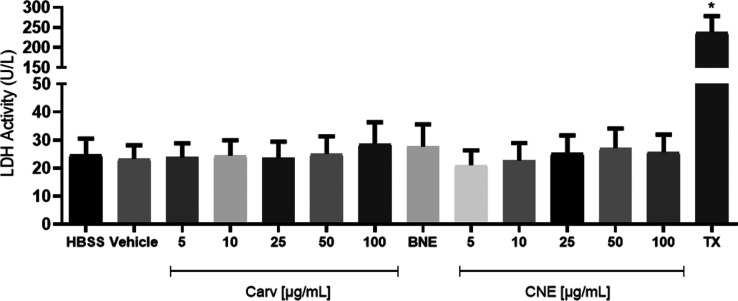 Figure 5
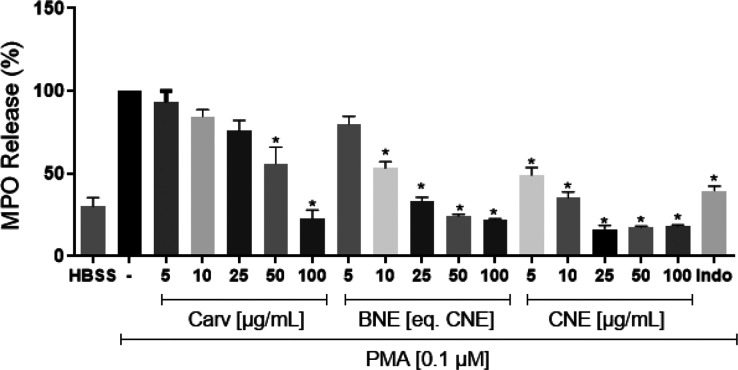 Figure 6
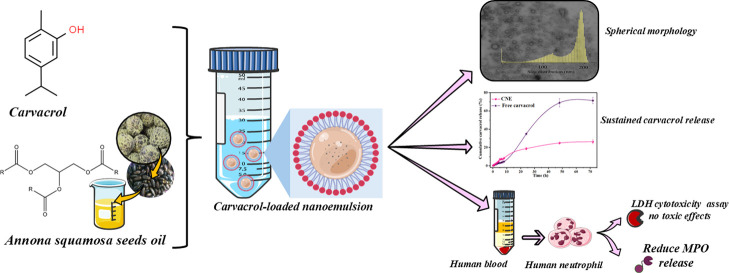 Figure 7
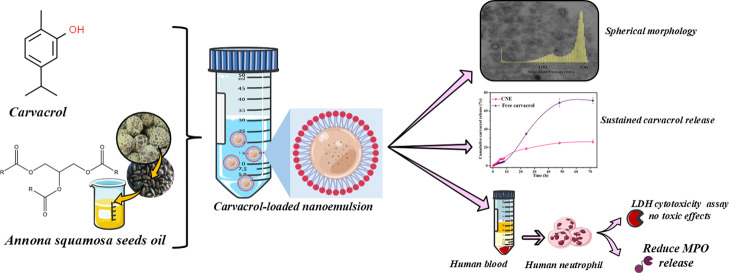 Figure 8
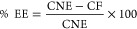 Figure 9
 Figure 10
 Figure 11
 Figure 12
 Figure 13
 Figure 14
 Figure 15
Peer Reviews
No public reviews on file for this paper yet. If you reviewed it on a platform where reviews are public (OpenReview, ICLR, NeurIPS, ICML), you can paste yours below so the community can read it here.
Videos
No videos yet. Explain this paper in a talk, walkthrough, or lecture? Add one.
Taxonomy
TopicsAdvancements in Transdermal Drug Delivery · Microencapsulation and Drying Processes · Natural Compound Pharmacology Studies