Immobilization of a Fungal Fructosyltransferase onto Silica Gel and Glutaraldehyde-Functionalized Silica Gel for Biocatalytic Applications
José Pedro Zanetti Prado, Ana Carolina Vieira, Alfredo Eduardo Maiorano, Sérgio Fernandes, Rodrigo Correa Basso, Sylma Carvalho Maestrelli, Cristiane Angélica Ottoni, Michelle da Cunha Abreu Xavier, Sergio Andres Villalba Morales, Rafael Firmani Perna

TL;DR
This study explores using silica gel and glutaraldehyde-functionalized silica gel to immobilize a fungal enzyme for producing fructooligosaccharides, finding that the modified gel offers better stability and reusability.
Contribution
The novel contribution is the evaluation of glutaraldehyde-functionalized silica gel as an improved support for enzyme immobilization in FOS production.
Findings
Functionalized silica gel achieved higher immobilization yield but lower activity compared to unmodified silica gel.
Enzyme immobilized on both supports showed higher activity at 400–600 g L–1 substrate concentrations.
Functionalized silica gel demonstrated better reusability and stability over eight cycles and under various conditions.
Abstract
The immobilization of fructosyltransferase enzymes has been identified as an essential strategy for the production of fructooligosaccharides (FOS) in heterogeneous reaction systems. This study investigated the applicability of silica gel and silica gel functionalized with glutaraldehyde as porous inorganic supports for the immobilization of the extracellular fructosyltransferase from Aspergillus oryzae IPT-301, aiming to obtain active and stable heterogeneous biocatalysts for FOS production. The silicas were characterized using Fourier transform infrared (FTIR), scanning electron microscopy (SEM) and N2 physisorption. The thermal, operational, storage, and pH stability, as well as the kinetic profiles of the biocatalysts, were evaluated. The functionalized silica gel achieved higher immobilization yield but exhibited lower recovered activity values compared to the silica gel without…
Genes, proteins, chemicals, diseases, species, mutations and cell lines named across the full text — each resolved to its canonical identifier and authoritative record.
Click any figure to enlarge with its caption.
 Figure 1
 Figure 2
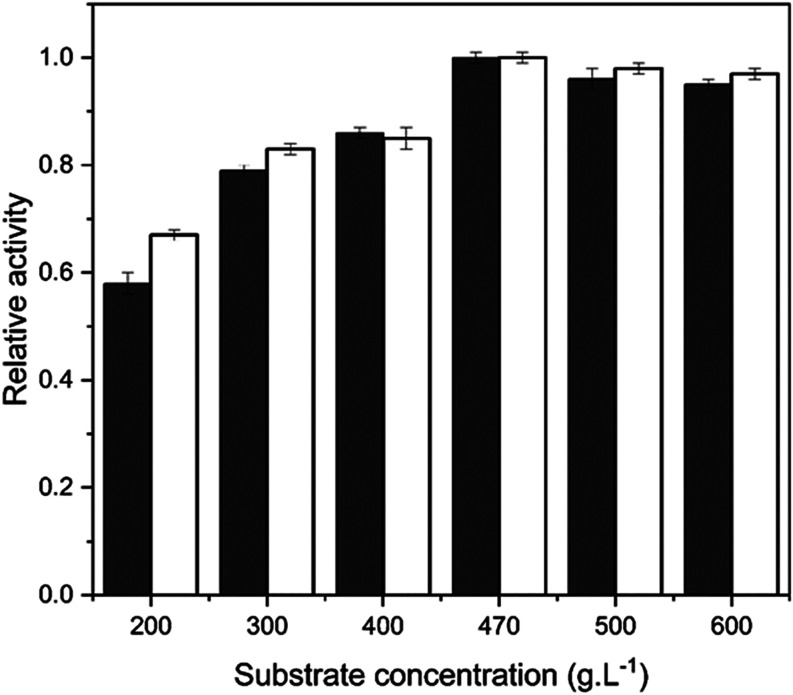 Figure 3
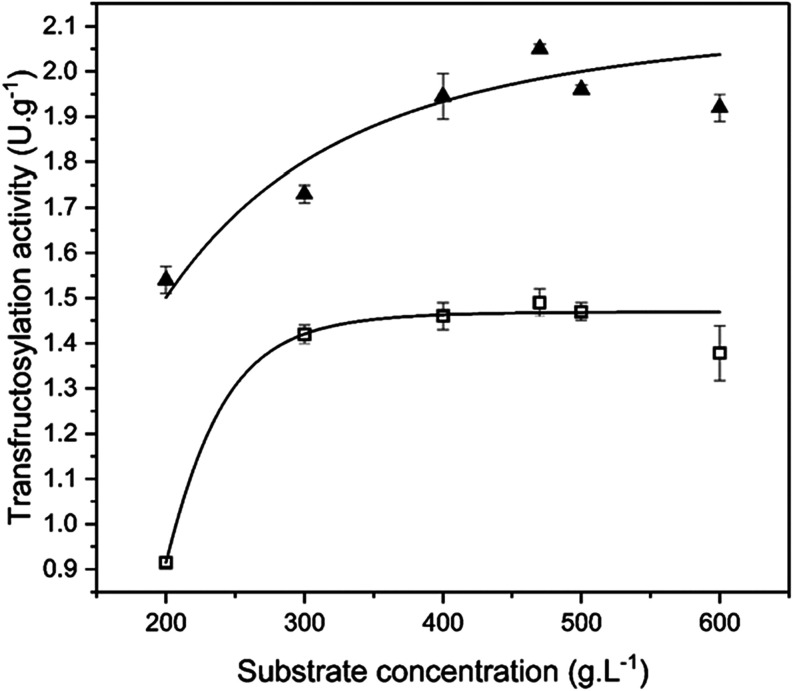 Figure 4
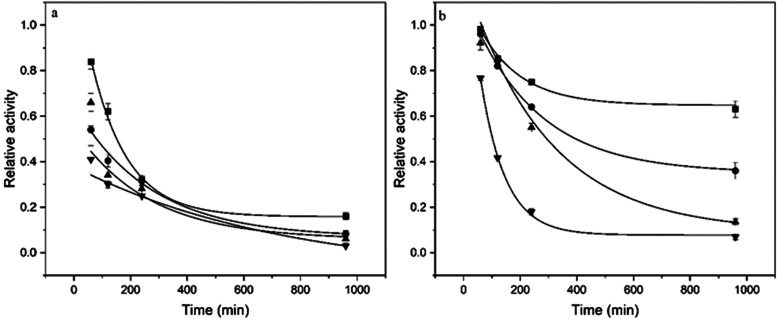 Figure 5
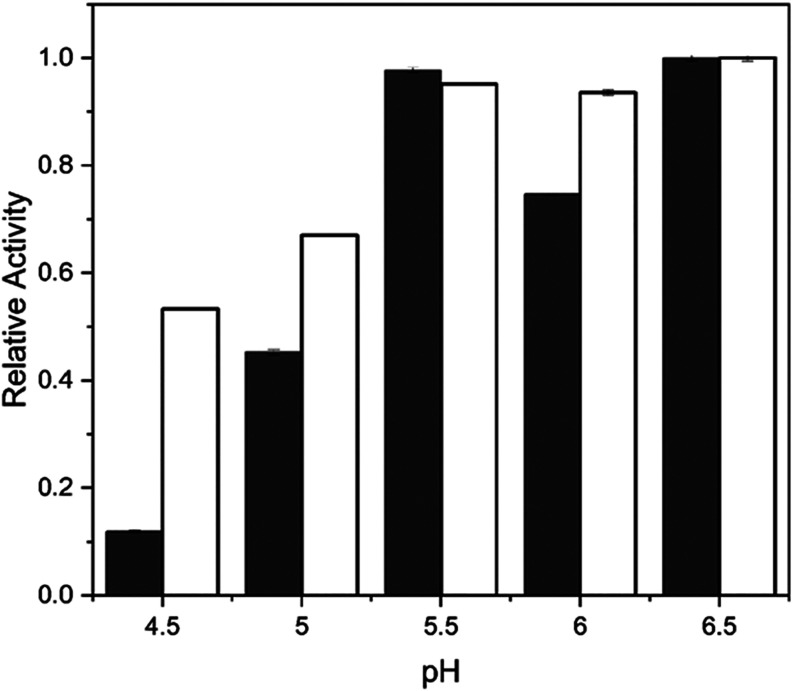 Figure 6
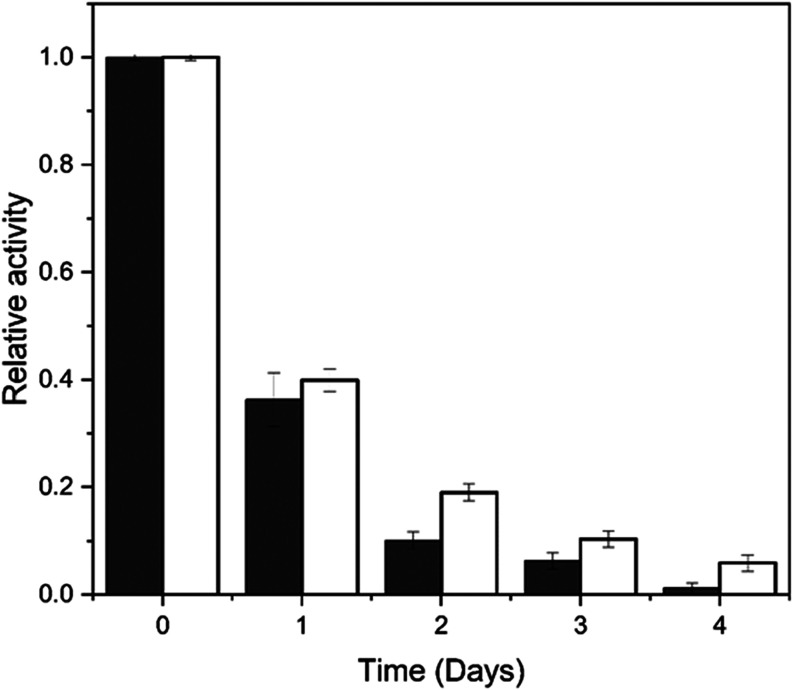 Figure 7
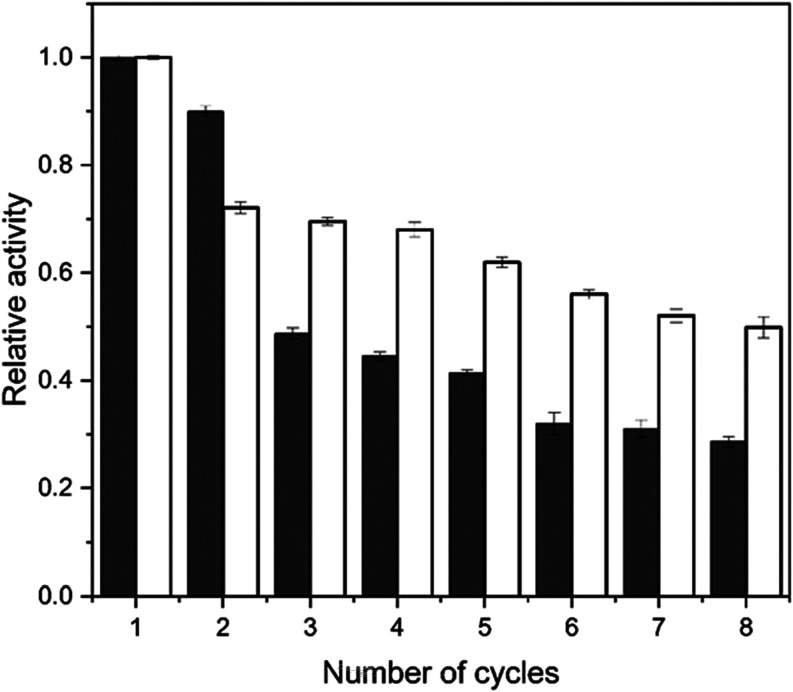 Figure 8
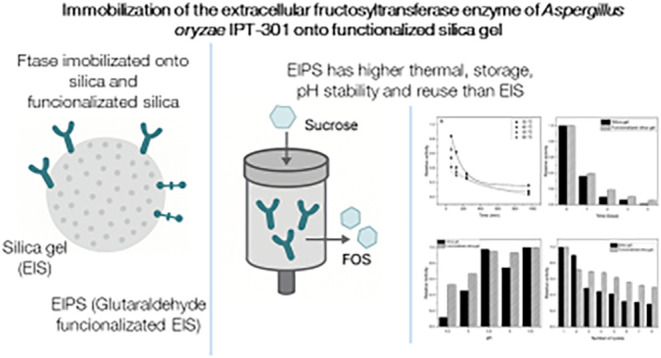 Figure 9
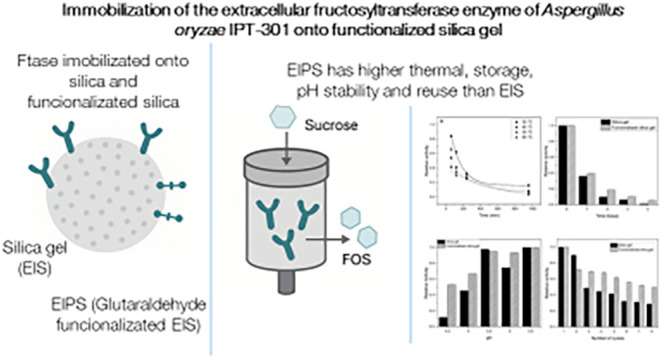 Figure 10
 Figure 11
 Figure 12
 Figure 13
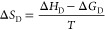 Figure 14
Peer Reviews
No public reviews on file for this paper yet. If you reviewed it on a platform where reviews are public (OpenReview, ICLR, NeurIPS, ICML), you can paste yours below so the community can read it here.
Videos
No videos yet. Explain this paper in a talk, walkthrough, or lecture? Add one.
Taxonomy
TopicsMicrobial Metabolites in Food Biotechnology · Glycosylation and Glycoproteins Research · Enzyme Catalysis and Immobilization