Clinical Note–Extracted Psychosocial Factors for Predicting Suicide Attempt Among ED Patients With Suicidal Ideation
Hyunjoon Lee, Ketan Jadhav, Michael Ripperger, Peyton L. Coleman, Theodore J. Morley, Samuel A. Palmer, Lide Han, Qingxia Chen, Cosmin A. Bejan, Douglas M. Ruderfer, Colin G. Walsh

TL;DR
Adding psychosocial factors like chronic stress to clinical data improves the accuracy of predicting suicide attempts in emergency department patients with suicidal ideation.
Contribution
This study demonstrates that integrating psychosocial factors extracted from clinical notes enhances suicide risk prediction models in ED patients.
Findings
Incorporating psychosocial factors significantly improved model performance metrics like AUROC and AUPRC.
Chronic stress was identified as the strongest predictor of suicide attempt.
The enhanced model maintained high specificity while improving predictive accuracy.
Abstract
Is the addition of psychosocial factors to a clinical data–based suicide risk prediction model associated with better performance in predicting suicide attempts among patients presenting to the emergency department (ED) for suicidal ideation? In this electronic health record–based prognostic study of 4661 patients discharged from the ED after presentation for suicidal ideation, incorporating psychosocial factors was associated with significantly higher performance in predicting suicide attempt, with chronic stress as the strongest predictor. This study suggests that, for ED patients with suicidal ideation, identifying and using psychosocial factors may be key to accurate risk stratification and may help guide targeted interventions such as therapies addressing chronic stress. The Joint Commission recommends universal suicide screening in emergency departments (EDs), which emphasizes…
Genes, proteins, chemicals, diseases, species, mutations and cell lines named across the full text — each resolved to its canonical identifier and authoritative record.
Click any figure to enlarge with its caption.
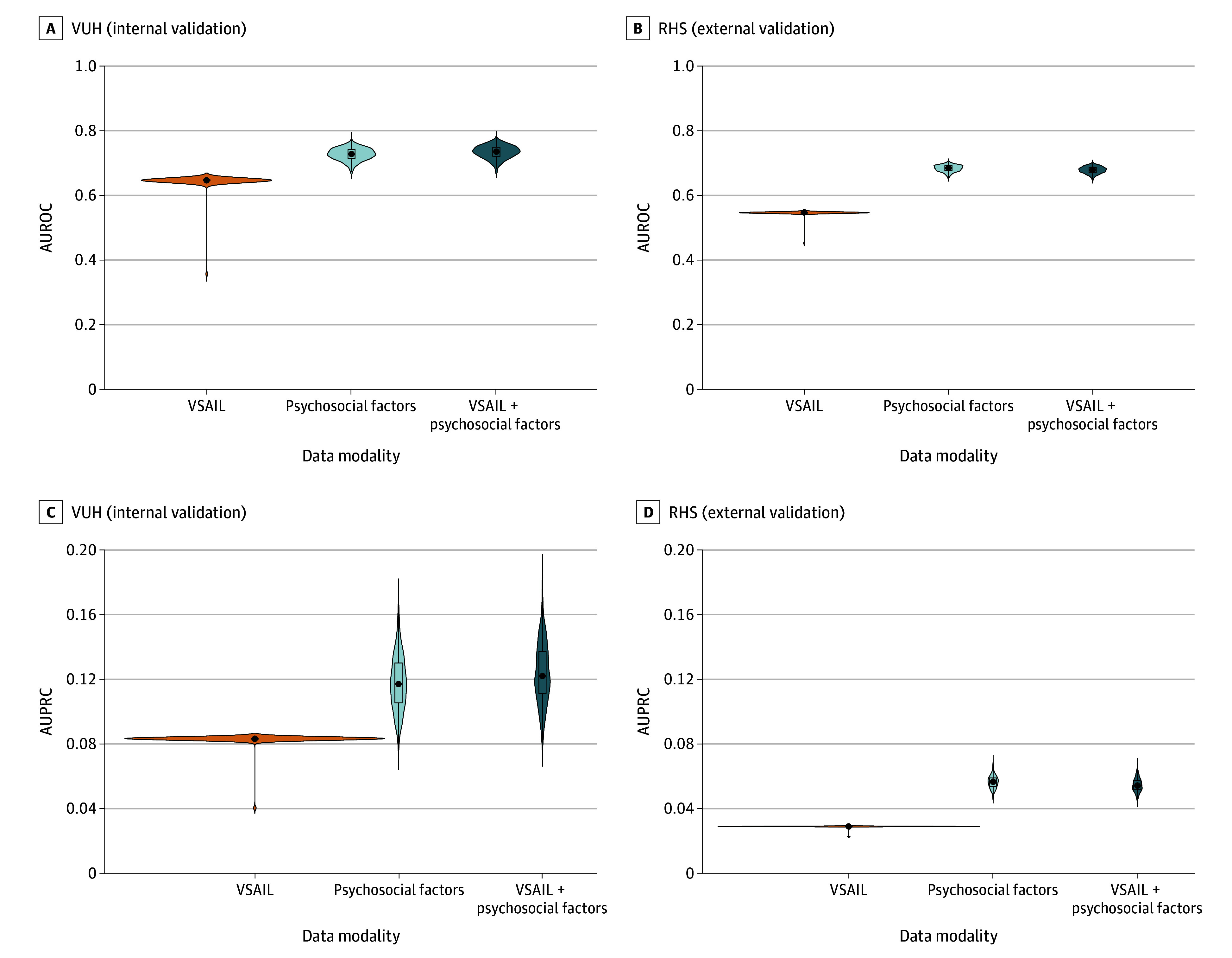 Figure 1
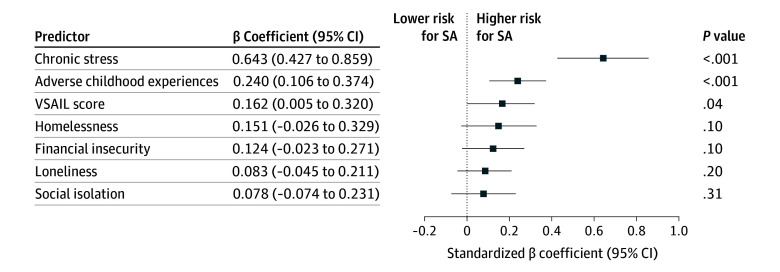 Figure 2
Peer Reviews
No public reviews on file for this paper yet. If you reviewed it on a platform where reviews are public (OpenReview, ICLR, NeurIPS, ICML), you can paste yours below so the community can read it here.
Videos
No videos yet. Explain this paper in a talk, walkthrough, or lecture? Add one.
Taxonomy
TopicsSuicide and Self-Harm Studies · Mental Health via Writing · COVID-19 and Mental Health