[64Cu]Cu-Labeled αCD11b Diabody as a Novel PET Tracer for the Detection of Immunosuppression in Glioblastoma
Bo Li, Sydney A. Jackson, Amelia Stepniak, Peggy Birikorang, Dominic Menendez, Robert Edinger, Michael Pun, Charles M. Laymon, Carolyn J. Anderson, Gary Kohanbash, W. Barry Edwards

TL;DR
A new PET tracer is developed to detect immunosuppressive cells in glioblastoma, potentially improving immunotherapy effectiveness.
Contribution
A novel [64Cu]Cu-labeled αCD11b diabody is introduced for PET imaging of CD11b-positive tumor-associated myeloid cells in glioblastoma.
Findings
The tracer achieved optimal tumor uptake at 4 hours post-administration with a %ID/g of 1.06 in tumors.
Molar activity of 2.12 MBq/nmol provided optimal tracer uptake due to modulation by CD11b antigen sink.
The tracer effectively visualized TAMCs in a syngeneic mouse model of glioblastoma.
Abstract
Glioblastoma multiforme (GBM) is one of the deadliest types of cancer that occurs in people of all ages; 15 months is the average survival time. While treatments for GBM are mostly unsuccessful, immunotherapy has the potential to be an effective strategy for glioblastoma. However, the immunosuppressive influence of tumor-associated myeloid cells (TAMCs) results in poor responses to immunotherapy. As TAMCs are CD11b-positive, the potential of a radiolabeled αCD11b diabody was investigated to assess immunosuppression mediated by TAMCs in an immunocompetent mouse model of glioblastoma. An αCD11b diabody (Db) was constructed with the VH and VL sequences of an αCD11b IgG that resulted in thermal stability and high affinity. αCD11b Db was conjugated with a cross-bridged chelator, CB-TE1K1P, through click chemistry. The resulting conjugate was radiolabeled with 64Cu and investigated in vitro…
Genes, proteins, chemicals, diseases, species, mutations and cell lines named across the full text — each resolved to its canonical identifier and authoritative record.
Click any figure to enlarge with its caption.
 Figure 1
 Figure 2
 Figure 3
 Figure 4
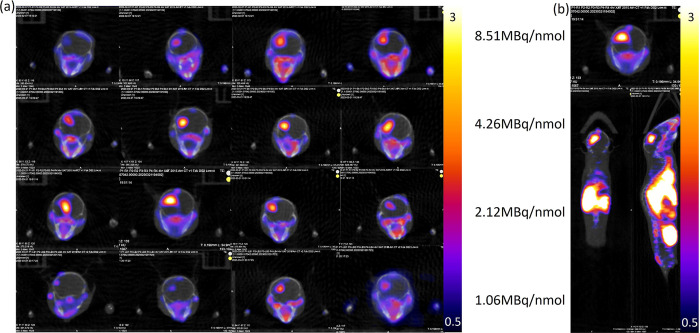 Figure 5
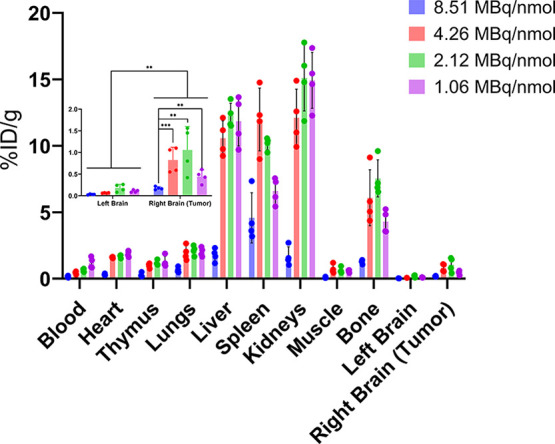 Figure 6
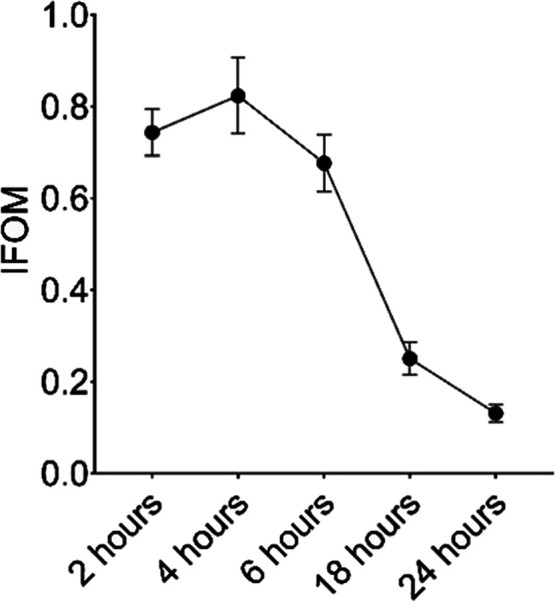 Figure 7
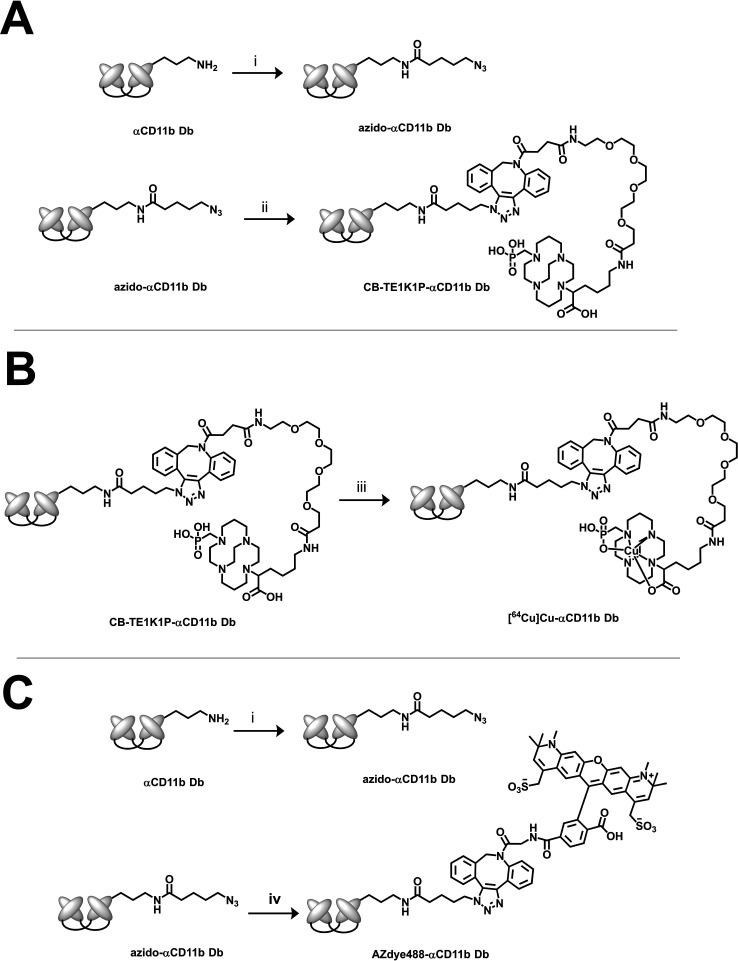 Figure 8
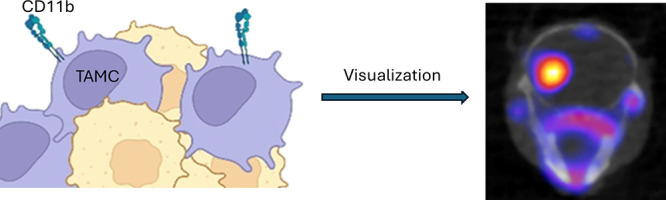 Figure 9
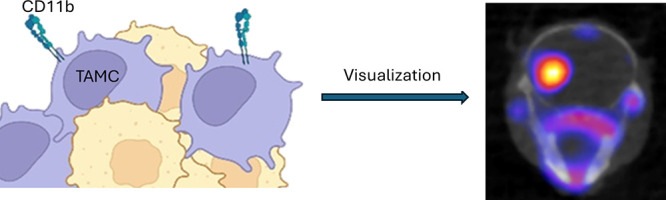 Figure 10
 Figure 11
 Figure 12
Peer Reviews
No public reviews on file for this paper yet. If you reviewed it on a platform where reviews are public (OpenReview, ICLR, NeurIPS, ICML), you can paste yours below so the community can read it here.
Videos
No videos yet. Explain this paper in a talk, walkthrough, or lecture? Add one.
Taxonomy
TopicsRadiopharmaceutical Chemistry and Applications · Immune cells in cancer · Glioma Diagnosis and Treatment