Elastic Properties of BCN Alloys, Graphene, and h‑BN Monolayers Containing Point Defects
Prosun Santra, Mahdi Ghorbani-Asl, Sadegh Ghaderzadeh, Elena Besley, Arkady V. Krasheninnikov

TL;DR
This study explores how point defects affect the mechanical properties of 2D materials like graphene and h-BN, showing that defects can either weaken or tune material stiffness.
Contribution
The paper systematically assesses the impact of substitutional impurities and vacancies on the mechanical properties of 2D materials using first-principles calculations.
Findings
Substitutional carbon atoms in h-BN significantly reduce Young’s modulus, especially when replacing nitrogen atoms.
Pair substitution of B and N atoms with carbon in h-BN results in stiffness values between those of graphene and pristine h-BN.
B vacancies in h-BN cause a greater decrease in stiffness than N vacancies due to stronger local strain fields.
Abstract
Point defects can strongly affect the mechanical properties of two-dimensional (2D) materials, causing an overall detrimental effect on the strength, stiffness, and elasticity. However, the opposite has also been reported in the literature, which indicates that our understanding of the role of defects at the atomic level remains incomplete. This computational study provides a systematic assessment, based on first-principles calculations, of the mechanical properties of the archetypal 2D materials (h-BN and graphene monolayers) containing substitutional impurities and vacancies, which is further extended to 2D BCN alloys representing the case of high concentration of substitutional impurities in h-BN and graphene. In general, the stiffness of these materials, as described by Young’s modulus, decreases in the presence of point defects. The Young’s modulus of h-BN decreases rapidly with…
Genes, proteins, chemicals, diseases, species, mutations and cell lines named across the full text — each resolved to its canonical identifier and authoritative record.
Click any figure to enlarge with its caption.
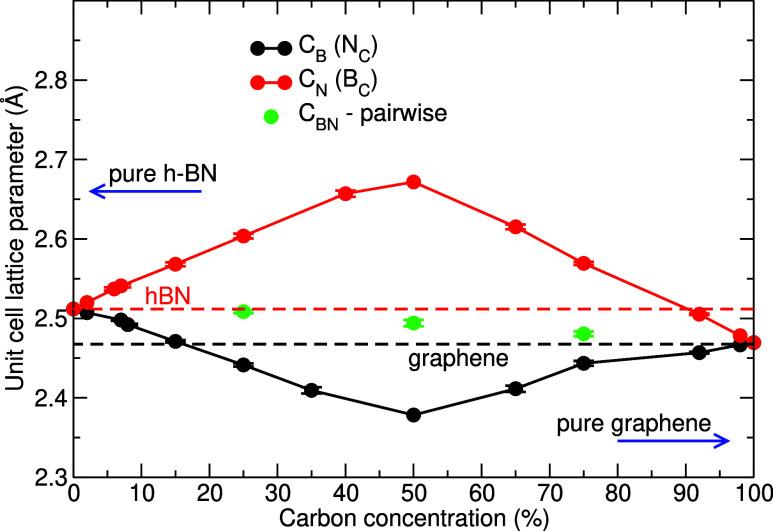 Figure 1
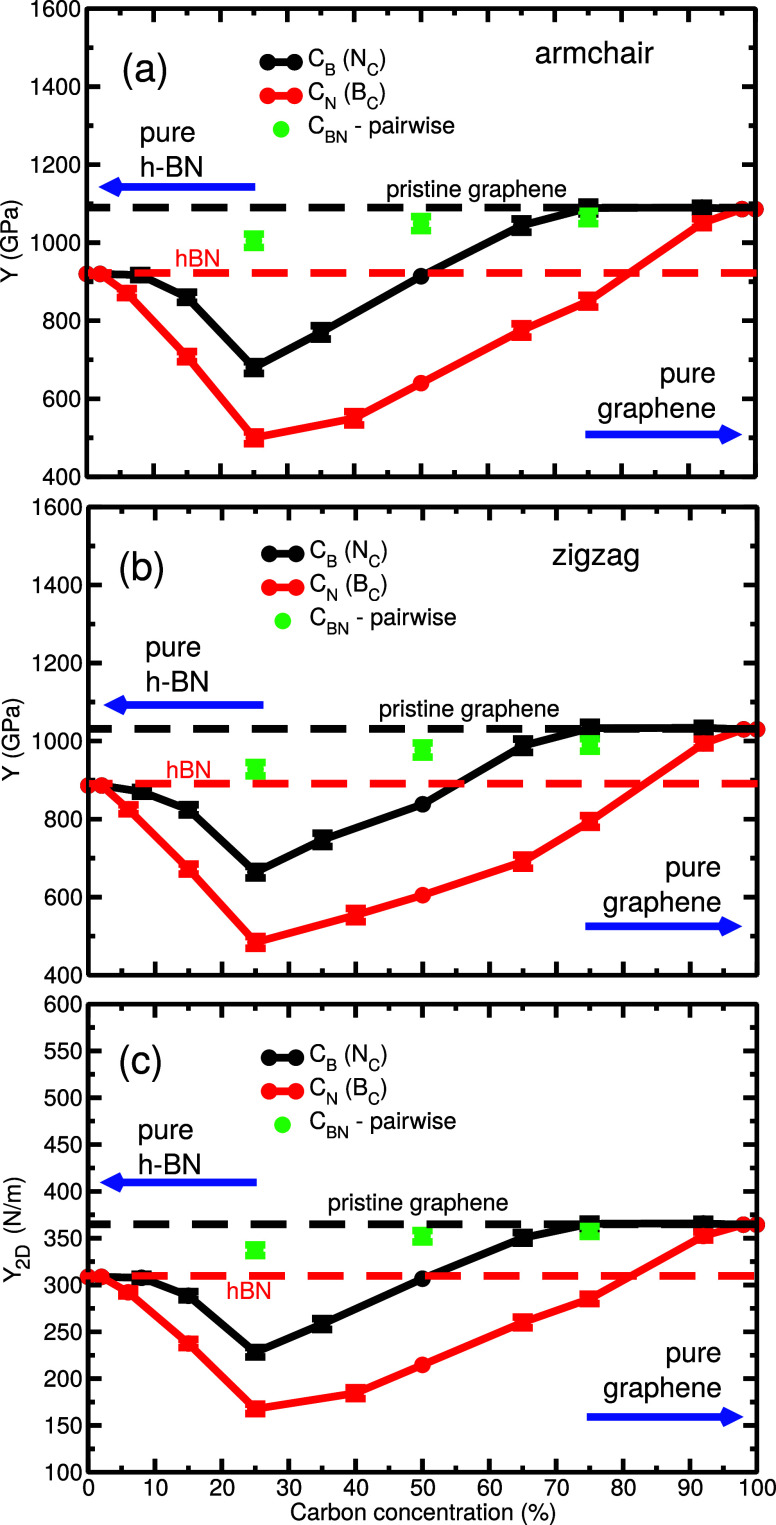 Figure 2
 Figure 3
 Figure 4
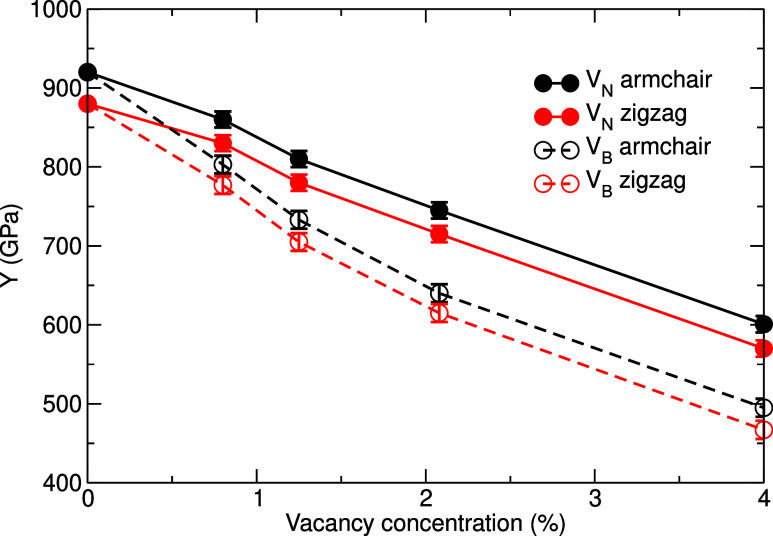 Figure 5
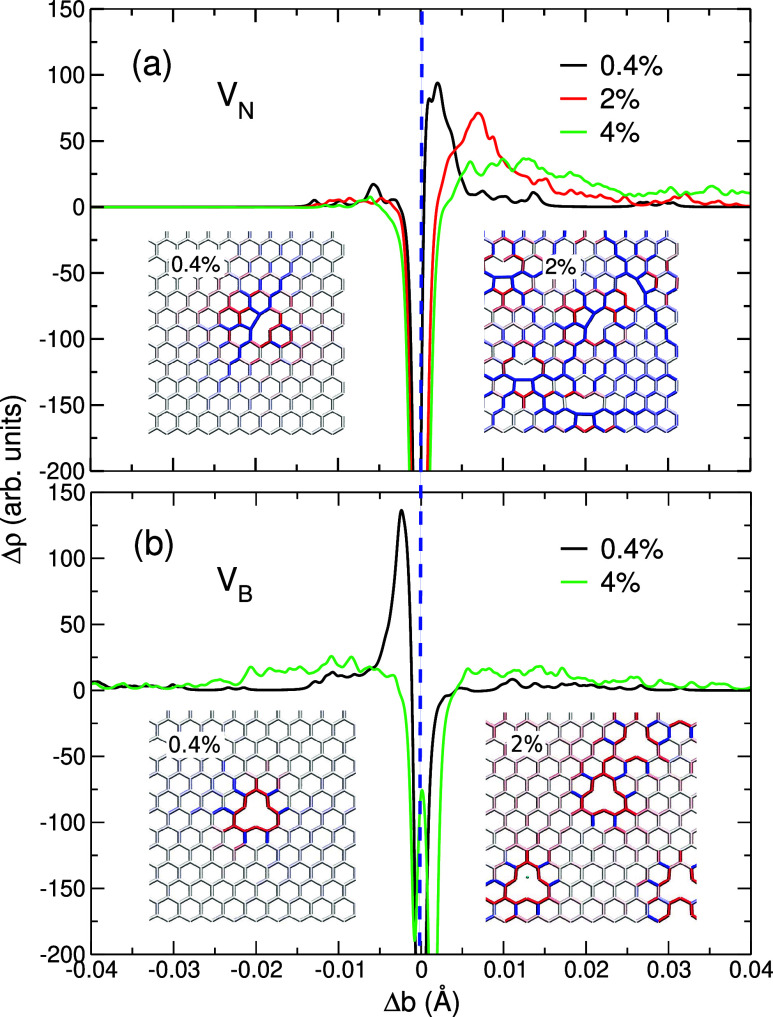 Figure 6
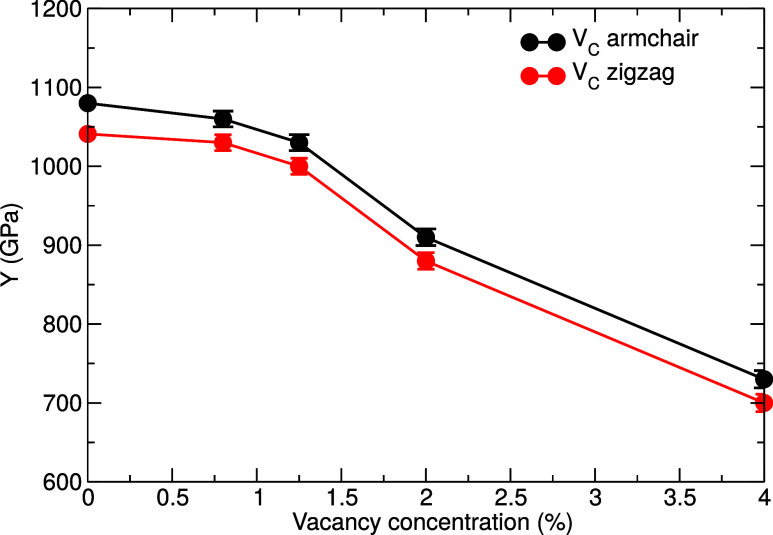 Figure 7
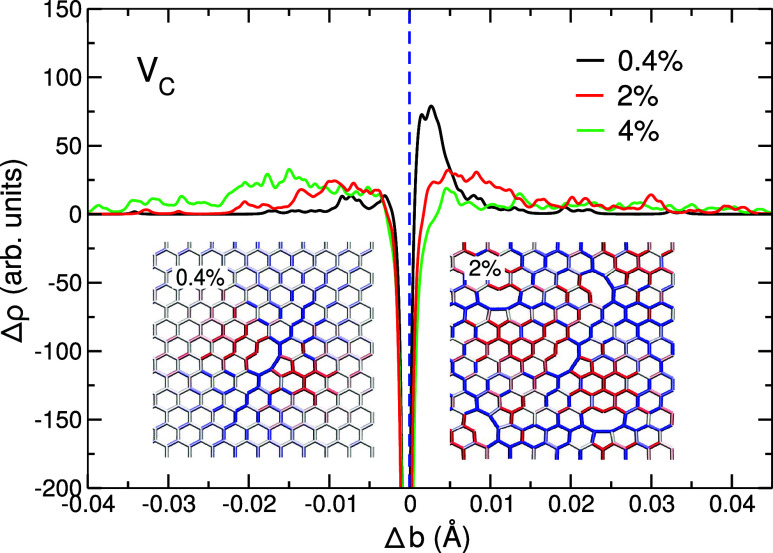 Figure 8
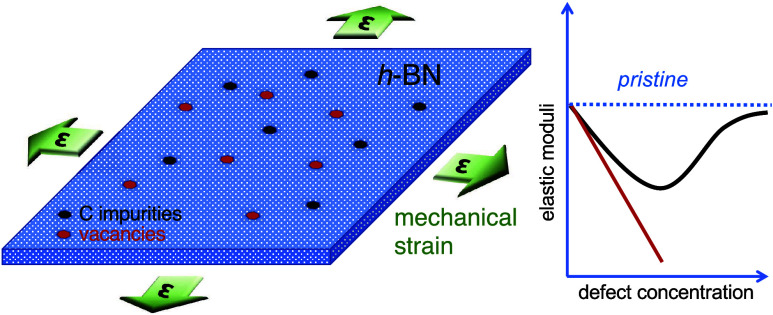 Figure 9
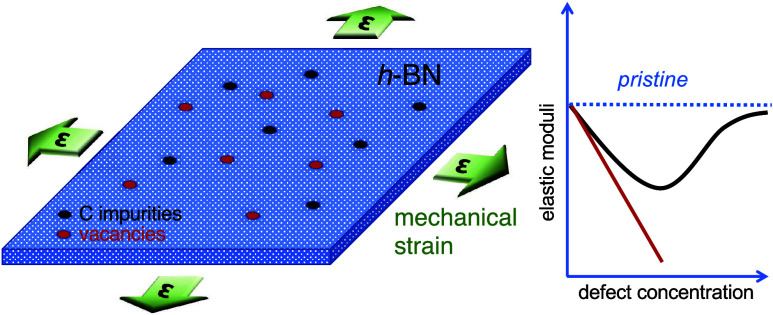 Figure 10
 Figure 11
 Figure 12
 Figure 13
 Figure 14
 Figure 15
 Figure 16
Peer Reviews
No public reviews on file for this paper yet. If you reviewed it on a platform where reviews are public (OpenReview, ICLR, NeurIPS, ICML), you can paste yours below so the community can read it here.
Videos
No videos yet. Explain this paper in a talk, walkthrough, or lecture? Add one.
Taxonomy
TopicsBoron and Carbon Nanomaterials Research · Graphene research and applications · Thermal properties of materials