Chemical Environment and Temperature Effects on the Formation and Destruction of C3O2 in Cosmic-Ray-Processed Ices
Sergio Pilling, Felipe Fantuzzi, Diana P. P. Andrade, Leonardo Moraes

TL;DR
This study explores how cosmic rays and temperature affect the formation and breakdown of C3O2 in icy environments in space.
Contribution
The paper provides detailed pathway maps linking ice composition, temperature, and irradiation history for C3O2 chemistry.
Findings
C3O2 forms via different pathways in pure CO and CO2 ices.
Temperature increases from 10 to 20 K enhance bimolecular reactions but not radiation-driven ones.
Destruction of C3O2 depends on the ice composition and radiation processes.
Abstract
Astrophysical ices composed of CO and CO2 undergo complex radiation-driven chemistry, producing reactive species with potential prebiotic relevance. Using the PROCODA kinetic model (642 coupled reactions, 18 tracked species) combined with ion irradiation data, we investigate the main formation and destruction pathways of carbon suboxide (C3O2) in CO-, CO2-, and mixed CO/CO2-rich ices. A clear two-regime picture emerges. At early fluence, chemistry is matrix-controlled: in pure CO ice, C3O2 forms mainly via CO + C2O → C3O2, whereas in pure CO2 ice it proceeds via CO2 + C2O2 → O2 + C3O2; mixed ices retain CO-involving channels. At chemical equilibrium, routes shift as accumulated intermediates take over: in CO ice, C3 + CO2 → C + C3O2 dominates, while in CO2 ice, CO + C2O2 → O + C3O2 prevails. Destruction is likewise environment-sensitive: C3O2 + R → CO + C2O leads in CO ice, versus C3O2…
Genes, proteins, chemicals, diseases, species, mutations and cell lines named across the full text — each resolved to its canonical identifier and authoritative record.
Click any figure to enlarge with its caption.
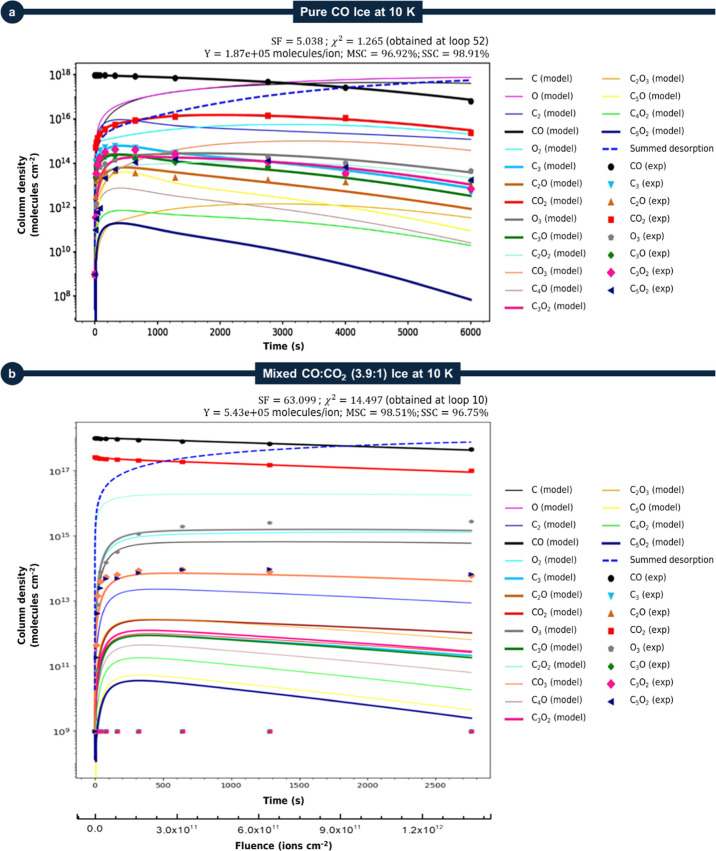 Figure 1
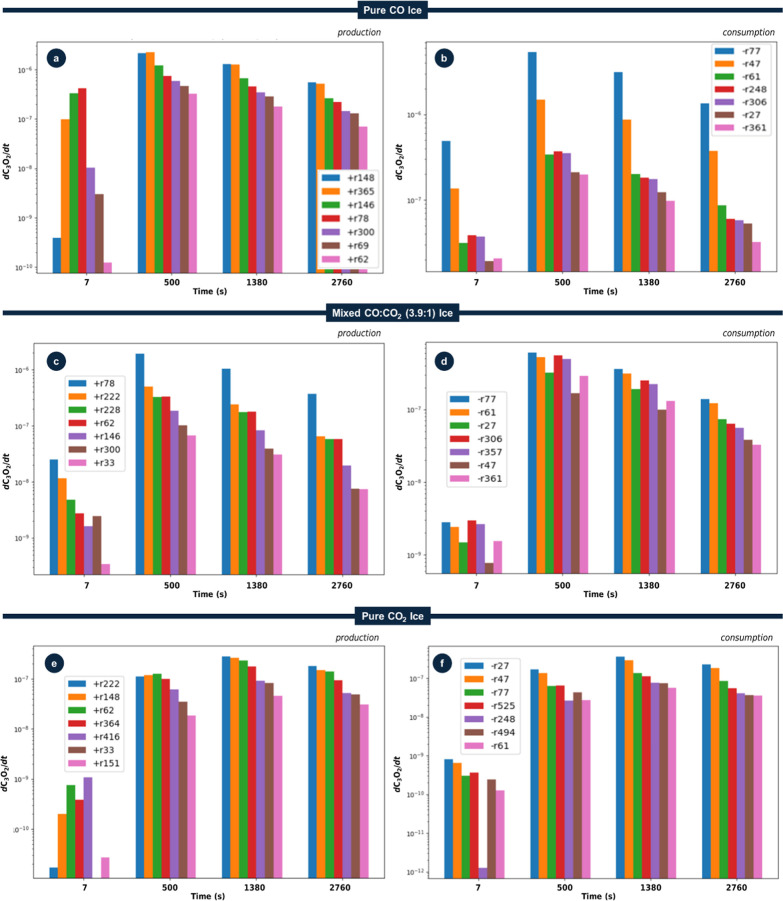 Figure 2
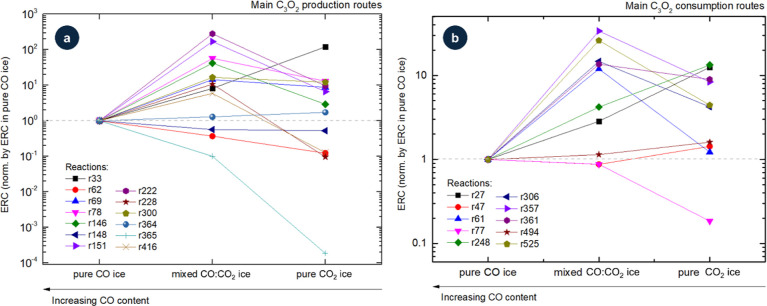 Figure 3
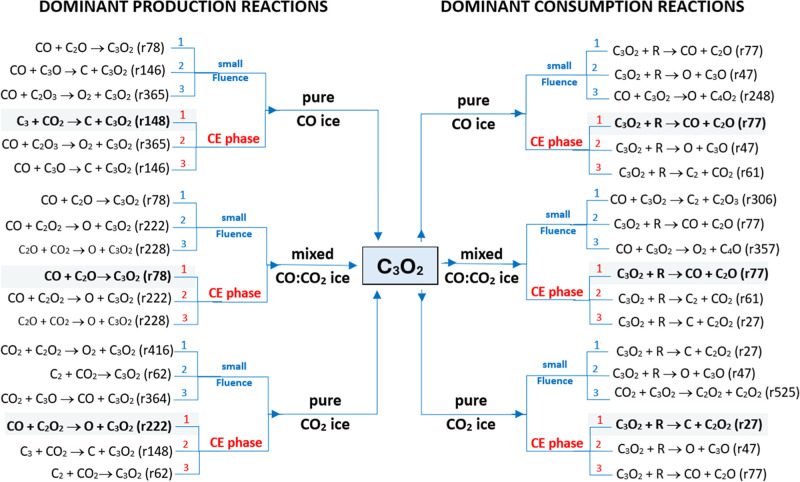 Figure 4
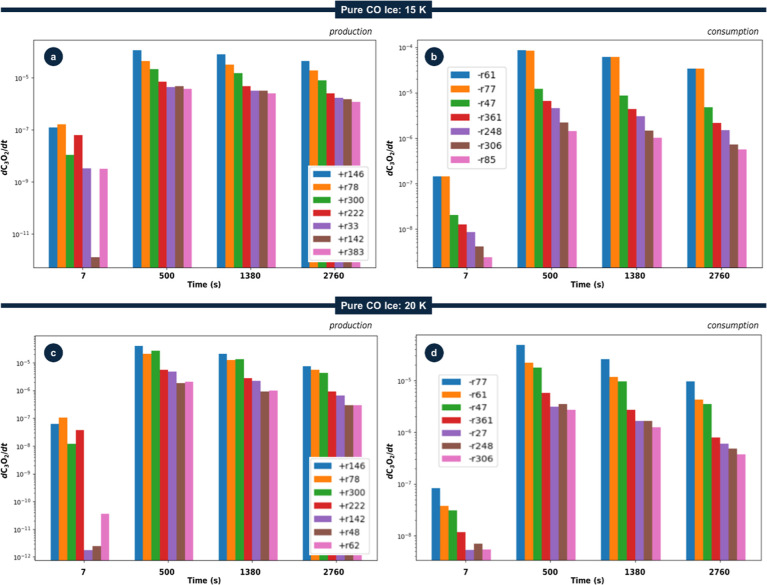 Figure 5
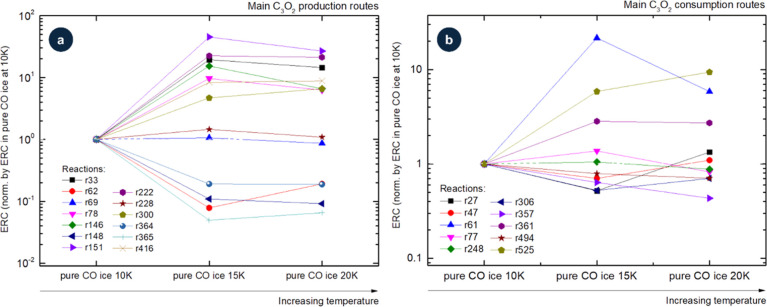 Figure 6
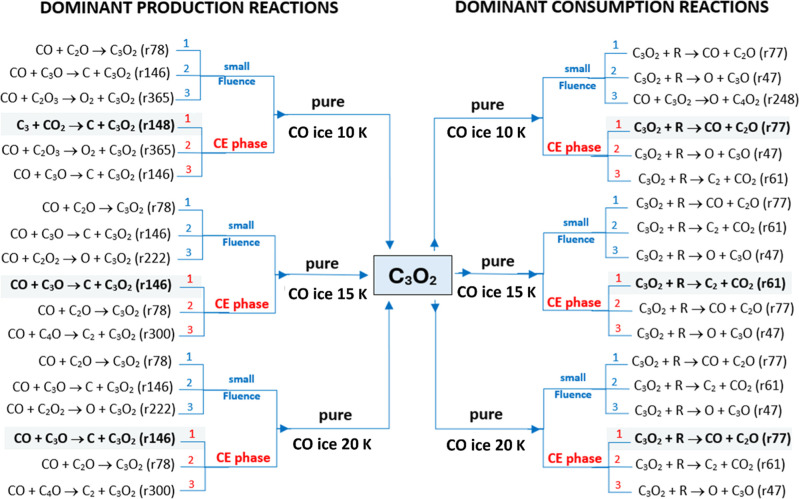 Figure 7
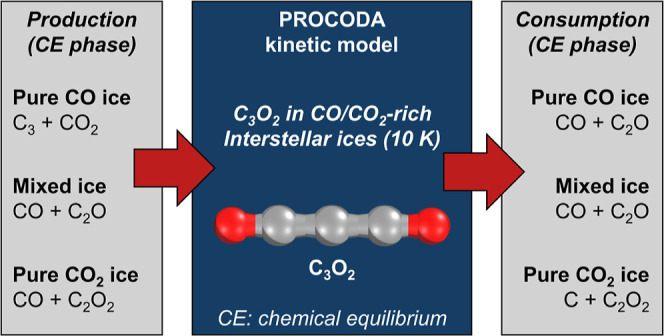 Figure 8
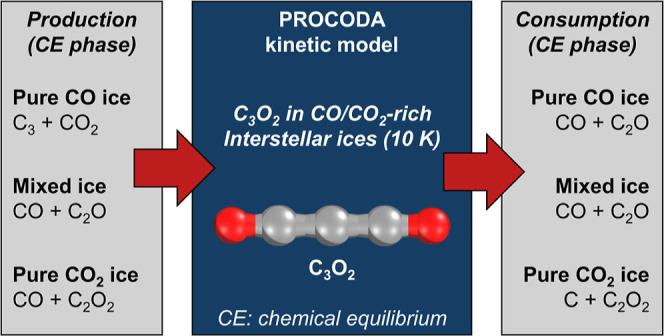 Figure 9
 Figure 10
Peer Reviews
No public reviews on file for this paper yet. If you reviewed it on a platform where reviews are public (OpenReview, ICLR, NeurIPS, ICML), you can paste yours below so the community can read it here.
Videos
No videos yet. Explain this paper in a talk, walkthrough, or lecture? Add one.
Taxonomy
TopicsAstrophysics and Star Formation Studies · Astro and Planetary Science · Dust and Plasma Wave Phenomena