An Intramolecular Cobalt–Peptoid Complex as an Effective Catalyst for Light-Driven Water Oxidation at pH 7
Suraj Pahar, Karunamay Majee, Galia Maayan

TL;DR
Scientists created a cobalt-based catalyst that efficiently splits water under neutral pH using light, offering a potential solution for clean energy production.
Contribution
A bioinspired intramolecular Co(III)–peptoid complex is introduced as an efficient catalyst for light-driven water oxidation at pH 7.
Findings
The CoTBE complex achieves a maximal turnover number of about 51 in 45 minutes under blue LED light.
The peptoid ligand includes a proton shuttling ethanol group, enabling activity at neutral pH.
The catalyst operates efficiently in phosphate buffer with a photosensitizer and sacrificial electron acceptor.
Abstract
Light-driven water splitting to produce hydrogen as an alternative clean renewable fuel for coping with the future energy crisis is one of the most important challenges of the 21st century. Water oxidation (WO), which is the first step in the water splitting process, is catalyzed in nature by a Mn4CaO5 cluster near pH 6. However, developing a synthetic catalyst for WO, which is based on nonprecious metal ions and can operate near neutral pH (e.g., pH 7.0), is still challenging. Herein, we demonstrate that the bioinspired intramolecular Co(III)–peptoid complex CoTBE is a stable and efficient molecular catalyst for light-driven WO in phosphate buffer at pH 7 in the presence of a photosensitizer and a sacrificial electron acceptor under irradiation of blue LED light with an intensity of 1.5 mW/cm2, with a maximal turnover number of about 51 in 45 min. Co(III) is coordinated and…
Genes, proteins, chemicals, diseases, species, mutations and cell lines named across the full text — each resolved to its canonical identifier and authoritative record.
Click any figure to enlarge with its caption.
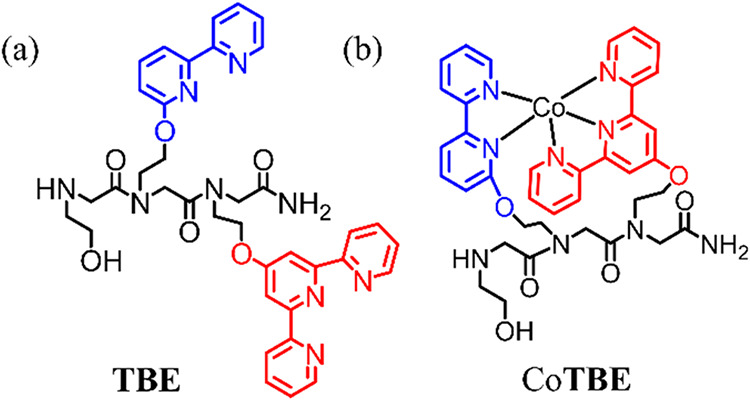 Figure 1
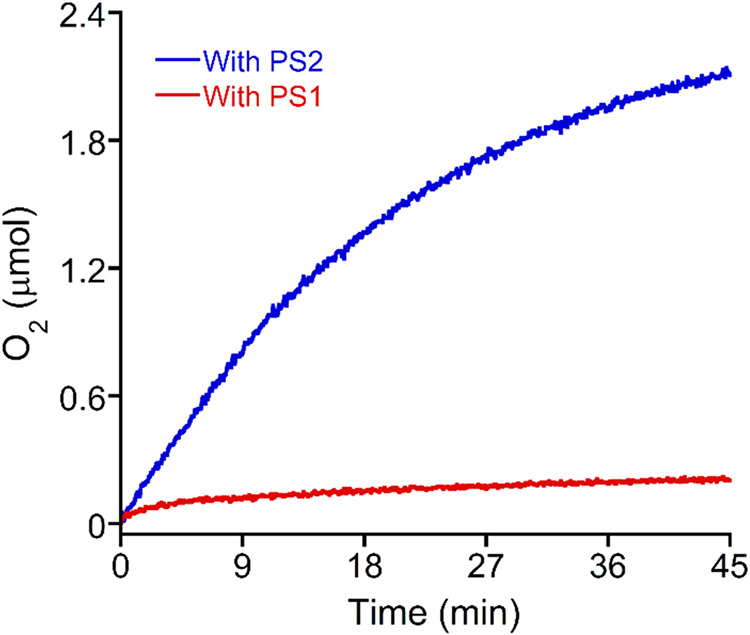 Figure 2
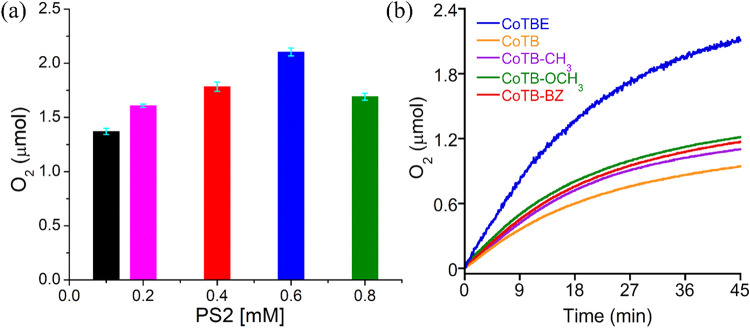 Figure 3
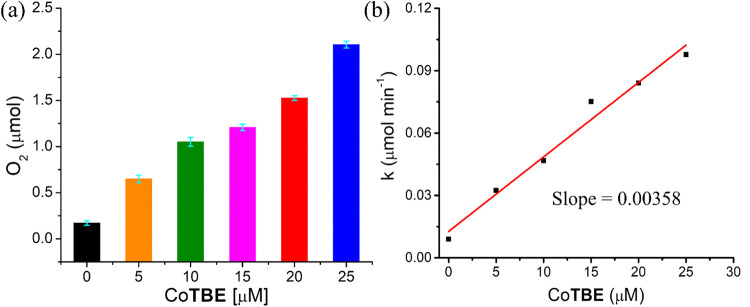 Figure 4
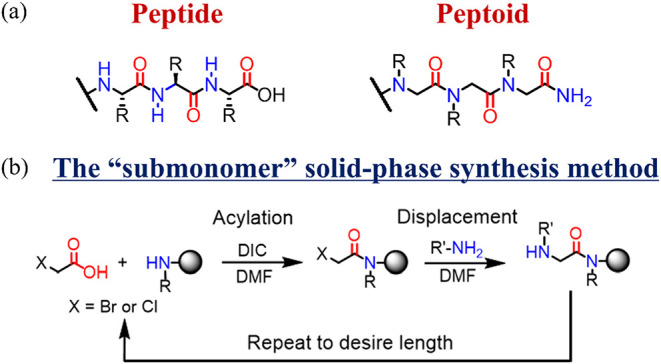 Figure 5
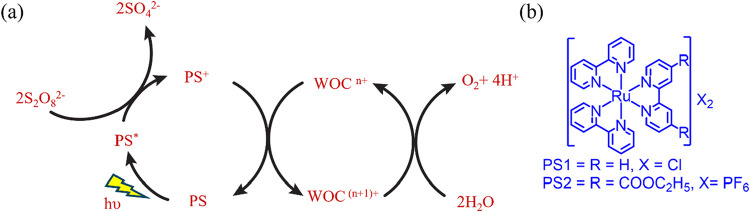 Figure 6
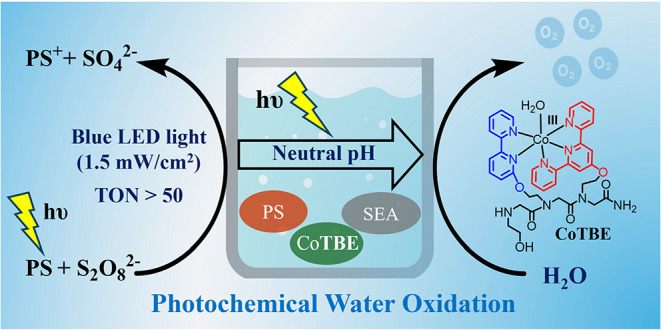 Figure 7
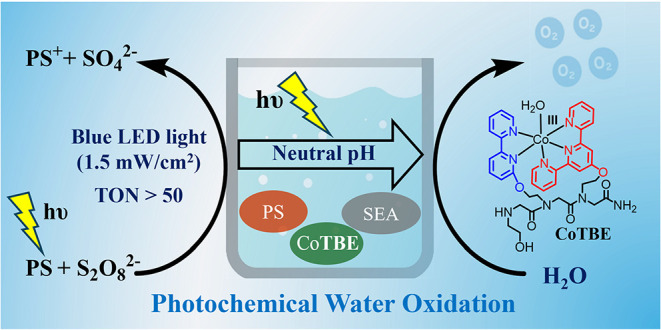 Figure 8
 Figure 9
Peer Reviews
No public reviews on file for this paper yet. If you reviewed it on a platform where reviews are public (OpenReview, ICLR, NeurIPS, ICML), you can paste yours below so the community can read it here.
Videos
No videos yet. Explain this paper in a talk, walkthrough, or lecture? Add one.
Taxonomy
TopicsMetal-Catalyzed Oxygenation Mechanisms · Electrocatalysts for Energy Conversion · CO2 Reduction Techniques and Catalysts