Influence of Imidazole Substituent Bulkiness on [CuI(PPh3)2N] Complexes with TADF Blue Solid-State Emission
Carolina Francener, Giliandro Farias, Renê Santos de Amorim, Marcelo Meira Faleiros, Larissa Gomes Franca, Andrew P. Monkman, Adailton J. Bortoluzzi, Teresa Dib Zambon Atvars, Eduard Westphal, Ivan H. Bechtold

TL;DR
This paper studies how the size of imidazole ligands affects the blue light emission of copper complexes used in OLEDs.
Contribution
The study introduces new Cu(I) complexes with varying alkyl chains and reveals how ligand bulkiness influences TADF properties.
Findings
Bulky ligands result in smaller singlet–triplet energy gaps, enhancing TADF behavior.
Alkyl chain size affects phosphorescence lifetimes and coordination geometry.
Imidazole ligands do not directly participate in emission but influence geometry around the Cu(I) center.
Abstract
Copper(I) heteroleptic complexes with phosphine- and nitrogen-containing ligands are well-known thermally activated delayed fluorescence (TADF) emitters and are of interest for OLED applications due to their cost-effectiveness. In this work, we report the design and synthesis of a series of novel Cu(I) complexes featuring triphenylphosphine- and imidazole-based ligands functionalized with varying alkyl chains. This allowed for the evaluation of purely monodentate ligand systems and the impact of the ligand bulkiness on the photophysical properties. Time-resolved spectroscopy, combined with temperature-dependent measurements, revealed blue solid-state emission and confirmed the TADF behavior across the series. Room-temperature lifetimes reached as low as 0.5 μs, facilitated by small singlet–triplet energy gaps ΔE (S1–T1) between 110 and 60 meV. Bulky ligands led to the smallest S–T…
Genes, proteins, chemicals, diseases, species, mutations and cell lines named across the full text — each resolved to its canonical identifier and authoritative record.
Click any figure to enlarge with its caption.
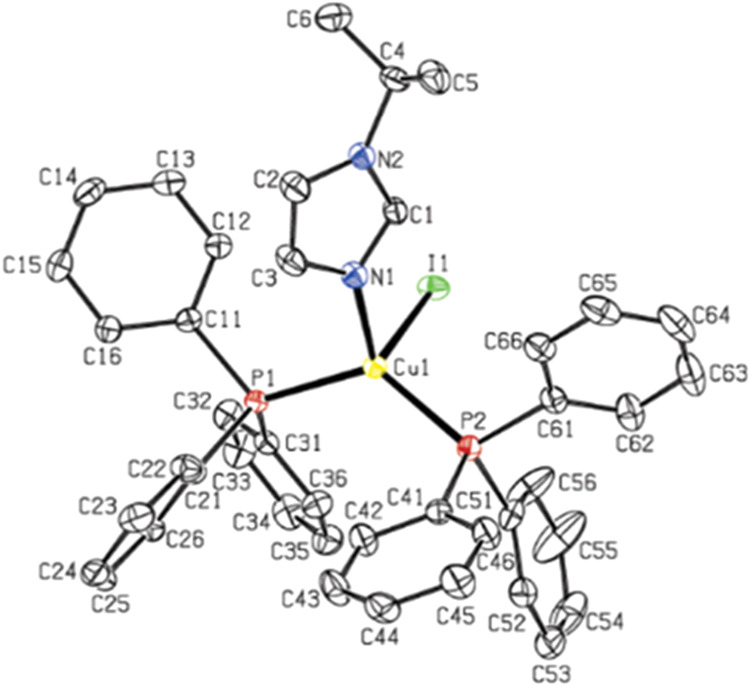 Figure 1
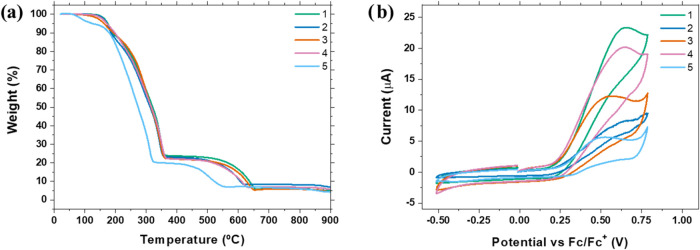 Figure 2
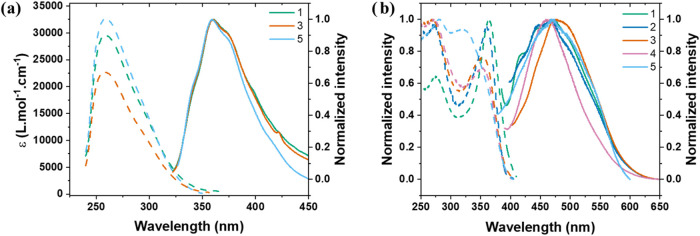 Figure 3
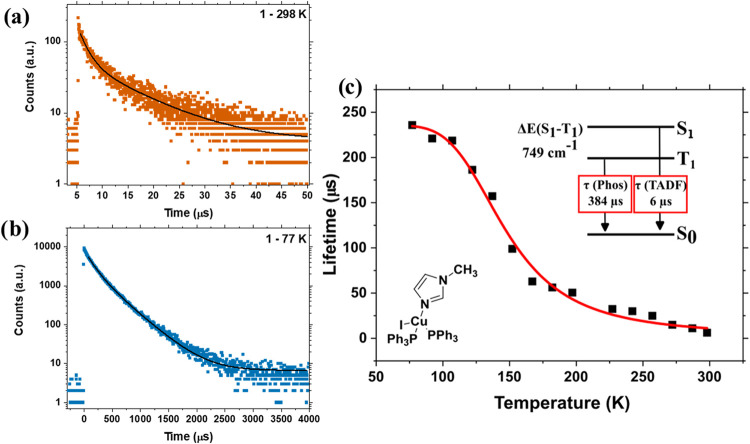 Figure 4
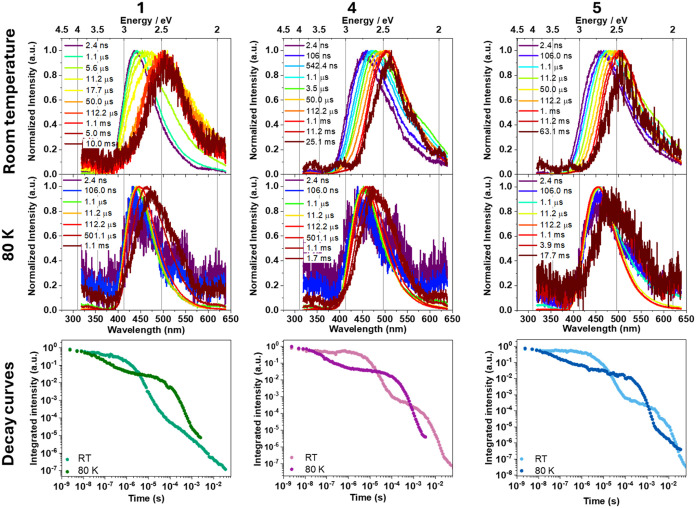 Figure 5
 Figure 6
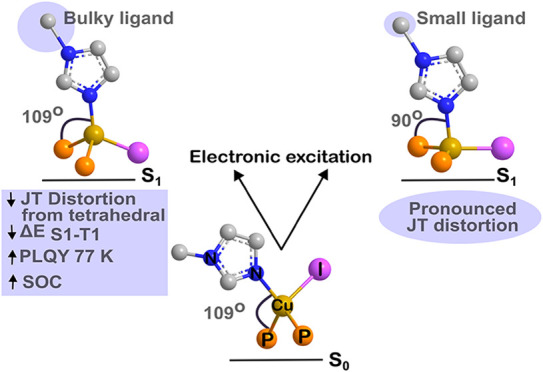 Figure 7
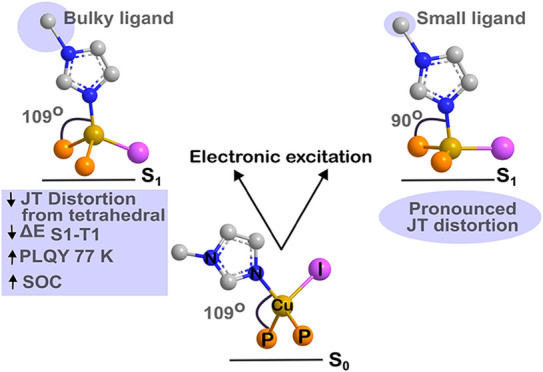 Figure 8
 Figure 9
 Figure 10
 Figure 11
 Figure 12
 Figure 13
Peer Reviews
No public reviews on file for this paper yet. If you reviewed it on a platform where reviews are public (OpenReview, ICLR, NeurIPS, ICML), you can paste yours below so the community can read it here.
Videos
No videos yet. Explain this paper in a talk, walkthrough, or lecture? Add one.
Taxonomy
TopicsOrganic Light-Emitting Diodes Research · Metal complexes synthesis and properties · Magnetism in coordination complexes