Solvent-Free Hydrogenation and Dehydrogenation of Quinoline and Quinaldine for the LOHC Concept
Päivi T. Aakko-Saksa, Aino M. Mykkänen, Timo Repo

TL;DR
This paper explores quinoline and quinaldine as potential hydrogen storage materials, showing they can be hydrogenated and dehydrogenated efficiently without solvents.
Contribution
The study demonstrates solvent-free hydrogenation and dehydrogenation of quinoline and quinaldine under mild conditions using single catalysts.
Findings
Quinoline and quinaldine can be hydrogenated to tetrahydro forms without solvents, achieving up to 2.9 wt·% hydrogen storage.
Dehydrogenation of tetrahydro forms can also occur under solvent-free conditions.
Quinaldine with one methyl group is most favorable for solvent-free hydrogenation due to steric effects.
Abstract
As presented herein, N-heterocyclic quinoline (Q) and quinaldine (MeQ) represent promising liquid organic hydrogen carriers (LOHCs). They can be quantitatively hydrogenated to tetrahydro (TH) forms under mild reaction conditions (100 °C and 10 bar of H2) using Pt/C and Pd/C catalysts. It is noteworthy that the hydrogenation occurs without a solvent, yielding hydrogen storage capacities of up to 2.9 wt·%. Further hydrogenation of Q and MeQ to their decahydro (DH) forms requires the presence of a solvent. In addition to the hydrogenation of Q and MeQ, we succeeded in the dehydrogenation of the TH forms under solvent-free reaction conditions. This suggests that a pressure-controlled system with a single catalyst for hydrogenation and dehydrogenation of the MeQ/Q system could enable hydrogen storage under solvent-free reaction conditions. We also examined various substituted pyridine…
Genes, proteins, chemicals, diseases, species, mutations and cell lines named across the full text — each resolved to its canonical identifier and authoritative record.
Click any figure to enlarge with its caption.
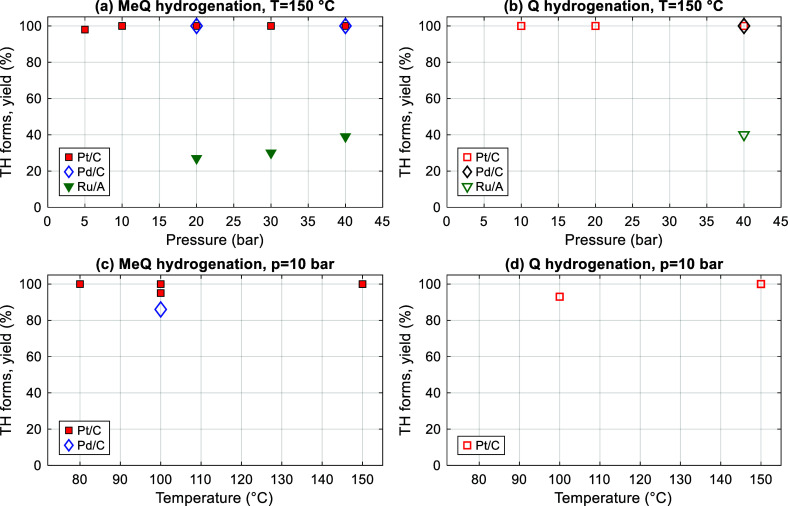 Figure 1
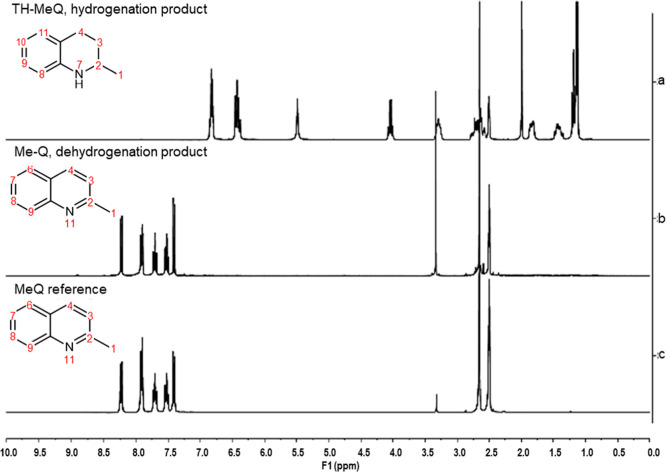 Figure 2
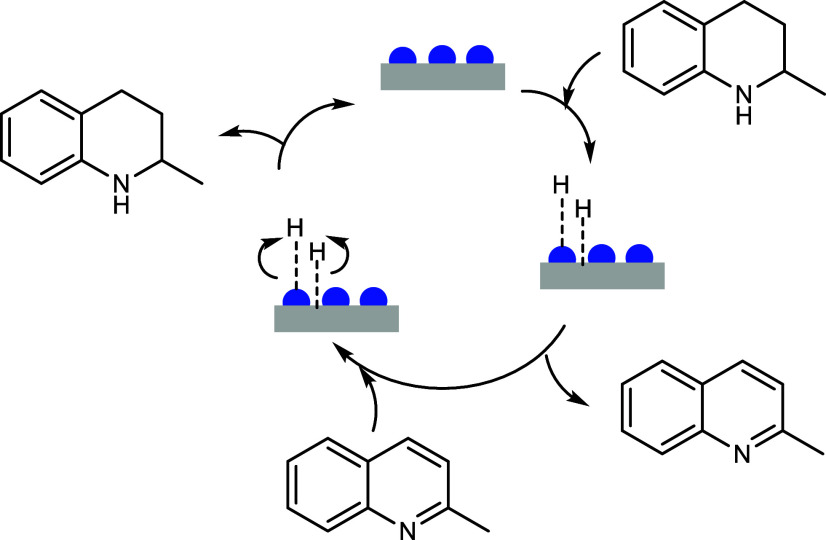 Figure 3
 Figure 4
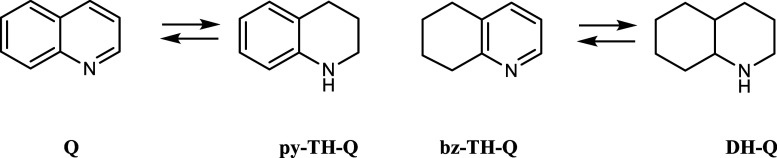 Figure 5
 Figure 6
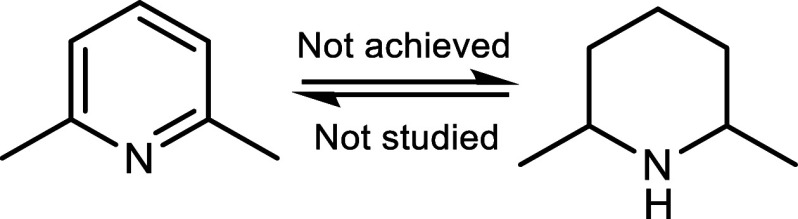 Figure 7
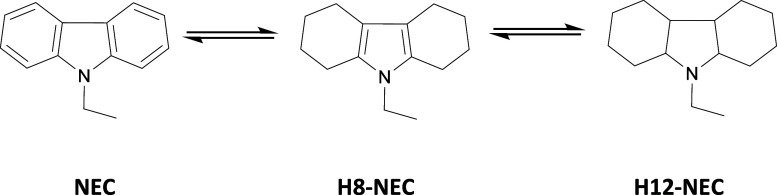 Figure 8
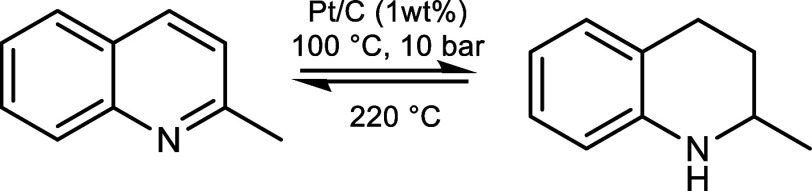 Figure 9
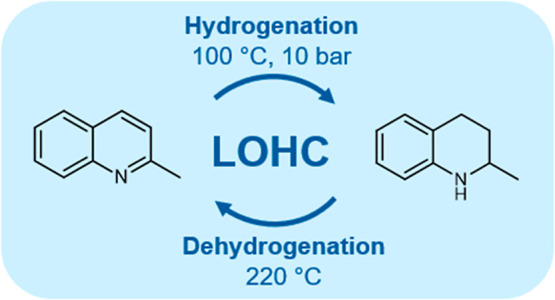 Figure 10
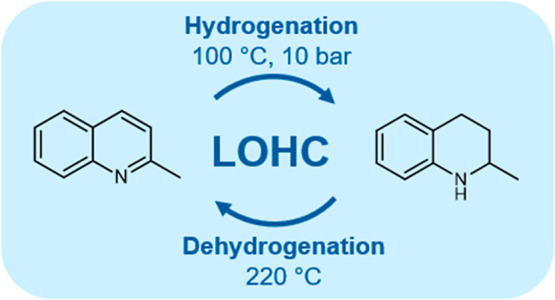 Figure 11
Peer Reviews
No public reviews on file for this paper yet. If you reviewed it on a platform where reviews are public (OpenReview, ICLR, NeurIPS, ICML), you can paste yours below so the community can read it here.
Videos
No videos yet. Explain this paper in a talk, walkthrough, or lecture? Add one.
Taxonomy
TopicsAsymmetric Hydrogenation and Catalysis · Hybrid Renewable Energy Systems · Electrocatalysts for Energy Conversion