Associations Among Cyberbullying Victimization, Inhibitory Control, Neural Activation of Error Processing, and Mental Health Problems in Adolescents: Neuroimaging, Retrospective Longitudinal Cohort Study Using the Adolescent Brain Cognitive Development Data
Xuanyu Zhang, Chengyan Xie, Yu Chen, Boyu Qiu

TL;DR
This study finds that cyberbullying in early adolescence is linked to increased externalizing problems and changes in brain activity related to error processing in later years.
Contribution
The study provides longitudinal neuroimaging evidence of altered brain activation in cyberbullying victims during error processing.
Findings
Cyberbullying at age 9-10 is associated with greater externalizing problems two years later.
Cyberbullying is linked to increased neural activation in brain regions during error processing four years later.
Neural changes do not directly mediate the link between cyberbullying and externalizing problems.
Abstract
Cyberbullying victimization is prevalent and closely linked to mental health problems. However, existing research, often limited by cross-sectional designs and a focus on direct relationships, has yielded inconsistent results. Furthermore, the biological mechanisms underlying the relationship between cyberbullying victimization and psychopathological outcomes remain largely unclear at present. This retrospective cohort study aimed to explore the longitudinal associations among cyberbullying victimization, inhibitory control, brain activation during error processing, and mental health problems among adolescents. We curated the clinical, behavioral, and neuroimaging data (551/1186, 46.5% girls; 9-10 years at baseline) from the Adolescent Brain Cognitive Development study, a nationally representative cohort established through school-based probability sampling (selected factors included…
Genes, proteins, chemicals, diseases, species, mutations and cell lines named across the full text — each resolved to its canonical identifier and authoritative record.
Click any figure to enlarge with its caption.
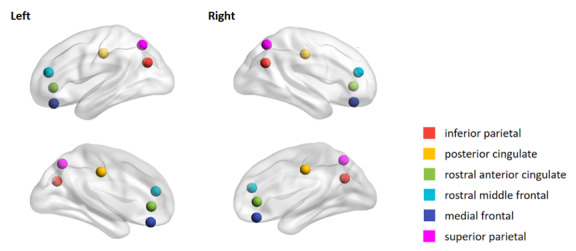 Figure 1
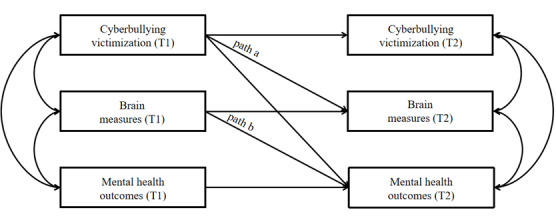 Figure 2
Peer Reviews
No public reviews on file for this paper yet. If you reviewed it on a platform where reviews are public (OpenReview, ICLR, NeurIPS, ICML), you can paste yours below so the community can read it here.
Videos
No videos yet. Explain this paper in a talk, walkthrough, or lecture? Add one.
Taxonomy
TopicsBullying, Victimization, and Aggression · Intimate Partner and Family Violence · Psychopathy, Forensic Psychiatry, Sexual Offending