Win ratio analysis of low-voltage area ablation in persistent atrial fibrillation: sub-analysis of SUPPRESS-AF
Akihiro Sunaga, Yuki Matsuoka, Daisaku Nakatani, Katsuki Okada, Daisuke Sakamoto, Hideaki Hasegawa, Tetsuhisa Kitamura, Masaharu Masuda, Nobuaki Tanaka, Tetsuya Watanabe, Hitoshi Minamiguchi, Yasuyuki Egami, Takafumi Oka, Tomoko Minamisaka, Takashi Kanda, Masato Okada

TL;DR
This study found that adding low-voltage area ablation to standard treatment for persistent atrial fibrillation did not improve clinical outcomes and increased procedure time.
Contribution
The study provides new evidence on the clinical effectiveness of low-voltage area ablation in persistent atrial fibrillation using a win ratio analysis.
Findings
LVA ablation added to PVI did not improve hierarchical clinical outcomes.
Procedure times were longer in the LVA ablation group.
No significant difference in adverse events or AF recurrence was observed between groups.
Abstract
In persistent atrial fibrillation (AF), low-voltage areas (LVAs) in the left atrium are considered arrhythmogenic. Although substrate ablation targeting LVAs may reduce AF recurrence, its effect on broader clinical outcomes remains unclear, and procedural risks must be considered. This study aims to compare hierarchical clinical outcomes between pulmonary vein isolation (PVI) alone and PVI plus LVA ablation in patients with persistent AF and LVAs using a win ratio analysis. This was a post hoc sub-analysis of the SUPPRESS-AF trial, including 341 patients with LVAs out of 1364 randomized. Patients received either PVI alone (n = 171) or PVI with LVA ablation (n = 170). Hierarchical outcomes were analysed in order of clinical importance: all-cause death, symptomatic stroke, AF recurrence, bleeding, and periprocedural complications. Win ratio analysis was used for comparison. Baseline…
Genes, proteins, chemicals, diseases, species, mutations and cell lines named across the full text — each resolved to its canonical identifier and authoritative record.
Click any figure to enlarge with its caption.
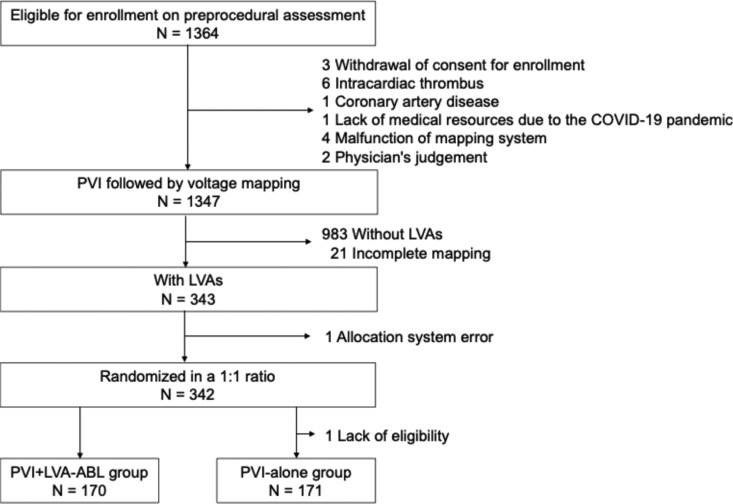 Figure 1
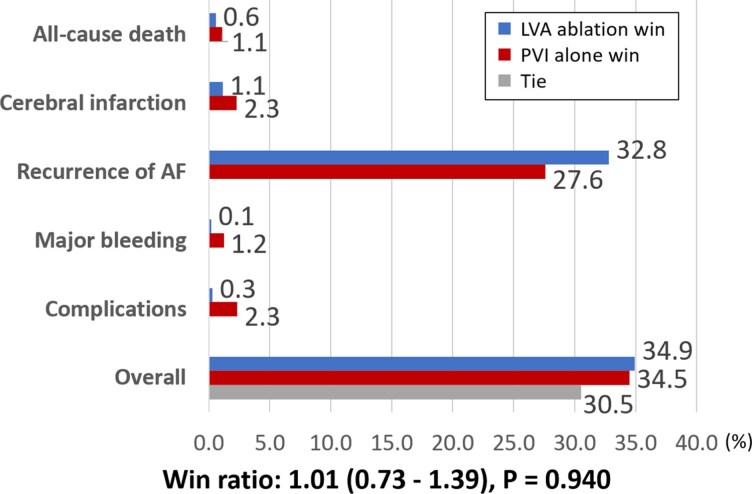 Figure 2
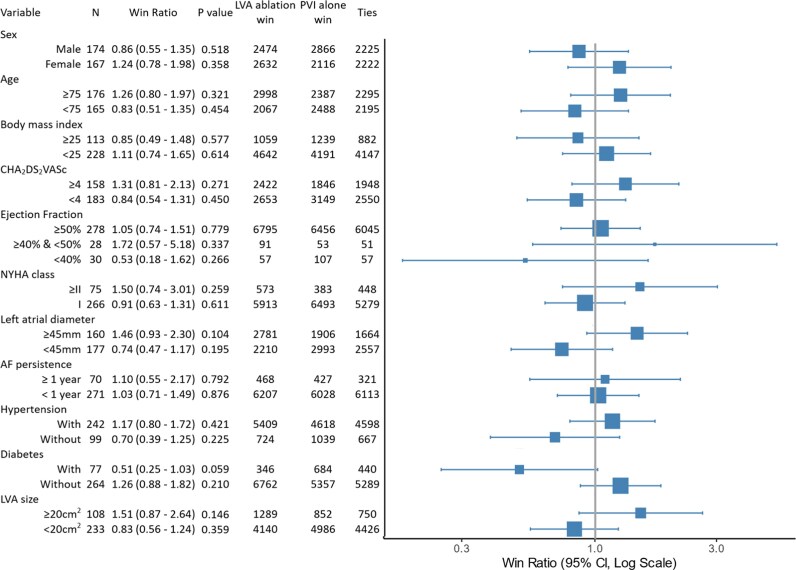 Figure 3
Peer Reviews
No public reviews on file for this paper yet. If you reviewed it on a platform where reviews are public (OpenReview, ICLR, NeurIPS, ICML), you can paste yours below so the community can read it here.
Videos
No videos yet. Explain this paper in a talk, walkthrough, or lecture? Add one.
Taxonomy
TopicsAtrial Fibrillation Management and Outcomes · Cardiac Arrhythmias and Treatments · Cardiac pacing and defibrillation studies