Age‐related variations in prostaglandin E‐major urinary metabolite values in Japanese children
Takatoshi Maeyama, Ayaka Takashiba, Ayaha Hata, Keinosuke Hizuka, Ryutaro Saura, Yuri Etani, Shin‐ichiro Hagiwara

TL;DR
This study establishes normal reference ranges for a urinary biomarker in healthy Japanese children, showing that younger children have higher values than older children and adults.
Contribution
The study provides the first reference values for PGE-MUM in healthy children, highlighting age-related differences important for clinical interpretation.
Findings
Young children (2–6 years) had higher PGE-MUM values (18.4–58.7 μg/g·Cr) compared to older children (7–14 years, 12.4–50.3 μg/g·Cr).
PGE-MUM values decreased with age but showed no significant sex-related differences.
Healthy children have higher PGE-MUM values than healthy adults, emphasizing the need for age-specific reference ranges.
Abstract
Prostaglandin E‐major urinary metabolite (PGE‐MUM) is an emerging noninvasive biomarker used to evaluate clinical and endoscopic activity in patients with inflammatory bowel disease. Previous studies have shown that PGE‐MUM values correlate with colonic inflammation in pediatric ulcerative colitis; however, reference values for children without inflammation have not been defined yet. This study aimed to determine the normal reference values of PGE‐MUM in healthy pediatric subjects without inflammatory conditions. Between December 2018 and January 2022, we prospectively enrolled 221 participants (cross‐sectional study, aged 0–15 years) who were undergoing growth hormone stimulation testing for diagnostic purposes and exhibited no symptoms of inflammation or elevated C‐reactive protein levels at a single pediatric center in Japan. PGE‐MUM values were measured using a chemiluminescent…
Genes, proteins, chemicals, diseases, species, mutations and cell lines named across the full text — each resolved to its canonical identifier and authoritative record.
Click any figure to enlarge with its caption.
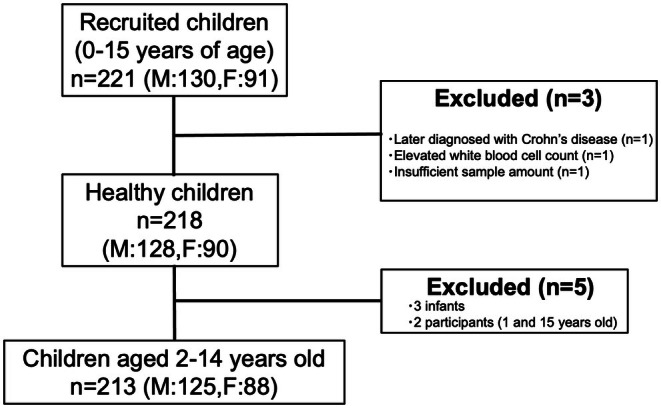 Figure 1
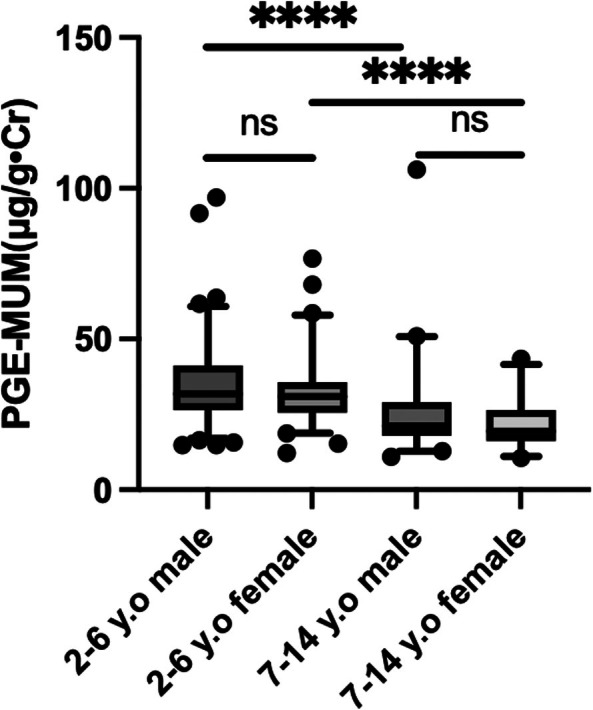 Figure 2
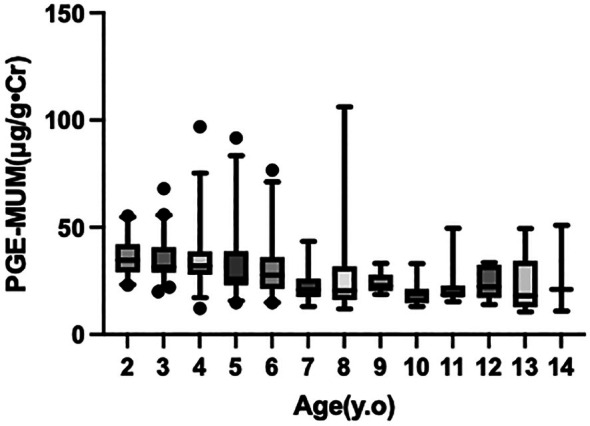 Figure 3
Peer Reviews
No public reviews on file for this paper yet. If you reviewed it on a platform where reviews are public (OpenReview, ICLR, NeurIPS, ICML), you can paste yours below so the community can read it here.
Videos
No videos yet. Explain this paper in a talk, walkthrough, or lecture? Add one.
Taxonomy
TopicsInflammatory Bowel Disease · Pharmacogenetics and Drug Metabolism · Inflammatory mediators and NSAID effects