Feasibility study of in‐house second‐channel calibration of dual‐channel electrometers using a battery‐powered current source
Hayato Tsuno, Ruan Sasaki, Koji Sasaki, Kohei Nishi, Tae Ushikawa, Daisaku Goto, Yasuhiro Kawashima, Ririko Kosugi

TL;DR
The paper introduces a cost-effective method to calibrate the second channel of dual-channel electrometers using a battery-powered current source and the first channel as a reference.
Contribution
A novel method for calibrating the second circuit of dual-circuit electrometers using the first circuit as a reference is proposed and validated.
Findings
The proposed method achieved high accuracy with relative errors below 0.1% for multiple electrometers.
The sensitivity coefficients of the second circuits were successfully determined using the first circuit's calibration coefficient.
This method could reduce calibration costs in clinical settings by eliminating the need for specialized equipment.
Abstract
An ionization chamber and electrometer allow measurement of the absorbed dose to water. A sensitivity comparison between electrometers is essential for quality control, and an efficient method is available to accurately measure the electrometer sensitivity coefficient without using a linear accelerator (linac). Although dual‐ circuit electrometers are becoming increasingly common, no calculation method for the sensitivity coefficient of their second‐circuit is available. Hence, we propose a method for calculating this sensitivity coefficient using the first‐circuit as the reference and evaluate its accuracy. Using the first‐circuit of a RAMTEC pro electrometer as a reference, the RAMTEC duo and SuperMAX electrometers were connected as test units to the simple yet accurate Japanese‐patented SCG002 current source powered by a dry cell battery. Sensitivity ratio r elec was calculated…
Genes, proteins, chemicals, diseases, species, mutations and cell lines named across the full text — each resolved to its canonical identifier and authoritative record.
Click any figure to enlarge with its caption.
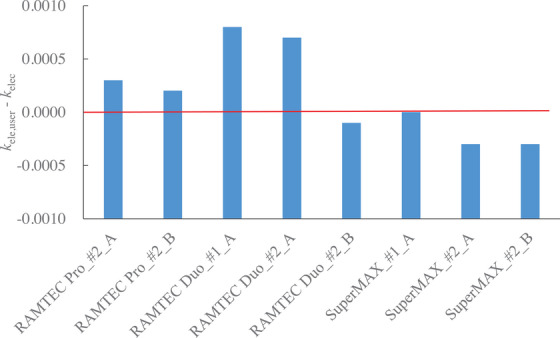 Figure 1
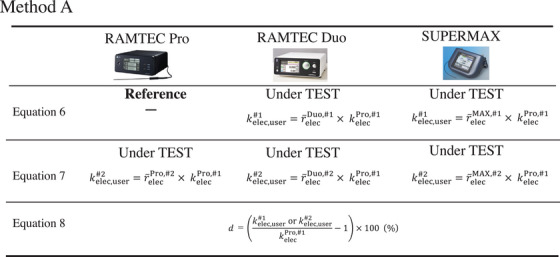 Figure 2
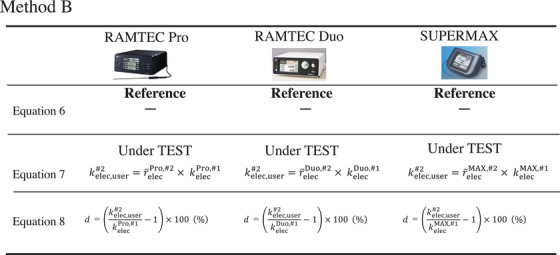 Figure 3
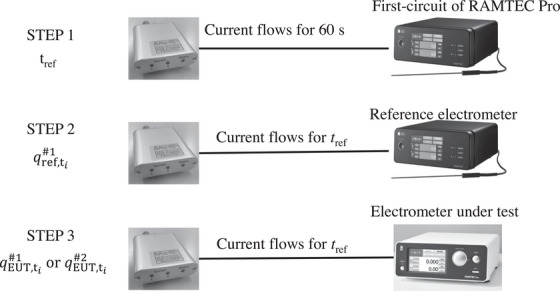 Figure 4
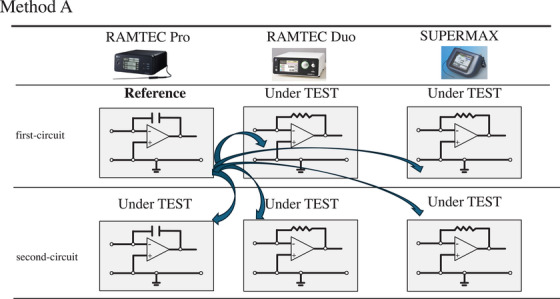 Figure 5
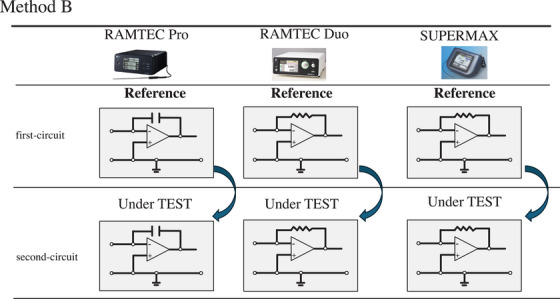 Figure 6
Peer Reviews
No public reviews on file for this paper yet. If you reviewed it on a platform where reviews are public (OpenReview, ICLR, NeurIPS, ICML), you can paste yours below so the community can read it here.
Videos
No videos yet. Explain this paper in a talk, walkthrough, or lecture? Add one.
Taxonomy
TopicsCardiac electrophysiology and arrhythmias · Ion channel regulation and function · Electromagnetic Fields and Biological Effects